
Lufthansa A380 Boston Diversion: $600K+ Bill After Passenger Assault Forces Superjumbo Emergency Landing
A Lufthansa A380 carrying 508 passengers diverted to Boston after an onboard assault. The airline faces a six-figure bill due to the complexity and cost of handling the world's largest passenger aircraft unexpectedly.

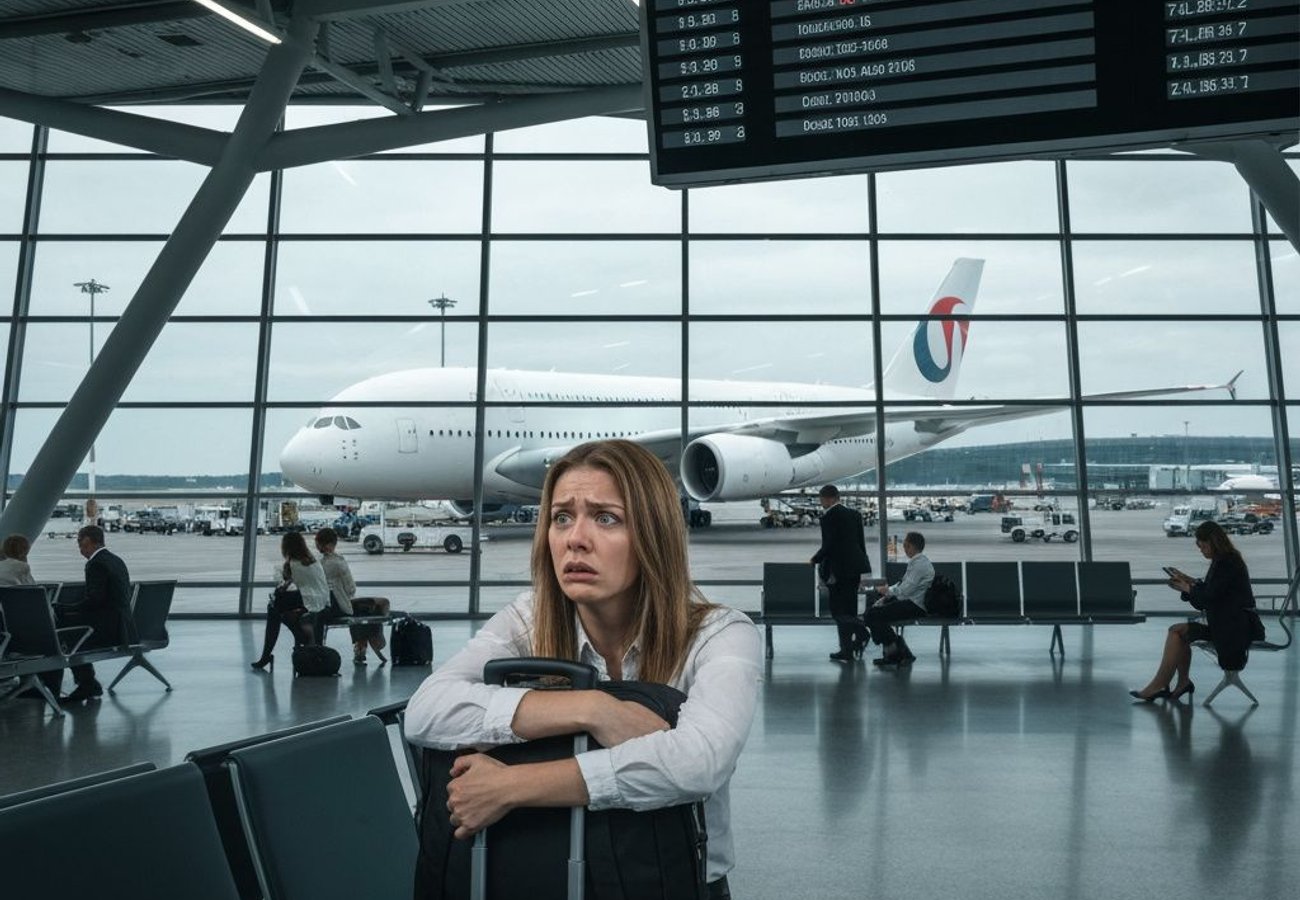
Image generated by AI
The $600K Problem Flying Over the Atlantic
A Lufthansa Airbus A380 carrying 508 passengers was forced into an unscheduled landing at Boston Logan International Airport (BOS) on June 13, 2026, after a passenger allegedly assaulted another traveler mid-flight. The superjumbo was operating Flight LH459 from San Francisco International Airport (SFO) to Munich Airport (MUC) when crew members restrained the disruptive passenger and requested an emergency diversion.
What started as a routine transatlantic crossing became a financial nightmare for the German airline. The incident is a stark reminder of how quickly operational costs spiral when the world's largest commercial passenger aircraft is forced off course.
Why A380 Diversions Are Aviation's Most Expensive Disasters
Not every airport can handle the A380.
The superjumbo operates on a completely different scale than standard narrowbody or widebody aircraft. At 73 meters long with a 80-meter wingspan, the A380 requires specialized ground infrastructure that most mid-size airports simply don't possess. Boston Logan, while a major international hub, wasn't necessarily equipped for an unexpected A380 arrival.
The costs cascade immediately:
Landing fees at a major airport can exceed $10,000 for an aircraft of this size. Ground handling equipment must be sourced—many airports lack specialized A380 tow tractors and boarding bridges. Refueling operations alone require dedicated fuel trucks and coordination. Security protocols must be expedited. Passenger processing, including dealing with the disruptive traveler, adds administrative overhead.
Reddit: "An A380 diversion isn't just an inconvenience—it's a logistical and financial earthquake for any airline." — r/aviation
The Price Tag: How High Will It Go?
Emirates has previously disclosed that A380 diversions cost between $50,000 and $600,000 depending on circumstances, according to reporting by Gulf News. The variation depends on delay length, airport fees, fuel burn, and whether additional crew resources are required.
Given that Lufthansa's A380 remained grounded in Boston with 508 passengers and a full fuel load requiring management, industry observers estimate the final bill will land toward the higher end of that spectrum.
The calculation includes:
- Additional fuel burn from rerouting and holding patterns
- Landing and parking fees at Boston Logan
- Ground handling charges (towing, refueling, catering)
- Crew duty-time extensions and potential hotel accommodations
- Security and passenger processing costs
- Operational disruption fees rippling through Lufthansa's broader network
According to aviation economics analysis, single-engine aircraft can be rerouted with minimal friction. Four-engine A380s create cascading complications across an airline's entire schedule.
Passengers Won't Get Compensation—Here's Why
Despite the significant inconvenience, 508 passengers will likely receive zero compensation under EU Regulation 261/2004 (EU261).
The regulation exempts airlines from paying standard compensation—up to €600 per passenger—when delays result from extraordinary circumstances beyond the airline's control. Passenger assaults fall squarely into this category.
Safety and security incidents are classified as extraordinary circumstances that airlines cannot reasonably prevent. A disruptive passenger assaulting another traveler qualifies as a security matter, not an operational failure caused by the airline.
Airlines still have obligations, however. Carriers must provide:
- Meals and refreshments
- Hotel accommodations (if applicable)
- Communication assistance
- Rebooking on alternative flights
But compensation payments? Off the table.
Reddit: "EU261 doesn't apply to acts of other passengers. The airline can't control what one person does to another at 35,000 feet." — r/travellaw
Who Really Pays the Price?
Here's where it gets complicated for Lufthansa: the airline likely has no legal recourse against the disruptive passenger under current U.S. federal law. The FAA can fine unruly passengers up to $37,000, but that money goes to the government, not the airline.
Some jurisdictions have explored allowing airlines to sue passengers directly for diversion costs. U.S. courts have entertained such claims in limited cases, but precedent remains sparse. Without explicit contractual language in passenger agreements holding them financially liable for diversions, Lufthansa faces an uphill legal battle.
The practical reality: the airline absorbs the entire financial hit.
The Ripple Effect: Network Disruption
A six-hour or longer delay at Boston doesn't just affect one flight. A380s are typically scheduled for long-haul routes where aircraft and crew utilization is critical. A diversion creates cascading delays across subsequent flights, potential crew duty-time violations, and schedule compression that requires expensive repositioning.
Lufthansa must coordinate with its operations control center to manage:
- Crew rest requirements and duty-time extensions
- Passenger connections at Munich and beyond
- Aircraft maintenance inspections (post-diversion safety checks)
- Equipment reassignment to cover canceled or delayed downstream flights
- Potential aircraft repositioning costs
What appears as a single diversion incident actually costs the airline money across multiple flights and regions.
The Bigger Picture: A380 Economics Under Pressure
This incident underscores why airlines have increasingly soured on the A380. Lufthansa, Emirates, and Singapore Airlines operate the bulk of the world's A380 fleet, but the aircraft's four-engine configuration, massive fuel consumption, and operational complexity make it economically vulnerable.
A diversion that would cost a Boeing 777 or Airbus A350 $75,000-$150,000 can cost an A380 four times as much. Over the aircraft's 25-year service life, these incidents—while rare—add up.
Lufthansa has not publicly disclosed the final cost of the Boston diversion, but aviation finance analysts expect a bill exceeding $400,000.
The superjumbo met its match not in the skies, but on the ground in Boston—and Lufthansa's accountants are feeling the impact.
Related Travel Guides
Disclaimer
This article is for informational and educational purposes only. It does not constitute legal, financial, or professional advice. While we strive to provide accurate and up-to-date information, travel policies, regulations, and conditions change rapidly. Always verify information with official sources before making travel decisions. Nomad Lawyer makes no representations about the accuracy, reliability, completeness, or suitability of the information provided. Readers should consult qualified professionals for advice specific to their circumstances. The views expressed in this article are those of the author and do not necessarily reflect the views of Nomad Lawyer.
Preeti Gunjan
Contributor & Community Manager
A passionate traveller and community builder. Preeti helps grow the Nomad Lawyer community, fostering engagement and bringing the reader experience to life.
Learn more about our team →