
London Aviation Chaos: United, Qantas, and KLM Among Carriers Cancelling 16 Flights from Heathrow and Gatwick in 2026
Major travel disruptions hit London as 16 flights are cancelled across Heathrow and Gatwick, affecting key routes to Chicago, Singapore, and Amsterdam.

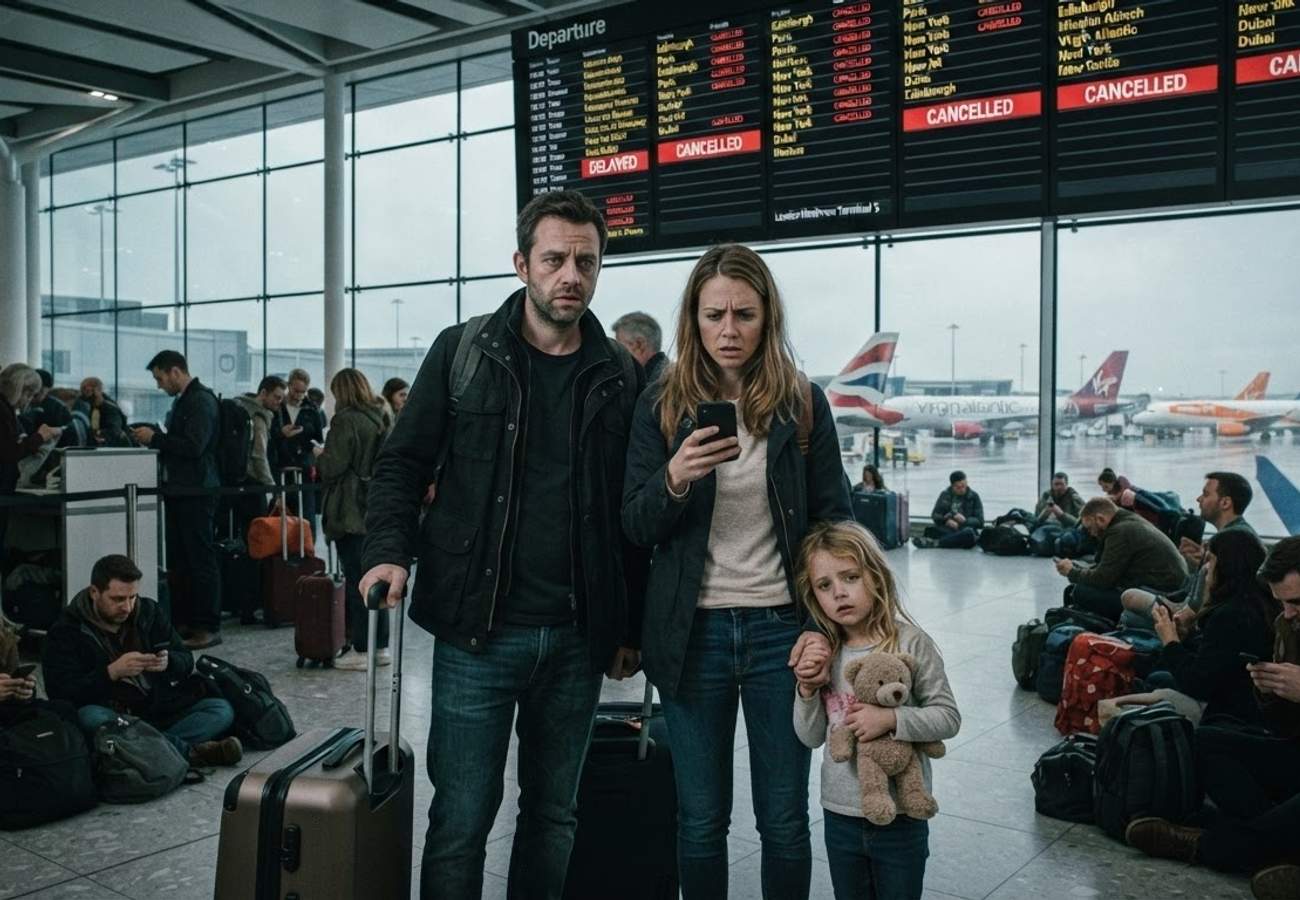
Image generated by AI
[London, July 6] — A wave of operational failures has triggered significant travel instability across the United Kingdom's primary aviation hubs, resulting in the cancellation of 16 scheduled departures from London Heathrow and London Gatwick airports. These disruptions have stranded passengers bound for major global cities, including Chicago, Singapore, and Amsterdam, as multiple full-service and budget carriers withdrew flights from their active schedules.
The scale of the disruption suggests a systemic operational challenge, as the cancellations were not isolated to a single airline but spanned a diverse group of carriers. From long-haul transatlantic journeys to short-haul European hops, the ripple effect has forced thousands of travelers to seek emergency rebookings or refund options.
Gatwick Airport Disruptions Target Leisure Routes
Operational volatility at London Gatwick Airport led to the removal of six scheduled departures, with a disproportionate impact on travelers heading to Southern Europe. Data indicates that Sicily became the primary focal point of these cancellations, with four of the six scrubbed flights destined for the region.
The affected services at Gatwick included multiple easyJet rotations and charters operated by Enter Air. Specifically, the route to Catania-Fontanarossa Airport saw the heaviest losses, while services to Nantes and Belfast were also eliminated. These cancellations highlight the vulnerability of leisure-heavy routes during peak travel windows, where a few cancelled slots can lead to massive passenger backlogs.
Heathrow Airport Faces Extensive International Cancellations
The severity of the disruption was more pronounced at London Heathrow Airport, where ten international departures were cancelled. Unlike the leisure-centric issues at Gatwick, the Heathrow disruptions targeted high-capacity, long-haul corridors and critical European business links.
United Airlines experienced significant capacity loss on its transatlantic network, with two separate flights to Chicago O’Hare International Airport cancelled, alongside a service to George Bush Intercontinental Airport in Houston. Other major global carriers were equally affected; Qantas withdrew its service to Singapore Changi Airport, and KLM cancelled a key rotation to Amsterdam Schiphol.
European connectivity also suffered, with Scandinavian Airlines (SAS) and Air France cancelling flights to Stockholm, Oslo, and Paris. The diversity of the affected airlines—ranging from North American giants to Asian and European flag carriers—suggests that the disruptions may be linked to broader airport operational constraints rather than individual airline technical failures.
Comprehensive Breakdown of Cancelled London Departures
The following table provides a detailed list of the 16 flights cancelled across both major London hubs, including flight numbers and final destinations.
| Flight | Airline | Departure Airport | Destination |
|---|---|---|---|
| EZY8447 | easyJet | London Gatwick Airport | Nantes Atlantique Airport |
| EZY8285 | easyJet | London Gatwick Airport | Catania-Fontanarossa Airport |
| EFW2612 | Enter Air | London Gatwick Airport | Catania-Fontanarossa Airport |
| EZY8287 | easyJet | London Gatwick Airport | Catania-Fontanarossa Airport |
| EFW2610 | Enter Air | London Gatwick Airport | Catania-Fontanarossa Airport |
| EZY803 | easyJet | London Gatwick Airport | George Best Belfast City Airport |
| UAL3884 | United Airlines | London Heathrow Airport | Chicago O’Hare International Airport |
| ACA869 | Air Canada | London Heathrow Airport | Halifax Stanfield International Airport |
| KLM1000 | KLM | London Heathrow Airport | Amsterdam Airport Schiphol |
| QFA2 | Qantas | London Heathrow Airport | Singapore Changi Airport |
| SZS812 | Scandinavian Airlines | London Heathrow Airport | Oslo Gardermoen Airport |
| SZS528 | Scandinavian Airlines | London Heathrow Airport | Stockholm Arlanda Airport |
| SAS528 | SAS | London Heathrow Airport | Stockholm Arlanda Airport |
| UAL928 | United Airlines | London Heathrow Airport | Chicago O’Hare International Airport |
| UAL879 | United Airlines | London Heathrow Airport | George Bush Intercontinental Airport |
| AFR1681 | Air France | London Heathrow Airport | Paris Charles de Gaulle Airport |
Systemic Impact on Global Aviation Networks
The geographical spread of these cancellations is vast, encompassing North America, Asia, and throughout Europe. When hubs as large as Heathrow and Gatwick experience simultaneous failures, the impact extends far beyond the initial departure.
Connecting passengers—those who use London as a transit point to reach other global destinations—are particularly vulnerable. For instance, the cancellation of the Qantas flight to Singapore or the United flights to Chicago creates a "domino effect," where passengers miss subsequent connections in those hub cities, leading to overnight stays and further logistical chaos.
Industry observers note that the involvement of both low-cost carriers like easyJet and premium airlines like Qantas and Air France indicates a wide-spectrum disruption. This suggests that the issues may be rooted in air traffic control (ATC) limitations, staffing shortages, or airport infrastructure glitches rather than a specific airline's fleet grounding.
Why This Matters: The Fragility of Global Hubs
This event serves as a critical case study in the fragility of "hub-and-spoke" aviation models. When a primary node like London experiences even a small percentage of cancellations (16 flights in a single window), the resulting instability is magnified across the global network.
For the aviation industry, this highlights a persistent struggle to balance maximum capacity with operational resilience. The fact that multiple airlines were affected simultaneously points to a systemic vulnerability in the UK's aviation infrastructure. As air travel demand continues to surge in 2026, the lack of "buffer capacity" at these airports means that any minor operational hiccup can quickly escalate into a multi-national travel crisis.
For passengers, this underscores the necessity of travel insurance and the importance of monitoring real-time flight data. The shift toward leaner operations by airlines means there are fewer "recovery flights" available when a primary service is cancelled, leaving travelers with fewer options for rapid re-routing.
Travelers are urged to verify their flight status via official airline apps before departing for the airport to avoid further congestion at terminals.
Related Travel Guides
Disclaimer
This article is for informational and educational purposes only. It does not constitute legal, financial, or professional advice. While we strive to provide accurate and up-to-date information, travel policies, regulations, and conditions change rapidly. Always verify information with official sources before making travel decisions. Nomad Lawyer makes no representations about the accuracy, reliability, completeness, or suitability of the information provided. Readers should consult qualified professionals for advice specific to their circumstances. The views expressed in this article are those of the author and do not necessarily reflect the views of Nomad Lawyer.
Preeti Gunjan
Contributor & Community Manager
A passionate traveller and community builder. Preeti helps grow the Nomad Lawyer community, fostering engagement and bringing the reader experience to life.
Learn more about our team →