
The Great Colorado Tarantula Trek: Experiencing Autumn on the Prairie in La Junta 2026

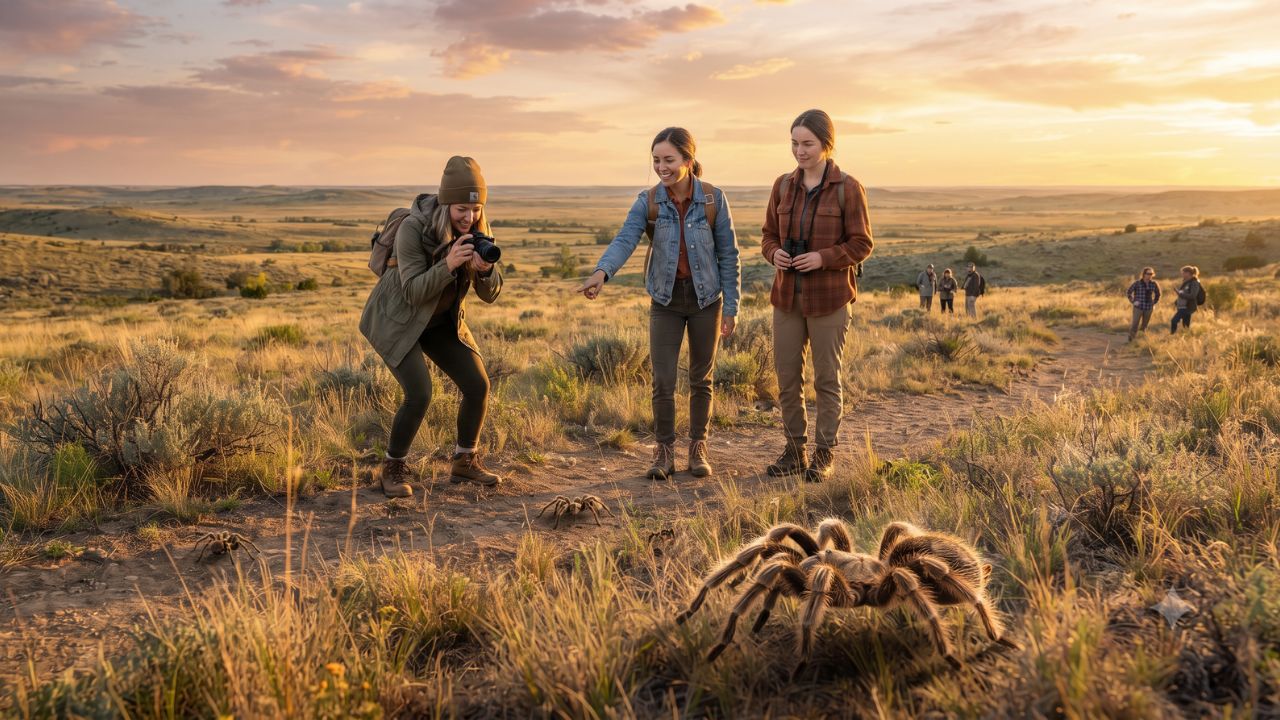
Every autumn across the shortgrass prairies of southeastern Colorado, male tarantulas spend up to a decade living silently underground before emerging on a single, once-in-a-lifetime overland trek across the plains in search of a mate. Centered around the historic agricultural town of La Junta in Otero County, this natural wildlife phenomenon has transformed the expansive expanses of the U.S. Forest Service Comanche National Grassland into one of the most intriguing and unexpected seasonal wildlife destinations in North America.
Running from mid-September through October and often extending into early November during mild autumns, the so-called "tarantula migration" is not a collective exodus to a new wintering habitat. Instead, it is an annual mating expedition undertaken exclusively by mature male Colorado brown tarantulas (Aphonopelma hentzi). Guided by scent and environmental cues, these eight-legged wanderers cross dirt roads, prairie pastures, and sagebrush flats during the golden hour before sunset, creating a wildlife watching experience that requires travelers to cast their gaze directly down at the soil.
The Decade-Long Life Cycle: Science Behind the Trek
Understanding the life cycle of the Colorado brown tarantula reveals why this annual event is so ecologically significant. Research conducted by arachnologists at Eastern Michigan University and entomologists with Colorado State University Extension highlights a remarkable reproductive journey:
- A Decade of Preparation: Male tarantulas live solitary underground lives for eight to ten years, molting repeatedly inside native prairie burrows before developing the tibial hooks and mating anatomy required for their final journey.
- The Mating Expedition: Once mature, males leave their burrows permanently in late September and October, roaming across miles of open prairie to locate the silk-lined underground burrows of stationary females.
- The Sedentary Females: Female tarantulas rarely travel far from their established subterranean burrows, which they can inhabit for up to twenty or thirty years in undisturbed shortgrass ecosystems.
- The Role of Native Grasslands: Agricultural plowing and intensive land cultivation destroy the deep underground burrow networks tarantulas require. The protected, untouched native prairies of the Comanche National Grassland provide the essential conservation sanctuary that sustains the entire regional population.
The growing public interest in this phenomenon culminated in the annual La Junta Tarantula Fest, held on September 25 and 26, 2026. Organized by Visit La Junta, the festival featured educational pavilions, community parades, artisan vendors, and guided tarantula bus tours that sold out in just three minutes, illustrating how an overlooked arachnid has become a celebrated regional tourism icon.
What Makes Southeastern Colorado's Prairie Environment Unique
While most visitors associate Colorado with snow-capped Rocky Mountain peaks, the southeastern corner of the state along the Arkansas River Valley is defined by vast skies, dramatic canyons, and historic pioneer trails.
The Comanche National Grassland encompasses over 440,000 acres of protected shortgrass steppe, where yucca, buffalo grass, and cholla cactus frame sweeping vistas of the Spanish Peaks on the distant western horizon. Within this arid environment, tarantulas share the prairie ecosystem with pronghorn antelope, burrowing owls, swift foxes, and prairie rattlesnakes.
In addition to wildlife watching, travelers can explore deep cultural history. La Junta is home to Bent's Old Fort National Historic Site, a reconstructed 1833 adobe fur-trading post along the Santa Fe Trail where traders, mountain men, and Cheyenne and Arapaho tribes met to trade goods. Southeast of town, the Picket Wire Canyonlands preserve North America's largest continuous dinosaur trackway along the Purgatoire River, featuring over 1,400 fossilized sauropod and theropod footprints embedded in Jurassic limestone.
Visitor Insider Tips for Tarantula Spotting Around La Junta
Maximizing your chances of observing tarantulas in their natural prairie habitat requires precise timing and proper outdoor field etiquette:
- Target the Golden Hour Before Sunset: The prime viewing window occurs between 17:00 and 18:30 (or roughly one hour before dusk) on warm, calm autumn afternoons. Tarantulas are ectothermic and become sluggish during cold snaps, while strong prairie winds drive them to seek shelter in grass clumps.
- Top Viewing Routes: Drive slowly along Colorado State Highway 109 south of La Junta toward the town of Kim, or explore Highway 350 heading southwest toward Timpas. Look for small, dark silhouettes slowly crossing the asphalt or moving along the gravel road shoulders.
- Never Handle or Harass the Spiders: Colorado brown tarantulas are docile and non-aggressive, but when provoked or touched, they kick microscopic urticating hairs from their abdomen that cause painful skin irritation and eye inflammation. Observe them strictly with cameras from a distance of two to three feet.
- Practice Strict Road Safety: When spotting a tarantula crossing a roadway, never stop your vehicle in the middle of a traffic lane or on blind hillcrests. Pull completely off onto the wide dirt shoulder with your hazard flashers engaged before stepping out to observe.
- Respect Private Ranches and Closed Gates: The Comanche National Grassland is a patchwork of public federal parcels intermingled with working cattle ranches. Always respect posted private property boundaries, never open closed pasture gates, and stay on established public rights-of-way.
Cultural and Environmental Context: Changing Perceptions Through Education
For decades, popular media portrayed tarantulas as dangerous desert predators, fostering widespread fear among the public. In southeastern Colorado, university research led by biologists like Professor Cara Shillington is actively transforming fear into conservation fascination through public science education.
By teaching visitors that tarantulas play an essential ecological role as native apex insect predators—controlling grasshopper, cricket, and beetle populations—the local community has turned an arachnid mating season into a vehicle for prairie stewardship.
Travelers consulting Colorado Tourism are encouraged to practice Leave No Trace principles across the grasslands. Preserving native topsoil, avoiding off-road vehicle driving, and supporting local family diners in Otero County ensures that wildlife watching generates lasting economic and ecological benefits for rural Colorado.
FAQ: Seeing the Tarantula Trek in La Junta 2026
When is the best time of year to see tarantulas in La Junta, Colorado?
The best window is from mid-September through late October, with activity peaking during the warm hour before sunset on calm afternoons.
Are Colorado brown tarantulas dangerous to humans or pets?
No. They are docile and their mild venom is comparable to a bee sting, though their defensive abdominal hairs can cause minor skin irritation if handled.
Where is the best place to find tarantulas around La Junta?
The Comanche National Grassland along Colorado Highway 109 and Highway 350 offers the highest concentration of native shortgrass prairie burrows.
What other attractions can I visit near La Junta?
Visitors can explore Bent's Old Fort National Historic Site, the dinosaur tracks at Picket Wire Canyonlands, and the historic Koshare Museum.
As the autumn sun dips below the Colorado horizon, the quiet shortgrass prairie reveals one of the most fascinating wild spectacles on the American plains.
Related Travel Guides
Disclaimer
This article is for informational and educational purposes only. It does not constitute legal, financial, or professional advice. While we strive to provide accurate and up-to-date information, travel policies, regulations, and conditions change rapidly. Always verify information with official sources before making travel decisions. Nomad Lawyer makes no representations about the accuracy, reliability, completeness, or suitability of the information provided. Readers should consult qualified professionals for advice specific to their circumstances. The views expressed in this article are those of the author and do not necessarily reflect the views of Nomad Lawyer.
Naina Thakur
Contributor & Travel Specialist
Travel enthusiast and legal writer covering visa regulations, responsible tourism, and cultural journeys across global destinations.
Learn more about our team →