
Kuwait Airways Istanbul Route Adds Saudi Arabia Stop in Strategic Relaunch
Kuwait Airways relaunches Istanbul flights April 1 with Dammam connection, transforming GCC-Turkey travel options through enhanced regional hub strategy in 2026.

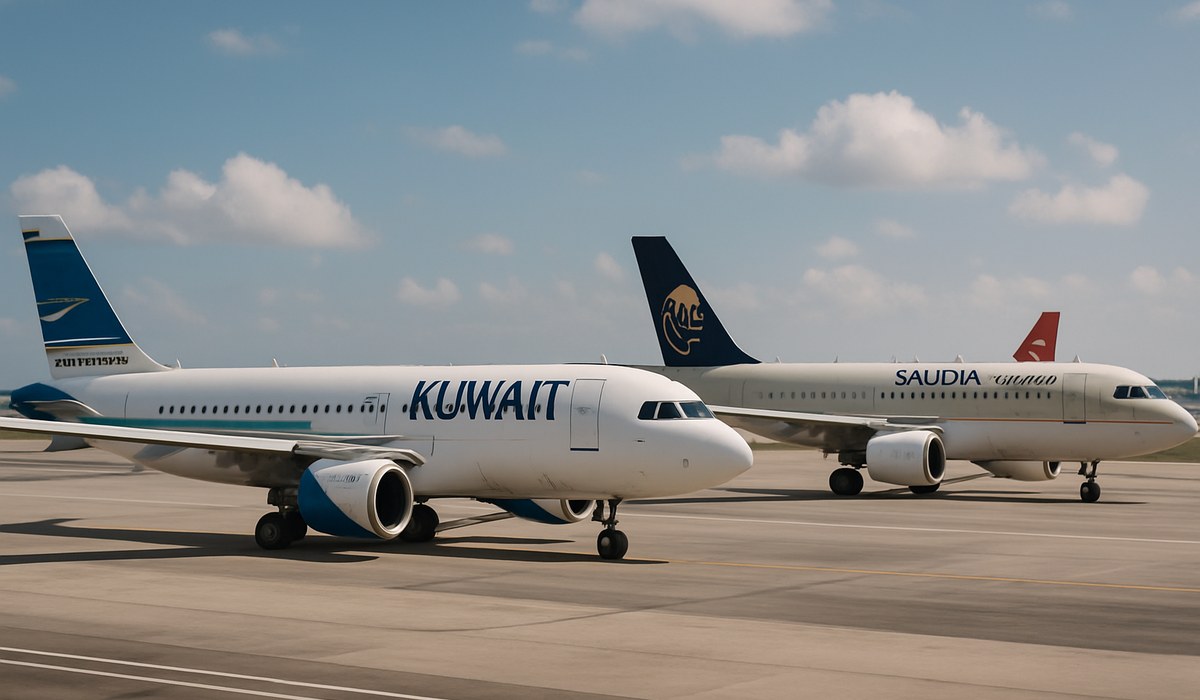
Image generated by AI
Quick Summary • Kuwait Airways restarts Istanbul operations April 1 with mandatory Dammam stopover • Strategic routing targets growing Gulf-Turkey travel demand and Saudi connectivity • Enhanced services include flexible booking dates and expanded regional access • Move positions carrier competitively against regional rivals on lucrative corridor
Starting April 1, travelers between the Gulf and Turkey gain a powerful new routing option as Kuwait Airways relaunches its Istanbul service with a strategic Saudi Arabia stopover that opens unprecedented connectivity across the region. The carrier's decision to route flights through Dammam's King Fahd International Airport marks a deliberate pivot toward multi-stop operations that maximize passenger flow from multiple Gulf Cooperation Council markets.
This Istanbul revival arrives as Middle Eastern aviation experiences robust recovery momentum. According to International Air Transport Association projections, Middle East air travel demand continues accelerating in 2026, with Gulf-Turkey corridors showing particularly strong growth patterns. Kuwait Airways' approach differs markedly from competitors who favor nonstop operations, instead betting that the Dammam connection will capture travelers who value cost efficiency and routing flexibility over flight duration.
Kuwait Airways Istanbul Route: What Travelers Need to Know
The revived service operates as a multi-sector flight pattern connecting Kuwait City (KWI) to Istanbul's main international gateway through King Fahd International (DMM). Passengers originating in Kuwait will board a single flight number that makes an intermediate stop in Dammam before continuing to Turkey. The configuration allows Saudi-based travelers to join the same aircraft for the Istanbul segment, effectively creating dual-market service on one routing.
Industry observers note this operational model reduces Kuwait Airways' financial exposure compared to launching separate Kuwait-Istanbul and Dammam-Istanbul services. The airline can aggregate demand from both cities while maintaining cost efficiency through consolidated crew scheduling and aircraft utilization. Passengers can track real-time flight status and historical performance data through FlightAware as the service launches.
Booking windows open immediately for April 1 departures and beyond. The carrier emphasizes scheduling flexibility with multiple weekly frequencies planned throughout the spring and summer travel seasons. Fare structures reportedly target price-conscious leisure travelers while offering premium cabin options for business passengers who prioritize regional connectivity over journey time.
Turkish tourism authorities project another record-breaking year for Gulf visitor arrivals in 2026. Istanbul remains the top destination for Saudi, Kuwaiti, and broader GCC tourists seeking cultural experiences, shopping opportunities, and business connections. Kuwait Airways positions itself to capture market share from competitors including Turkish Airlines, Flynas, and Jazeera Airways, all of which operate direct or one-stop Gulf-Turkey services.
The Dammam Connection Strategy: Why This Routing Matters
Dammam serves as Saudi Arabia's primary eastern gateway, anchoring the kingdom's petroleum-rich Eastern Province. The city and surrounding region host substantial expatriate populations alongside Saudi nationals with significant disposable income and frequent international travel patterns. By establishing Istanbul connectivity through Dammam, Kuwait Airways taps into this lucrative catchment area while strengthening its presence in the competitive Saudi market.
The strategy reflects broader industry trends toward sixth-freedom traffic rights and multi-hub connectivity. Similar to how Caribbean carriers are forging new partnerships to expand regional reach, Kuwait Airways leverages geography and bilateral agreements to create network advantages. The Dammam stop transforms what could be a simple point-to-point route into a mini-hub operation connecting two distinct Gulf markets with Turkey.
Regional aviation analysts point to Saudi Arabia's Vision 2030 economic diversification plan as context for understanding route developments. The kingdom actively encourages international carriers to expand Saudi connectivity while developing its own national champions. Kuwait Airways' commitment to routing through Dammam aligns with these objectives, potentially smoothing regulatory relationships and securing favorable slot allocations.
Passenger experience differs significantly from nonstop alternatives. Total journey time from Kuwait to Istanbul increases by approximately 90 to 120 minutes compared to direct flights, factoring in the ground stop in Dammam. However, the routing offers distinct advantages for travelers originating in Saudi Arabia's Eastern Province, who gain access to Istanbul without transiting through Riyadh or Jeddah.
Similar innovations reshape aviation across global regions. Just as SriLankan Airlines' AI-powered revenue management system demonstrates how carriers optimize pricing and capacity allocation, Kuwait Airways' multi-stop strategy represents operational sophistication that maximizes aircraft productivity. The approach mirrors techniques used by European low-cost carriers who pioneered multi-sector flying patterns decades ago.
Enhanced Services and Flexible Travel Dates Starting April 1
Kuwait Airways commits to upgraded passenger amenities coinciding with the Istanbul relaunch. Cabin configurations feature refreshed interiors with enhanced entertainment systems and revised meal services reflecting both Gulf and Turkish culinary traditions. The carrier targets business travelers with improved lie-flat seating options in premium cabins, recognizing that corporate passengers frequently book Gulf-Turkey routes.
Flexible booking policies address one of travelers' primary concerns in post-pandemic aviation. The airline permits date changes and cancellations with reduced penalty fees compared to legacy fare structures. This policy flexibility mirrors broader industry shifts toward passenger-friendly terms as carriers compete for loyalty in increasingly crowded markets.
Frequent flyer members of Kuwait Airways' Oasis Club program earn redemption credits on all Istanbul flights, including the Dammam segment. Mileage accrual rates follow standard distance-based calculations, meaning passengers receive credit for the entire journey length rather than just the Kuwait-Istanbul direct distance. Elite status benefits include priority boarding, lounge access in both Kuwait and Dammam, and enhanced baggage allowances.
Ground operations in Dammam receive particular attention given the stopover's strategic importance. Kuwait Airways negotiates dedicated gate positions and streamlined transfer procedures to minimize connection times. Passengers continuing from Dammam to Istanbul typically remain onboard during the brief ground stop, while Saudi-origin passengers board through standard gate procedures.
Cargo capacity represents another dimension of the route's commercial viability. The Istanbul corridor facilitates substantial freight movement between Gulf states and Turkey, ranging from industrial components to perishable goods. Kuwait Airways' multi-stop configuration allows consolidated cargo loading from both Kuwait and Dammam markets, enhancing overall aircraft revenue productivity beyond passenger ticket sales.
Regional Aviation Implications: GCC-Turkey Corridor Growth
The Kuwait Airways announcement arrives amid intense competition for Gulf-Turkey traffic. Turkish Airlines operates extensive Gulf networks through its Istanbul hub, while Saudi carriers including Flynas and the emerging Riyadh Air target Turkish destinations as core network pillars. Kuwait Airways differentiates through pricing strategy and the unique Dammam connectivity angle rather than schedule frequency or flight time advantages.
Market dynamics favor aggressive route expansion across the Middle East in 2026. Bilateral aviation agreements between Gulf states and Turkey permit expanded frequencies and new market entrants. Several low-cost carriers eye Istanbul opportunities, recognizing sustained demand from leisure travelers seeking affordable European-adjacent destinations with visa-friendly policies for GCC nationals.
Tourism flows demonstrate remarkable resilience and growth trajectories. Turkish statistical agencies report that Saudi visitors alone generated over 1.5 million arrivals in 2025, with projections indicating continued double-digit percentage increases through 2026 and beyond. Kuwaiti tourist numbers, while smaller in absolute terms, show equally robust growth patterns. These macro trends underpin airline confidence in expanding capacity despite competitive pressures.
Broader travel industry innovations create synergies with aviation developments. Much like cruise industry connectivity innovations that integrate air, sea, and land transportation modes, Kuwait Airways' multi-stop approach reflects sophisticated thinking about passenger journey patterns. Travelers increasingly value seamless connections and flexible routing over simple point-to-point speed metrics.
Regulatory frameworks continue evolving to accommodate route expansion. Gulf aviation authorities maintain generally liberal stance toward capacity additions on profitable international routes, recognizing aviation's role in economic development and tourism promotion. Turkey reciprocates with favorable bilateral terms, viewing Gulf markets as essential sources of high-spending visitors who support Istanbul's hospitality and retail sectors.
Price competition intensifies as capacity grows. Analysts anticipate downward fare pressure on Gulf-Turkey routes throughout 2026, particularly in economy cabins where leisure travelers demonstrate high price sensitivity. Kuwait Airways' cost structure and network design must deliver competitive pricing while maintaining service quality standards that justify premium positioning versus ultra-low-cost alternatives.
FAQ
When exactly does Kuwait Airways restart Istanbul flights? Service commences April 1, 2026, with booking windows now open for reservations. Initial frequencies target peak travel periods with potential schedule adjustments based on demand patterns through spring and summer seasons.
How long is the stopover in Dammam on flights to Istanbul? Ground time in Dammam typically ranges from 45 to 75 minutes depending on operational requirements and passenger boarding procedures. Through passengers from Kuwait usually remain aboard during this intermediate stop.
Can I book Dammam to Istanbul separately without originating in Kuwait? Yes, the airline sells tickets for the Dammam-Istanbul segment independently, allowing Saudi-based travelers to access the service without transiting through Kuwait. Pricing structures differ between standalone Dammam tickets and through-Kuwait itineraries.
What aircraft types operate this route? Kuwait Airways deploys narrow-body Airbus A320 family aircraft on the Kuwait-Dammam-Istanbul routing, configured with both business and economy class seating. Specific aircraft assignments vary based on operational requirements and maintenance schedules.
Do I need a transit visa for the Dammam stop if I'm staying on the plane? Through passengers remaining aboard during the Dammam ground stop typically do not require Saudi transit visas, as they never formally enter Saudi territory. However, travelers should verify current visa regulations with relevant authorities before booking, as policies occasionally change.
Related Articles:
- SriLankan Airlines Deploys AI Revenue Management for Route Optimization
- Caribbean Carriers Reshape Regional Connectivity Networks
- Travel Industry Conference Spotlights Multi-Modal Journey Innovations
Disclaimer
This article is for informational and educational purposes only. It does not constitute legal, financial, or professional advice. While we strive to provide accurate and up-to-date information, travel policies, regulations, and conditions change rapidly. Always verify information with official sources before making travel decisions. Nomad Lawyer makes no representations about the accuracy, reliability, completeness, or suitability of the information provided. Readers should consult qualified professionals for advice specific to their circumstances. The views expressed in this article are those of the author and do not necessarily reflect the views of Nomad Lawyer.
Preeti Gunjan
Contributor & Community Manager
A passionate traveller and community builder. Preeti helps grow the Nomad Lawyer community, fostering engagement and bringing the reader experience to life.
Learn more about our team →