
Kuwait Airways Halts All Flights After Iran Missile Strikes
Kuwait Airways suspends all operations following Iranian missile and drone attacks on Kuwait International Airport. Thousands stranded as Terminal 1 sustains critical damage.

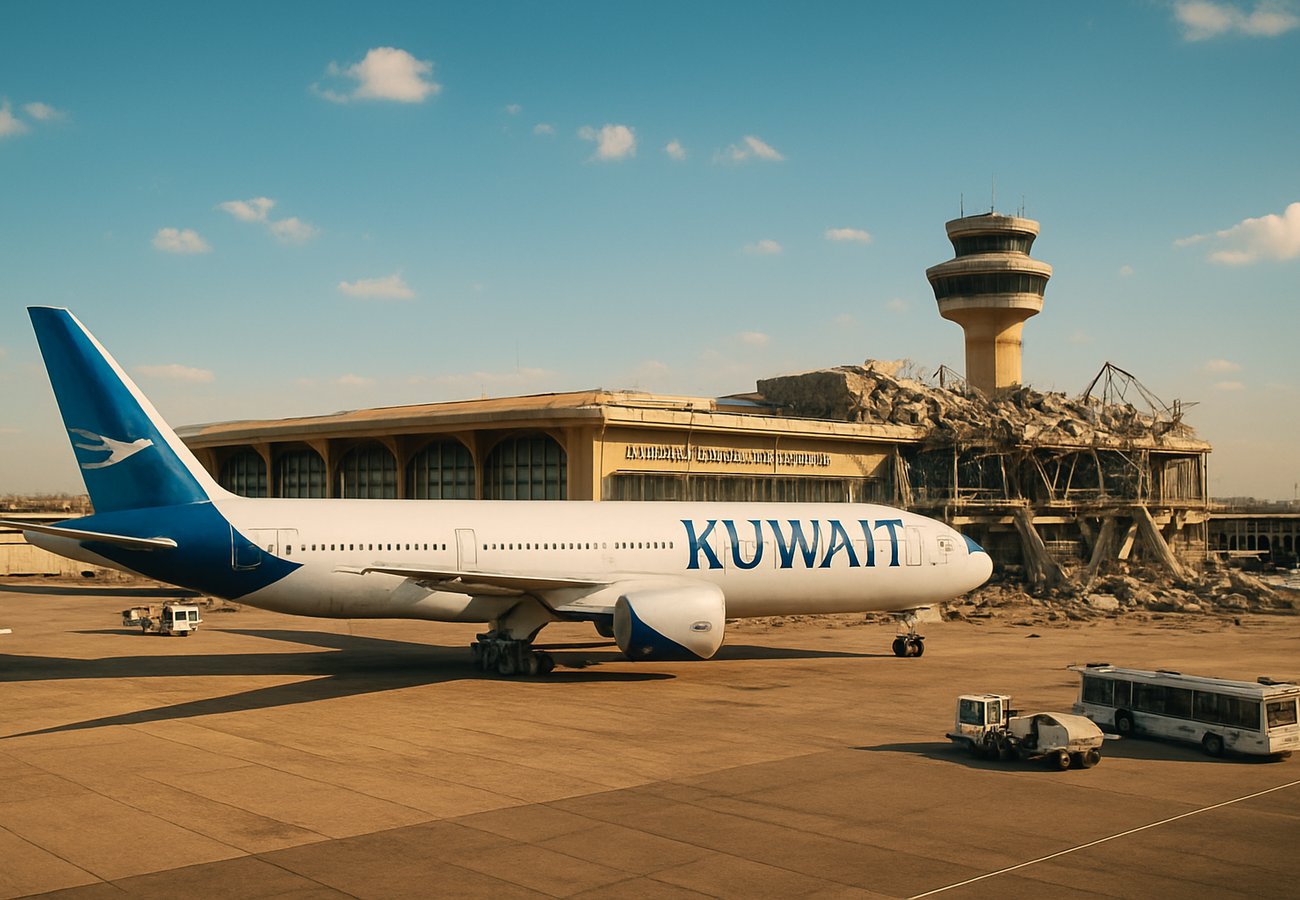
Image generated by AI
The nightmare unfolded in minutes. Kuwait Airways announced a complete suspension of all flight operations after Iranian missiles and drone strikes targeted Kuwait International Airport, leaving thousands of travellers stranded across the Gulf and triggering a cascading crisis through global aviation networks.
What started as a regional military escalation has snowballed into one of the aviation industry's most significant disruptions in 2026. The damage is both physical and systemic—and travellers caught in the crossfire are facing unprecedented uncertainty.
The Attack: Terminal 1 Takes Direct Hits
The primary target was Terminal 1 at Kuwait International Airport, which serves as the main operational hub for Kuwait Airways. Iranian missiles and drones struck critical infrastructure with enough force to render normal airport operations impossible. Departures and arrivals ground to a halt immediately as airport authorities shifted into emergency response mode.
Hundreds of aircraft remain grounded. The tarmac, typically bustling with regional and international carriers, now sits eerily still—a stark visual of the disruption unfolding across the entire Gulf aviation ecosystem.
Airport authorities have not yet released a formal timeline for reopening, citing the need for comprehensive structural assessments and enhanced security protocols before any flights resume.
Safety First: Why the Suspension Makes Sense
Officials didn't hesitate with the decision to ground all operations. When missiles strike an airport, the calculus changes dramatically. Operating departures and arrivals in an active conflict zone isn't a business decision—it's an existential one.
Reddit: "I was supposed to land in Kuwait yesterday. Now I'm stuck in Dubai with 2,000+ other passengers. Airlines have no answers." — r/travel
Kuwait Airways confirmed that operations will remain suspended until conditions stabilize and authorities certify the airspace as secure. This reflects international aviation safety standards, which mandate zero tolerance for operating in compromised conditions. It's the right call, even if it means maximum disruption.
Regional Routes Collapse Under Weight of Reroutes
This isn't just a Kuwait problem anymore. The suspension has triggered a domino effect across the entire Middle Eastern aviation network.
Dubai, Doha, and Manama airports have become emergency hubs, absorbing thousands of redirected passengers. Flights connecting through Kuwait to Europe, Asia, and other Middle Eastern destinations are either cancelled or rerouted—often adding 6-12 hours to journey times.
Airlines operating regional routes are frantically revising flight paths to avoid high-risk airspace. Contingency plans that existed only in emergency playbooks are now live operations. Ground crews at alternative airports are working around the clock to manage the surge.
According to reports from Anadolu Agency, the cascading delays and cancellations are affecting business travel, tourism, and cargo movement simultaneously—a triple blow to the region's connectivity.
Thousands Stranded: The Human Cost
Business travellers with critical meetings now face indefinite delays. Holidaymakers have watched vacation plans evaporate. Returning residents are stuck in limbo, unable to reach home.
The uncertainty is perhaps the worst part. Unlike weather delays—which have predictable windows—geopolitical disruptions offer no clear resolution. Passengers refresh flight status pages compulsively, searching for answers that don't exist yet.
Hotels near alternative airports are fully booked. Rental car companies report unprecedented demand. The entire travel ecosystem surrounding the Gulf is overwhelmed.
Airlines Scramble to Adapt
Major carriers operating in the region are implementing emergency protocols. Kuwait Airways isn't alone—every airline with connections through Kuwait is reconfiguring schedules, rebooking passengers, and absorbing massive financial losses.
Flight paths are being strategically redrawn to avoid the affected airspace entirely. This means longer flight times, higher fuel costs, and reduced capacity as planes take alternative routes that weren't designed for current traffic volumes.
Ground staff are working double shifts. Customer service teams are being flooded with calls from panicked passengers. Airlines are issuing travel waivers and rebooking options, but the sheer volume of affected passengers exceeds their capacity to respond quickly.
Middle East Aviation Infrastructure Exposed
This crisis exposes a uncomfortable truth: regional aviation infrastructure, while modern and sophisticated, remains fragile when exposed to geopolitical volatility.
Kuwait International Airport is a critical hub for the entire Arabian Peninsula and western Asia. When it goes offline, there's no easy workaround. Airlines can reroute, but they can't replicate the capacity or connectivity that Kuwait provides.
The suspension has forced a hard look at aviation resilience. How do airlines and airports prepare for scenarios that involve active military operations? The answer, increasingly, is that they can't—not completely. They can only respond and adapt.
Tourism and Business Travel Take Heavy Hits
The economic impact is immediate and severe. Hotels, car rental companies, restaurants, and tourism operators are experiencing sudden cancellations. Kuwait's reputation as a regional business and leisure destination is taking collateral damage.
Governments across the region are issuing travel advisories, cautioning against non-essential trips. This compounds the problem: fewer people are willing to risk booking flights to or through the affected area, further reducing airline revenue and destination demand.
Global Ripple Effects
The disruption extends far beyond the Gulf. Airlines in Europe and Asia with passengers transferring through Kuwait airports have reported cascading delays. International flights are backed up as the network struggles to absorb the lost capacity.
This is a reminder that modern aviation is a tightly connected system. When one major hub goes offline, the effects propagate globally within hours.
The Road to Recovery
Rebuilding won't be quick. Structural repairs to Terminal 1 need assessment and execution. Security protocols require enhancement. Airspace needs to be certified as safe by military and civil aviation authorities.
The broader challenge is psychological. Passengers will remain hesitant about booking through the Gulf until confidence is visibly restored. Airlines will need to rebuild trust through reliability and transparency.
What Travellers Should Do Right Now
If you're affected: contact your airline immediately. Don't rely on automated systems. Speak to human agents who can offer real alternatives and rebooking options. Be prepared to accept flights through alternative hubs, even if they add time to your journey.
Flexibility is your greatest asset right now. Fixed itineraries and non-refundable bookings will only amplify your pain. Monitor airline announcements obsessively and adjust plans as new information emerges.
For future bookings: the Gulf region remains unstable. Consider whether your trip can wait, or whether alternative routing through other hubs makes sense.
The skies over Kuwait are silent now—a stark reminder that geopolitical reality always trumps flight schedules.
Related Travel Guides
Charlotte Douglas Paralyzed: 378 Cancellations, 372 Delays Strand Thousands
Canadian Travelers Bypass US Entirely as Air Canada Capitalizes on Cross-Border Shift—Here's Why
Disclaimer
This article is for informational and educational purposes only. It does not constitute legal, financial, or professional advice. While we strive to provide accurate and up-to-date information, travel policies, regulations, and conditions change rapidly. Always verify information with official sources before making travel decisions. Nomad Lawyer makes no representations about the accuracy, reliability, completeness, or suitability of the information provided. Readers should consult qualified professionals for advice specific to their circumstances. The views expressed in this article are those of the author and do not necessarily reflect the views of Nomad Lawyer.
Kunal K Choudhary
Co-Founder & Contributor
A passionate traveller and tech enthusiast. Kunal contributes to the vision and growth of Nomad Lawyer, bringing fresh perspectives and driving the community forward.
Learn more about our team →