
KLM's 2026 Global Expansion Strategy: Amsterdam Becomes Central Hub Linking Europe to Asia, Africa, Americas and Caribbean Tourism Routes
KLM expands 2026 network across 165+ destinations in 70+ countries, launching new routes to Santiago de Compostela, Austin, Portland while restoring daily Asia services to Tokyo, Bangkok, Singapore, and strengthening Africa connectivity through Nairobi and Cape Town.

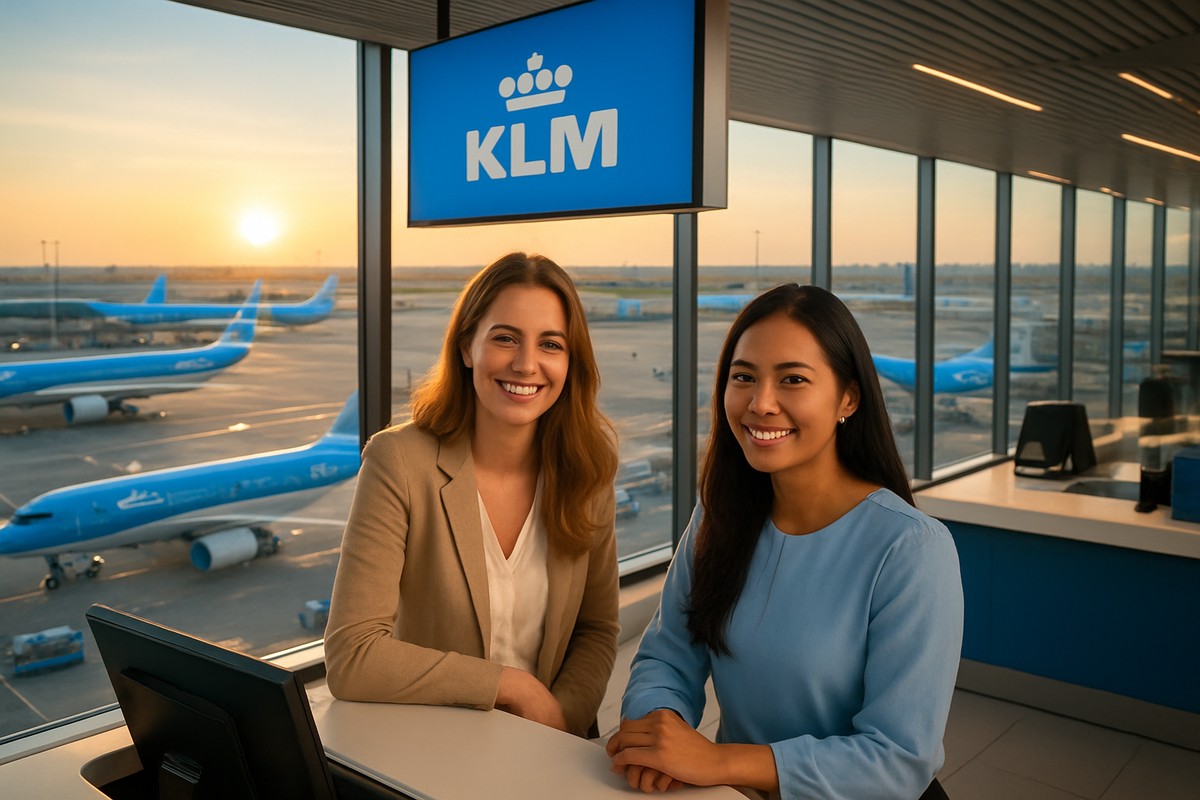
Image generated by AI
KLM's 2026 Global Expansion Strategy: Amsterdam Becomes Central Hub Linking Europe to Asia, Africa, Americas and Caribbean Tourism Routes
Dutch Flag Carrier Launches Strategic Network Across 165+ Destinations as International Travel Demand Surges
Amsterdam—Royal Dutch Airlines (KLM) is aggressively expanding its 2026 international network, positioning Amsterdam Airport Schiphol as a critical global aviation nexus connecting Europe, Asia, Africa, the Caribbean and North America. The expansion encompasses 165+ destinations across 70+ countries, with strategic new routes to Santiago de Compostela, Austin, Portland and restored daily operations to Tokyo, Bangkok, Singapore, and African hubs in Nairobi and Cape Town.
The ambitious expansion reflects surging post-pandemic tourism demand and positions KLM as a dominant player in reconnecting global leisure, business and religious pilgrimage travel flows through Europe's northern gateway.
Global Expansion Scope: 165+ Destinations, 70+ Countries, 115-Aircraft Fleet
KLM's 2026 operational footprint represents one of Europe's most comprehensive international networks. The airline operates approximately 115 aircraft serving destinations spanning six continents, with particular emphasis on restoring and expanding intercontinental capacity following the post-pandemic aviation recovery.
The network expansion reflects a deliberate strategy to balance dense European short-haul services—particularly across Spain, France, Germany, Italy and the Mediterranean—while simultaneously rebuilding long-haul operations devastated during the pandemic. Key strategic partnerships with Delta Air Lines (North America) and Air France (global network) amplify KLM's reach beyond its independent capacity.
The flagship Airbus A350-900, gradually replacing aging Airbus A330 and Boeing 777-200 aircraft, anchors KLM's modernization strategy. A 10% Sustainable Aviation Fuel (SAF) blend target demonstrates environmental commitment aligned with EU sustainability mandates.
Amsterdam-Santiago de Compostela: Religious Tourism Meets Regional Connectivity
KLM's newest strategic route highlights the airline's emerging focus on pilgrimage and cultural tourism markets. The Amsterdam (AMS) to Santiago de Compostela (SCQ) service operates 3–4 times weekly during May 2026, primarily using the regional Embraer 195-E2 aircraft operated under the KLM Cityhopper banner.
| Route Details | Information |
|---|---|
| Aircraft Type | Embraer 195-E2 |
| Flight Frequency | 3–4 weekly |
| Flight Duration | Approximately 2 hours 35 minutes |
| Estimated Round-Trip Fare | €180–€260 |
| Primary Travel Driver | Camino de Santiago pilgrimage season |
The route directly targets Europe's religious and cultural tourism boom. Santiago de Compostela, Spain's third-holiest Christian pilgrimage destination after Rome and Jerusalem, attracts thousands of annual pilgrims walking the historic Camino de Santiago trail. The seasonal service capitalizes on spring-summer peak pilgrimage demand while strengthening KLM's presence in Spain's growing tourism market.
This regional strategy demonstrates KLM's recognition that post-pandemic travel increasingly values authentic, cultural and religious experiences alongside traditional beach and business travel segments.
North American Expansion: Austin, Portland Lead Growth Markets
KLM is significantly increasing transatlantic capacity through expanded services to emerging U.S. destinations Austin and Portland, reflecting the airline's recognition that secondary American cities now rival traditional gateways for business and leisure traffic.
| Destination | Service Highlights |
|---|---|
| Austin (AUS) | Increased frequency |
| Portland (PDX) | Expanded connectivity |
| Buenos Aires (EZE) | Daily flights |
| Santiago (SCL) | Daily operations |
| Curaçao (CUR) | Expanded Caribbean network |
| St. Maarten (SXM) | Boeing 787-10 Dreamliner deployment |
Austin has emerged as a global technology and startup hub, attracting KLM's business-class traffic. Portland's appeal extends to both leisure and remote-work demographics seeking Pacific Northwest access. Simultaneously, KLM maintains robust South American operations with daily service to Buenos Aires and Santiago, supporting both leisure tourism and lucrative business segments.
The Caribbean network, serviced increasingly by fuel-efficient Boeing 787-10 Dreamliners, captures beach-tourism demand from European leisure travellers, with particular emphasis on Dutch Caribbean territories like Curaçao and St. Maarten, which maintain cultural and economic ties to the Netherlands.
Asia Recovery: Daily Operations Restored to Tokyo, Osaka as Japanese Tourism Rebounds
Asia remains KLM's strategic long-haul priority. Daily service restoration to Tokyo Narita (NRT) and Osaka Kansai (KIX) reflects Japan's sustained tourism recovery and growing outbound travel demand from Japanese business professionals and leisure travellers.
| Destination | Operational Status |
|---|---|
| Tokyo (NRT) | Daily service restored |
| Osaka (KIX) | Daily operations |
| Bangkok (BKK) | Core Southeast Asia hub |
| Singapore (SIN) | Regional feeder hub |
| Bali (DPS) | Connected via Singapore |
Singapore's strategic role as a Southeast Asia feeder hub allows KLM to maximize aircraft utilization while offering convenient connections to Bali, Indonesia's primary tourism destination. Bangkok remains one of KLM's strongest leisure destinations, driven by consistent European demand for Thai beach tourism, cultural experiences and culinary travel.
The restoration of daily Asian operations signals confidence in sustained post-pandemic tourism demand and represents a critical revenue driver for KLM's long-haul profitability.
India: Triple-Daily Service Supports Business, Education and Technology Sectors
India generates exceptional passenger traffic for KLM through triple-daily services to Delhi, Mumbai and Bengaluru. This frequency density reflects India's diverse traffic composition: technology sector employees, business travellers, students and family visitors maintaining connections between Europe and India.
KLM's India strategy prioritizes metropolitan gateways with strong economic activity, educational institutions and diaspora populations. The emphasis on multiple daily frequencies—exceeding typical leisure-route patterns—demonstrates KLM's recognition of India as a strategic, high-yield market with consistent year-round demand rather than seasonal tourism fluctuations.
Africa: East African Safari Tourism and South African Gateway Operations
KLM continues expanding African operations, particularly in East and Southern Africa, where tourism demand and business connectivity justify daily frequencies.
| Destination | Service Pattern |
|---|---|
| Nairobi (NBO) | Daily flights |
| Entebbe (EBB) | Daily service |
| Cape Town (CPT) | Long-haul operations |
| Johannesburg (JNB) | Major regional hub |
Nairobi's daily service captures East African safari tourism demand from European leisure travellers, while Johannesburg functions as a regional hub for South African and southern African connectivity. Cape Town's long-haul operations serve both leisure tourism (Cape Town's reputation as a premier global destination) and business travel to South Africa's economic capital.
These routes represent KLM's strategic positioning as Europe's primary African gateway, supporting both tourism revenue and emerging business opportunities across the continent.
Sustainability and Fleet Modernization: Environmental Goals Drive 2026 Operations
KLM's 2026 expansion occurs within an increasingly stringent environmental regulatory framework. The airline targets 10% SAF blend across operations—a significant commitment aligned with EU Aviation Single European Sky framework mandates.
Fleet modernization through Airbus A350-900 and Boeing 787-10 deployment directly supports fuel efficiency improvements. The A350-900's 25% fuel efficiency advantage over aging A330 aircraft and the 787-10's superior long-range economics create operational advantages while reducing carbon emissions per passenger-kilometer—a critical metric for European sustainability oversight.
Simultaneously, KLM maintains one of Europe's strongest punctuality records among major international carriers, balancing expansion with operational reliability essential for premium leisure and business segments.
Global Tourism Recovery Dynamics: Amsterdam as International Nexus
KLM's 2026 expansion fundamentally reflects the geography of post-pandemic travel recovery. Tourism demand has rebounded unevenly across global markets: Asia (driven by Japanese, Korean and Indian markets) shows particularly strong growth; European leisure tourism targets Mediterranean, Iberian and Alpine destinations; Caribbean tourism rebounds as cruise and beach markets normalize; African tourism grows among wealthy European demographics seeking safari and cultural experiences.
Amsterdam Schiphol positions itself as the intersection of these travel flows. A pilgrimage-bound traveller departs Amsterdam for Santiago de Compostela. A technology professional connections Amsterdam to Austin or Austin to Bangalore. A leisure traveller transits Amsterdam toward Tokyo or Cape Town. This hub-and-spoke efficiency generates KLM's revenue through connectivity fees and premium long-haul operations.
The expansion simultaneously reflects KLM's strategic positioning against competitors. Lufthansa (Frankfurt), Air France (Paris), Ryanair (pan-European) and Gulf carriers (Doha, Abu Dhabi, Dubai hubs) all compete for identical passenger flows. KLM's emphasis on restoring daily Asian operations, expanding Caribbean capacity and introducing regional European routes (Santiago de Compostela) represents defensive and offensive competitive positioning.
Industry Analysis: Post-Pandemic Capacity Rebalancing and Fuel Economics
KLM's 2026 expansion reflects broader aviation industry dynamics. Long-haul capacity removal during 2020-2021 created artificial scarcity and elevated fares across 2022-2024. As carriers restore capacity, yield compression (lower fares) becomes inevitable, requiring volume growth through frequency expansion and network breadth to maintain profitability.
Simultaneously, sustainable aviation fuel economics remain challenged. SAF currently costs 200-300% more than conventional jet fuel. KLM's 10% SAF target (likely 40-50% of long-haul operations) represents significant cost absorption, requiring strong premium passenger demand to maintain profitability.
The expansion also reflects labor market dynamics. KLM's growth requires pilot, flight attendant and ground staff recruitment—increasingly challenging across Europe given post-pandemic labor shortages and regional salary competition.
Operational Outlook: 2026-2027 Trajectory and Risk Factors
KLM's expansion assumes sustained international travel demand and stable fuel prices. Recession risks—particularly across Europe given economic uncertainty—could reduce demand for leisure and business travel. Geopolitical instability (Middle East tensions, Russia-Ukraine dynamics) could disrupt routes and increase security costs.
However, structural demand drivers remain robust: Asia's growing middle class, India's technology sector expansion, European retirement tourism, safari/adventure travel demand and religious pilgrimage all demonstrate resilience across economic cycles. KLM's diversified geographic portfolio mitigates single-market risks.
The 2026 expansion positions KLM for sustained growth through 2027-2028 as global travel normalization continues and environmental regulations increasingly favor efficient, modern aircraft operated by carriers demonstrating sustainability commitment.
Conclusion: Amsterdam's Ascent as Global Aviation Gateway
KLM's 2026 global expansion represents more than route additions; it reflects Amsterdam's emergence as one of the world's most strategically important aviation nexuses connecting European tourism source markets with Asian, African and Caribbean destinations. Through 165+ destinations across 70+ countries, the airline is systematically rebuilding global connectivity disrupted by pandemic while positioning itself for long-term growth aligned with environmental, technological and geopolitical realities.
As international travel demand continues normalizing, KLM's balanced strategy—maintaining dense European networks, restoring Asian capacity, expanding emerging markets in Americas and Africa, and committing to sustainability—positions the airline as a critical infrastructure player in the post-pandemic global aviation ecosystem. Amsterdam Schiphol, facilitated by KLM's network investment, strengthens its position as Europe's primary long-haul gateway competing with Frankfurt, Paris and London for international tourism and business connectivity leadership.
Key Takeaways
- Network Scale: KLM operates 165+ destinations across 70+ countries with approximately 115 aircraft
- Strategic New Routes: Amsterdam-Santiago de Compostela captures religious pilgrimage tourism; Austin and Portland expansions target emerging U.S. markets
- Asia Restoration: Daily operations restored to Tokyo, Osaka reflecting Japanese tourism recovery; Singapore hub supports Southeast Asia network
- India Priority: Triple-daily service to Delhi, Mumbai, Bengaluru serves technology, business and diaspora segments
- African Growth: Daily flights to Nairobi, Entebbe, Johannesburg and Cape Town support safari tourism and regional connectivity
- Sustainability: 10% SAF blend target and A350-900/787-10 fleet modernization align with EU environmental mandates
- Competitive Positioning: Expansion strategy positions Amsterdam Schiphol as Europe's leading long-haul gateway competing against Frankfurt, Paris, London hubs
- Tourism Recovery: Expansion reflects diverse post-pandemic travel demand: pilgrimage, beach leisure, business travel, adventure tourism and cultural experiences
Related Travel Guides
Disclaimer
This article is for informational and educational purposes only. It does not constitute legal, financial, or professional advice. While we strive to provide accurate and up-to-date information, travel policies, regulations, and conditions change rapidly. Always verify information with official sources before making travel decisions. Nomad Lawyer makes no representations about the accuracy, reliability, completeness, or suitability of the information provided. Readers should consult qualified professionals for advice specific to their circumstances. The views expressed in this article are those of the author and do not necessarily reflect the views of Nomad Lawyer.
Kunal K Choudhary
Co-Founder & Contributor
A passionate traveller and tech enthusiast. Kunal contributes to the vision and growth of Nomad Lawyer, bringing fresh perspectives and driving the community forward.
Learn more about our team →