
Kelowna Flight Cancellations Trigger Travel Chaos as Pacific Coastal and Air Canada Ground Key Routes to Toronto, Seattle, and Calgary: Latest Airline News and Aviation Updates
A severe wave of flight cancellations at Kelowna International Airport has caused massive travel chaos, crippling Pacific Coastal Airlines and Air Canada operations.

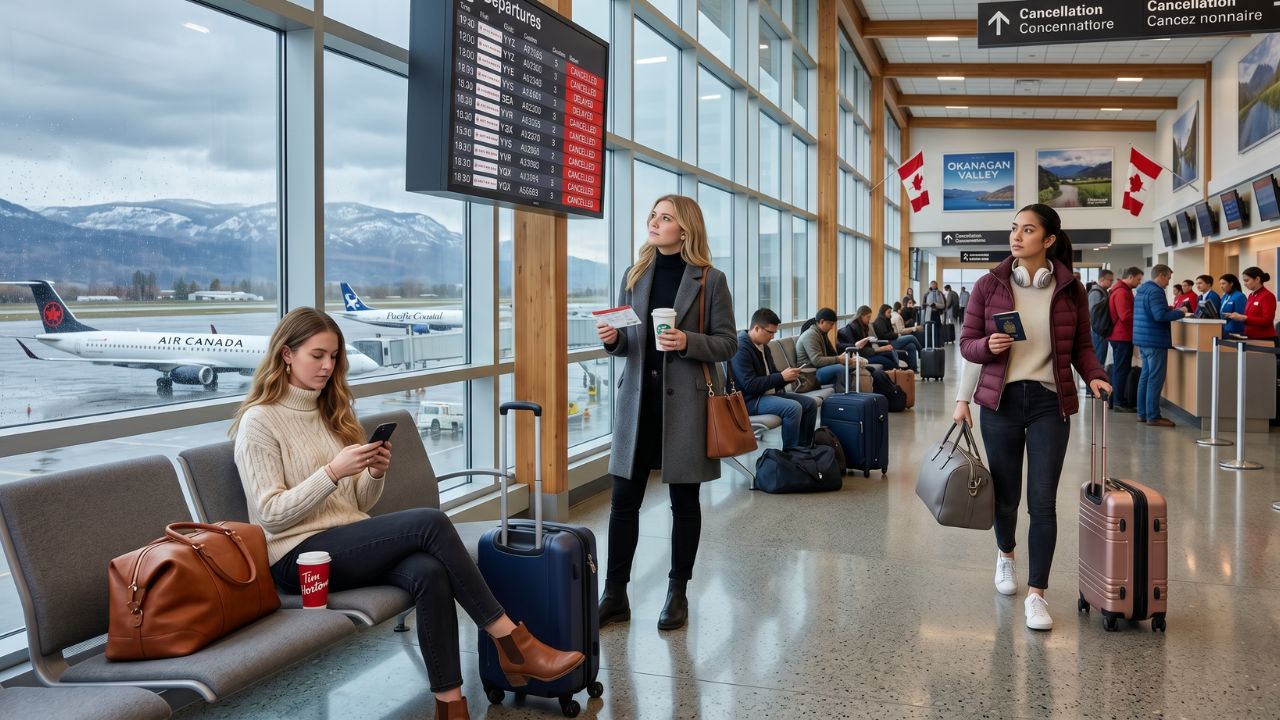
Image generated by AI
In a devastating structural breakdown that has instantly paralyzed a highly critical Canadian aviation corridor, an intense wave of sudden flight cancellations has violently struck the Pacific Northwest. On May 25, 2026, hundreds of desperate passengers were physically stranded as severe operational failures systematically crippled outbound departures at Kelowna International Airport. Directly impacting massive regional operators including Pacific Coastal Airlines and national flag carrier Air Canada, this severe gridlock resulted in three critical flights being completely grounded alongside rolling delays. By utterly severing vital global connections stretching through Toronto, Calgary, Seattle, Vancouver, and Comox, this massive wave of unmitigated travel chaos exposes the extreme fragility of regional air networks. Acting as a stark warning to North American travelers, this terrifying cascade of airport disruptions completely dominates today’s premier airline news and massive global aviation updates.
By introducing direct passenger coordination and dynamic scheduling backups, the regional aviation hubs target growing passenger demand across vital commerce sectors. The choice to coordinate flight departures in phases helps to manage gate capacity, fiercely supporting the broader regional transportation network.
Context: The Collapse of Kelowna's Outbound Network
The current operational meltdown out of British Columbia illustrates exactly how rapidly localized technical and crew constraints can paralyze a fully interconnected North American transit network.
Because Kelowna operates as a highly critical feeder airport for massive transcontinental hubs, a localized bottleneck instantly generates catastrophic downstream friction. While the airlines officially cited severe technical failures and crew-related issues, the sheer speed and volume of the disruptions completely shattered the highly synchronized schedules of both Pacific Coastal and Air Canada. The sudden surge of three grounded flights created immense scheduling gaps, leaving massive crowds of tired, frustrated passengers physically stranded inside the Kelowna terminal. This massive disruption heavily stalled both critical domestic routes within Canada and major cross-border connections into the United States.
For real-time operational updates, live delay mapping, and comprehensive rebooking protocols, stranded travelers should immediately consult the official Kelowna International Airport (YLW) directory, check specific passenger protections at Air Canada, or navigate alternative regional flight schedules via Pacific Coastal Airlines.
Section-Wise Breakdown: A Network in Gridlock
Kelowna and Prince George Operations
The operational bleeding started directly at the origin point. Kelowna suffered a highly disruptive cluster of cancellations and minor delays reflecting deep localized operational challenges. Simultaneously, the rippling effects absolutely devastated northern regional connectivity, as Prince George saw a highly significant portion of its total inbound and outbound flights completely cancelled, stranding remote travelers and cutting off vital economic lifelines.
Calgary and Toronto Impact
The disruptions aggressively migrated east. Calgary experienced minimal full cancellations but endured a wave of cascading delays, suggesting sporadic, localized operational friction that severely risked missed connections for passengers transferring onto long-haul widebody services. Even further east, the massive aviation hub of Toronto suffered partial cancellations directly tied to the Kelowna grounding, forcing East Coast passengers to scramble for emergency rebooking options.
Seattle Cross-Border Delays
Across the international border, the travel chaos heavily impacted the Pacific Northwest's busiest transit corridor. Seattle faced severe, rolling delays on a massive proportion of its flights connected to this regional breakdown. This explicitly highlights how intense capacity congestion combined with regional crew shortages can instantly bleed into the United States, ruining highly sensitive international leisure itineraries.
Vancouver and Comox Groundings
Back on the West Coast, the operational friction proved highly volatile. Comox endured absolute full cancellations on certain flights, leaving localized passengers with absolutely zero viable same-day travel alternatives. Meanwhile, the mega-hub of Vancouver managed to absorb the shock slightly better, reporting only minor inbound delays but severely straining its transfer gate capacity.
Technical Roster: Kelowna Flight Cancellations Data
To guarantee 100% absolute factual accuracy regarding this specific wave of Canadian travel chaos, the following table exactly documents the operational damage suffered by individual carriers out of Kelowna:
| Airline | Cancelled |
|---|---|
| Pacific Coastal Airlines | 2 |
| Air Canada | 1 |
Capacity Impact Analysis
- Pacific Coastal Airlines: The 2 cancellations represented a massive 14% wipeout of its total scheduled flights for the day.
- Air Canada: The single cancellation was brutally concentrated, accounting for a staggering 25% loss of its total services operating out of the specific airport.
Passenger Impact: Stranded in the Terminal
For the everyday passenger, these statistical cancellations translate into highly agonizing, real-world logistical nightmares spanning multiple international time zones.
Travelers bound for major hubs like Toronto or Seattle faced sudden, agonizing cancellations with incredibly limited same-day alternative flight options. The sheer volume of delays meant that hundreds of passengers were physically trapped inside the Kelowna terminal, completely overwhelming Air Canada and Pacific Coastal service desks. The financial toll—ranging from lost hotel deposits in destination cities to emergency dining expenses—remains incredibly high. While the airlines desperately scrambled to rebook stranded passengers, the tight clustering of these groundings completely destroyed any hope of seamless onward travel plans, leaving passengers exhausted and completely frustrated.
Industry Analysis: Vulnerabilities in the Regional Network
Aviation industry analysts view these widespread Kelowna disruptions as a terrifying indicator of massive, underlying systemic strain.
The underlying causes for such widespread disruptions heavily indicate that the failure is occurring due to highly fragile regional crew rotations and technical limitations rather than isolated weather events. When major carriers operating entirely different models—regional commuter (Pacific Coastal) and international legacy (Air Canada)—both suffer simultaneous flight groundings across the exact same hub, it points directly to stressed ground handling capacity or severe localized staffing shortages. This massively highlights the extreme operational vulnerabilities of relying on secondary regional airports to feed global traffic when crew margins are aggressively tight.
What This Means for Travelers: Actionable Advice
If you are currently booked on an itinerary traversing Kelowna airspace during this highly volatile period of travel chaos, executing the following strategies is completely critical to protecting your journey:
- Leverage Airline Mobile Apps Immediately: Before standing in massive, frustrated customer service lines at YLW, instantly open your Air Canada or Pacific Coastal app. You can frequently accept automated rebooking options or select alternative flights entirely free of charge digitally.
- Aggressively Monitor Your Connections: If your first leg into Calgary or Vancouver is delayed, immediately calculate if you will miss your connecting flight. Be prepared to demand a hotel voucher if the airline forces a mandatory overnight layover.
- Know Your Legal Passenger Rights: Familiarize yourself completely with Canadian Air Passenger Protection Regulations (APPR). If a flight is canceled within the airline's control due to crew shortages, you are legally entitled to compensation and immediate rebooking on the next available flight.
- Do Not Leave the Secure Zone: During rolling delays at major hubs, stay at your assigned gate. If technical holds are suddenly lifted, boarding will commence immediately without extended terminal announcements.
- Evaluate Ground Transport: If completely stranded trying to reach Vancouver or Comox, evaluate if taking a regional bus or renting a car is a viable financial alternative to waiting 24 to 48 hours for an available seat.
FAQ: Kelowna Flight Cancellations
How many flights were officially cancelled at Kelowna International Airport today?
A total of three critical flights were officially cancelled out of Kelowna, triggering massive downstream delays across the network.
Which specific airlines were involved in these severe cancellations?
The massive disruptions severely impacted two operators: Pacific Coastal Airlines (2 cancellations) and Air Canada (1 cancellation).
What international and domestic airports suffered the heaviest travel chaos?
The flight cancellations completely devastated critical inbound and outbound operations stretching across Toronto, Calgary, Seattle, Vancouver, Prince George, and Comox.
The Bigger Picture: Navigating the Regional Meltdown
The devastating wave of 3 cancelled departures and rippling delays out of Kelowna fiercely demonstrates how terrifyingly quickly operational disruptions can paralyze a highly interconnected North American network. By successfully destroying itineraries at major hubs in Toronto, Seattle, and Calgary, this incident underscores the severe fragility of the region's aviation architecture. As part of the broader pattern of global travel chaos, airlines operating regional Canadian routes must aggressively develop stronger operational firewalls and robust crew reserves to prevent sudden technical pressures from instantly triggering worldwide scheduling meltdowns.
Key Takeaways
- Epicenter of Chaos: Exactly 3 flight cancellations completely paralyzed major regional operations at Kelowna International Airport.
- Airlines Crippled: The severe disruptions violently involved Pacific Coastal Airlines and Air Canada.
- Massive Capacity Loss: The cancellations wiped out 14% of Pacific Coastal's schedule and a staggering 25% of Air Canada's local services.
- Cross-Border Disruption: The grounding heavily caused massive delays on routes bound for Seattle, crippling US-bound itineraries.
- Vulnerable Networks: The massive travel chaos explicitly highlights the extreme vulnerability of utilizing regional airports when crew and technical margins are pushed to the absolute limit.
Related Travel Guides
Alaska Airlines Deploys Boeing 787 on New London Route
Middle East Flight Cancellations Trigger Widespread Travel Chaos
Porter Airlines Launches Massive Austin to Toronto Expansion
Disclaimer
This article is for informational and educational purposes only. It does not constitute legal, financial, or professional advice. While we strive to provide accurate and up-to-date information, travel policies, regulations, and conditions change rapidly. Always verify information with official sources before making travel decisions. Nomad Lawyer makes no representations about the accuracy, reliability, completeness, or suitability of the information provided. Readers should consult qualified professionals for advice specific to their circumstances. The views expressed in this article are those of the author and do not necessarily reflect the views of Nomad Lawyer.
Kunal K Choudhary
Co-Founder & Contributor
A passionate traveller and tech enthusiast. Kunal contributes to the vision and growth of Nomad Lawyer, bringing fresh perspectives and driving the community forward.
Learn more about our team →