
Kazakhstan to Expand National Parks by 20,000 Square Kilometers as Central Asia Bets Big on Eco-Tourism and Wildlife Conservation
Kazakhstan is heavily targeting the international eco-tourism market with an ambitious plan to expand its protected national parks to 332,000 square kilometers by 2035. The expansion will protect endangered snow leopards and introduce new glamping and adventure infrastructure across the Altai Mountains and Charyn Canyon.

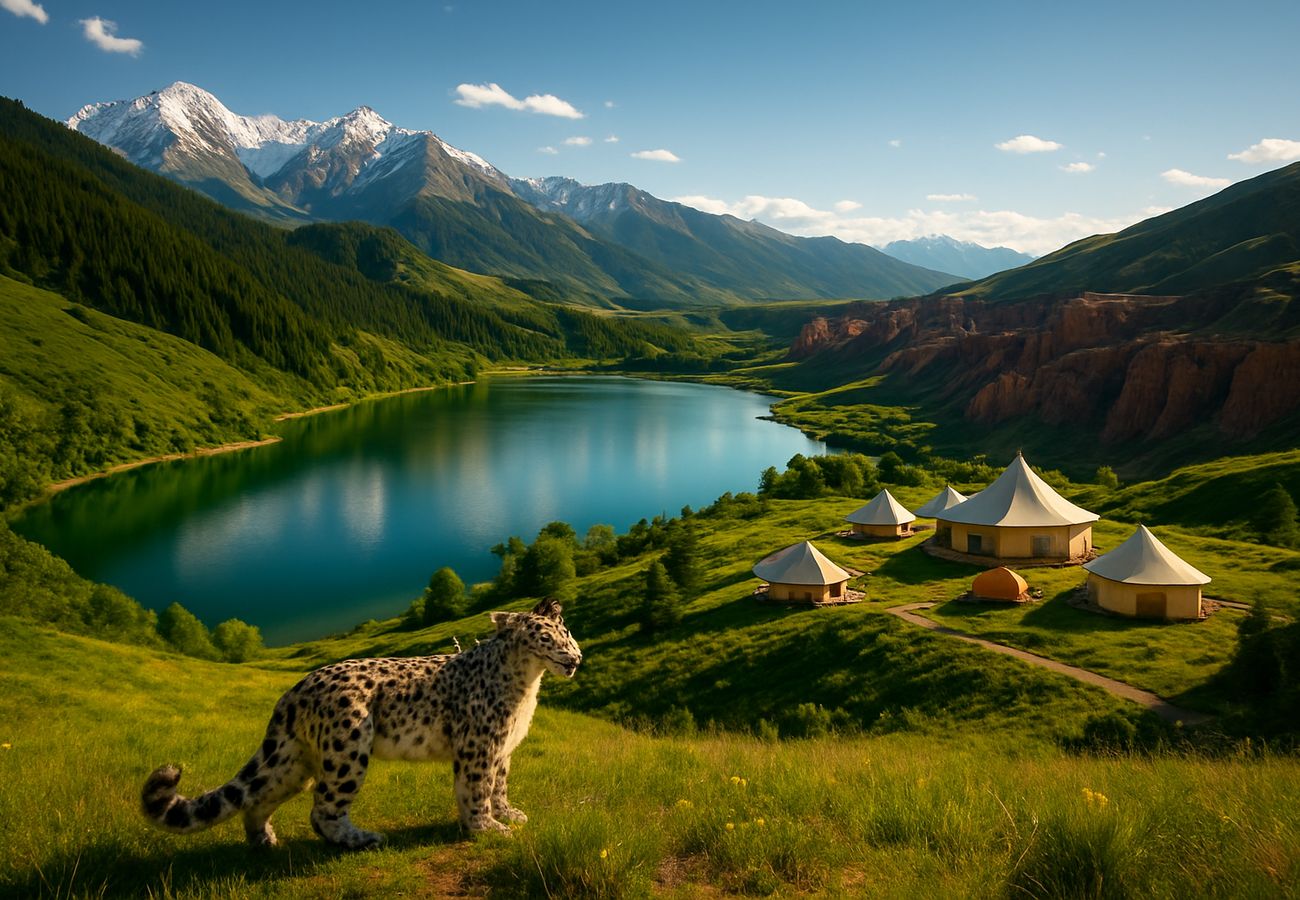
Image generated by AI
Kazakhstan to Expand National Parks by 20,000 Square Kilometers as Central Asia Bets Big on Eco-Tourism and Wildlife Conservation
With Protected Lands Set to Eclipse the Size of Poland and Italy Combined, the Bold 2035 Concept Aims to Protect Endangered Snow Leopards While Building Vast New Glamping and Hiking Networks
ASTANA, Kazakhstan — Central Asia’s largest nation is making a monumental pivot toward environmental preservation and high-value adventure tourism. Kazakhstan has officially unveiled ambitious plans to drastically expand its national park network, committing to protecting an additional 20,000 square kilometers of wild landscapes over the next decade. Driven by the newly established Concept for the Conservation and Sustainable Use of Biological Diversity for 2026-2035, the initiative will bring the country’s total protected area to an astonishing 332,000 square kilometers — an ecological footprint larger than Poland and Italy combined. The move is a strategic economic play to position Kazakhstan as the world’s next great frontier for sustainable eco-tourism, wildlife tracking, and wilderness adventure.
Quick Summary
- The Expansion: Kazakhstan will add 20,000 square kilometers of protected national park territory by 2035.
- Total Protected Area: The network will encompass 332,000 square kilometers.
- Tourism Infrastructure: The government is actively funding new visitor centers, glamping sites, and hiking trails across key regions like Ile-Alatau and the Kolsai Lakes.
- Wildlife Conservation: Critical habitats will be fortified for endangered species, including the snow leopard, Bukhara deer, and Przewalski’s horse.
- Forestry & Restoration: The plan includes recovering 8,000 square kilometers of forest and planting saxaul trees in the arid Aral Sea basin to combat desertification.
Unlocking Central Asia's Hidden Landscapes
Historically overlooked by mainstream western travelers, Kazakhstan possesses a staggering geographic diversity ranging from the endless sweep of the Eurasian steppe to dense alpine forests. The new conservation master plan seeks to monetize these natural assets sustainably by opening them up to the booming global eco-tourism market.
The expansion will bolster protection and accessibility around some of the nation's most jaw-dropping, yet under-visited, natural sites:
- Charyn Canyon: Often compared to the American Grand Canyon, its dramatic red sandstone cliffs are a primary target for expanded trekking routes.
- The Altai Mountains: A pristine, rugged alpine range bordering Russia and China, ideal for high-altitude hiking and horseback riding.
- Kaindy Lake: Famous for the ghostly, submerged forest of spruce trees rising directly out of its striking turquoise waters.
- The Tian Shan Range and Kolsai Lakes: The focal points for new eco-friendly visitor centers and high-end outdoor hospitality.
Building the Eco-Tourism Infrastructure
Designating land as a national park is only the first step; making it accessible and attractive to international tourists requires heavy logistical investment. To avoid the destructive pitfalls of mass tourism, Kazakhstan is leaning entirely into sustainable development.
The government has confirmed the rollout of enhanced tourism infrastructure carefully integrated into the wilderness. This includes the widespread development of eco-villages — remote, sustainable communities where travelers can experience traditional Kazakh rural life with a minimal carbon footprint. For the luxury and adventure markets, a network of new glamping sites is being established, complemented by comprehensive trail marking, improved navigation signposting, and the construction of modern visitor and educational centers.
Furthermore, to maintain authenticity, local guides are receiving increased training to lead specialized, low-impact tours — ranging from multi-day hikes and birdwatching to experiencing indigenous cultural practices like traditional eagle hunting.
A Mega-Project in Biodiversity and Ecological Restoration
At its core, the 2035 framework is an aggressive biodiversity rescue operation. Kazakhstan’s wilderness harbors over 6,000 plant species and roughly 230 animal species.
The expanded park borders will form a massive biological shield for critically endangered native fauna, most notably the snow leopard, the Bukhara deer, and Przewalski’s horse (the last truly wild horse species). The protected zones will also act as staging grounds for ambitious reintroduction programs, facilitating the return of iconic wildlife such as tigers, kulans (wild asses), and the goitered gazelle to their historical habitats.
Simultaneously, the government is tackling rapid desertification. A key pillar of the strategy involves ecological warfare against the drying of the Aral Sea basin. By undertaking a massive agricultural push to plant hardy saxaul trees across the former seabed, scientists hope to anchor the dry soil, prevent toxic dust storms, and rehabilitate the localized climate to support returning plant and animal life. In total, the national initiative will increase forest coverage by an additional 8,000 square kilometers.
Conclusion: A Model for Sustainable Frontier Tourism
As global tourism groans under the weight of severe overcrowding in traditional European and Asian hotspots, the demand for pristine, responsible, and remote travel is surging. Kazakhstan’s 2026–2035 national park expansion perfectly intercepts this trend. By aggressively protecting its ecological assets while purposefully building sustainable infrastructure to view them, Kazakhstan is stepping out of the shadows to present itself as the ultimate global destination for the 21st-century adventure traveler.
FAQ: Eco-Tourism in Kazakhstan's National Parks
Q: How much land is Kazakhstan adding to its national parks? A: Kazakhstan is adding 20,000 square kilometers of protected territory by 2035, bringing the total national park area to roughly 332,000 square kilometers.
Q: What are the main natural attractions for tourists in Kazakhstan? A: Major draws include the dramatic red cliffs of Charyn Canyon, the pristine Altai Mountains, the submerged forest of Kaindy Lake, and the alpine beauty of the Kolsai Lakes and Tian Shan mountains.
Q: What kind of wildlife can tourists see in Kazakhstan? A: The expanded parks protect incredible biodiversity, including endangered species like the snow leopard, Bukhara deer, and Przewalski’s horse. Reintroduction efforts are also underway for tigers, kulans, and goitered gazelles.
Q: Is there infrastructure for tourists in these rugged areas? A: Yes. The government is actively building sustainable infrastructure, including eco-villages, glamping sites, new hiking trails, and modern visitor centers to support international eco-tourism.
Q: What is being done about the Aral Sea? A: To combat desertification around the dying Aral Sea, Kazakhstan has launched a massive ecological project to plant saxaul trees on the dry seabed to stabilize the soil and rehabilitate the regional ecosystem.
Disclaimer
This article is for informational and educational purposes only. It does not constitute legal, financial, or professional advice. While we strive to provide accurate and up-to-date information, travel policies, regulations, and conditions change rapidly. Always verify information with official sources before making travel decisions. Nomad Lawyer makes no representations about the accuracy, reliability, completeness, or suitability of the information provided. Readers should consult qualified professionals for advice specific to their circumstances. The views expressed in this article are those of the author and do not necessarily reflect the views of Nomad Lawyer.
Raushan Kumar
Founder & Lead Developer
Full-stack developer with 11+ years of experience and a passionate traveller. Raushan built Nomad Lawyer from the ground up with a vision to create the best travel and law experience on the web.
Learn more about our team →