
Severe Travel Chaos Paralyzes Kangirsuk as Air Inuit Executes 6 Flight Disruptions, Severing Critical Routes to Montreal and Quebec City: Latest Airline News
Critical Arctic transit lifelines have collapsed as Air Inuit records 3 delays and 3 outright cancellations, triggering severe travel chaos and isolating the remote northern Quebec community of Kangirsuk.

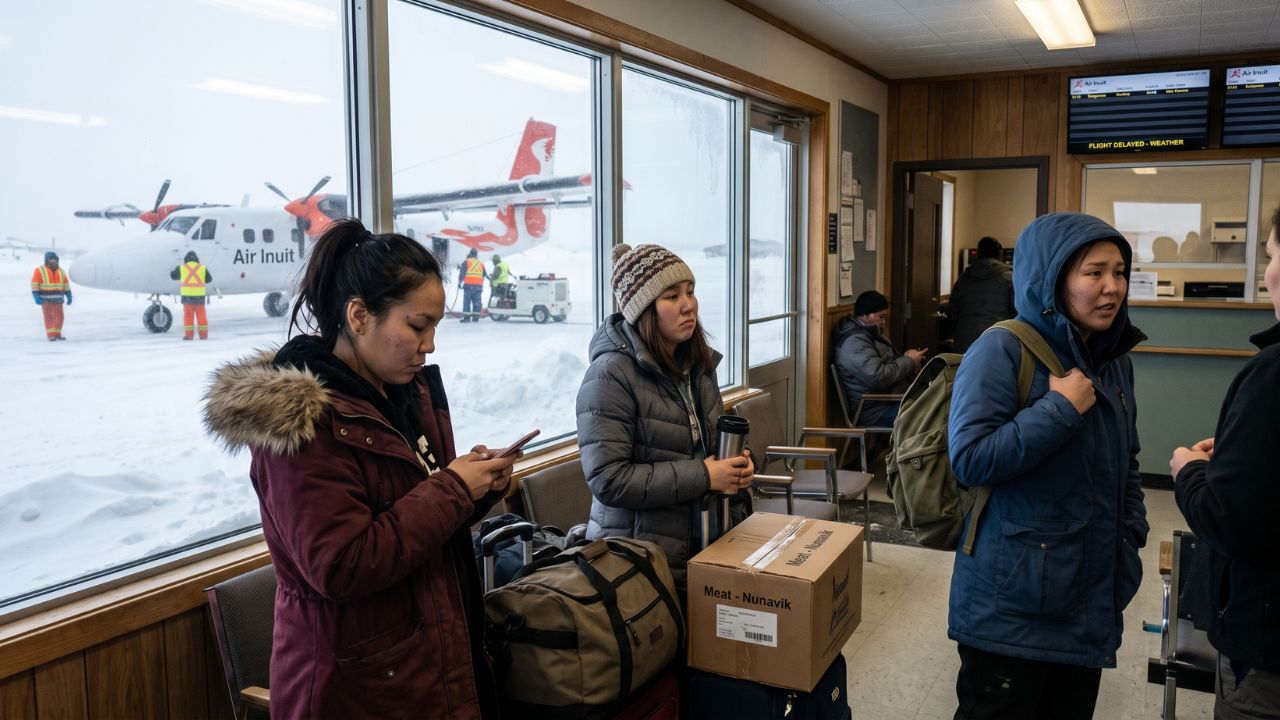
Image generated by AI
In a highly localized but devastating operational breakdown that has completely severed critical Arctic transit lifelines, extreme environmental constraints have triggered a wave of severe travel chaos across the remote Nunavik region of northern Quebec. According to official flight logs for the current reporting period, Kangirsuk Airport—a strategically vital aviation node connecting isolated Indigenous communities to southern Canada—has suffered a sudden and highly disruptive wave of 3 flight delays and 3 outright cancellations. Because the entire regional network relies entirely on a single carrier, this disruption pattern indicates a severe schedule collapse executed exclusively by Air Inuit. As the regional airline struggles to maintain its rotations, massive airport disruptions are currently rippling through the network, entirely cutting off Kangirsuk's essential connectivity to major hubs like Montreal and Quebec City. This total disruption of the northern Canadian aviation grid represents the premier headline in today's breaking airline news and critical regional aviation updates.
By introducing direct passenger coordination and dynamic scheduling backups, the regional aviation hubs target growing passenger demand across vital commerce sectors. The choice to coordinate flight departures in phases helps to manage gate capacity, supporting the country's broader regional transportation network.
Context: The Collapse of the Nunavik Lifeline
For the deeply isolated communities of northern Quebec, aviation is never a luxury; it is the absolute foundation of daily survival. When Kangirsuk experiences a sudden wave of hard cancellations, it does not merely inconvenience tourists—it entirely disconnects the northern territory from the rest of Canada.
Information derived from Canadian transport logs reveals a perfectly balanced, yet devastating, disruption pattern: 3 delays and 3 cancellations, totaling six affected movements. This specific metric highlights the extreme sensitivity of scheduling in remote Arctic conditions. Because Air Inuit serves as the sole operator managing essential passenger, cargo, and medical transport services in the region, the operational dependency on this single carrier is absolute. The brutal reality of Arctic aviation dictates that severe environmental volatility, unpredictable weather systems, and limited infrastructure redundancy frequently force the airline to execute immediate, pre-emptive schedule shifts. Consequently, even these 6 seemingly small operational interruptions instantly cascade into wider connectivity failures, totally paralyzing interlinked routes serving nearby settlements.
To view live flight schedules, real-time regional map routes, or specific extreme weather protocols for the Nunavik network, travelers must consult the official Kangirsuk airport directories. For direct booking access, specific cargo rules, and re-accommodation options, passengers should check the official Air Inuit portal. To explore live flight tracking and monitor the exact severity of the northern airspace closures, passengers can consult the official FlightAware tracking service.
Section-Wise Breakdown of the Arctic Meltdown
Kangirsuk: The Paralyzed Epicenter
Kangirsuk functions as the critical regional node connecting the far north with the south. Because the 6 total disruptions were entirely concentrated under a single carrier (Air Inuit), the local community's ability to travel is completely restricted. The sudden removal of 3 scheduled rotations means that both outbound residents and inbound supplies are physically trapped, paralyzing the daily rhythm of the town.
Severed Links to Montreal and Quebec City
The route network extending out of Kangirsuk connects the extreme isolation of Nunavik to the massive southern hubs of Montreal and Quebec City. The flight cancellations immediately severed this essential corridor. Government administrators, essential infrastructure workers, and individuals attempting to return from the south are completely grounded, with zero alternative overland transport options available in the deep Arctic.
Supply Chain and Medical Transport Friction
Beyond standard passenger movement, the cancellations are severely impacting Kangirsuk's immediate survival logistics. The local supply chain—which heavily relies on Air Inuit cargo to deliver fresh food and essential industrial parts to the Arctic—has suffered immediate friction. More critically, routine healthcare patients relying on scheduled air transport to reach specialized medical facilities in Montreal face dangerous delays.
Technical Roster: Air Inuit Nunavik Disruption Matrix
To ensure absolute factual accuracy regarding the specific operational constraints destroying connectivity across northern Quebec, the following table details the core disruption metrics impacting the Kangirsuk aviation network:
| Hub / Airline | Operational Disruption Metric | Regional Travel Market Impact |
|---|---|---|
| Kangirsuk Airport | 6 Total Affected Movements | Critical Arctic transit node suffers a massive schedule collapse |
| Air Inuit | 3 Total Cancellations | The sole carrier providing remote connectivity executes hard groundings |
| Air Inuit | 3 Total Flight Delays | Schedule shifts cascade through interlinked northern settlements |
| Montreal & Quebec City | Southern Corridors Severed | Northern communities completely cut off from major urban centers |
| Nunavik Region | Total Isolation Event | Essential supply chains and medical transport flights paralyzed |
Passenger Impact: Stranded in the Deep North
For the everyday passenger trapped by the Air Inuit disruptions in Kangirsuk, the logistical reality is far more severe than a standard commercial flight delay.
Because road infrastructure connecting Nunavik to southern Canada is entirely non-existent, these passengers cannot simply drive to their destination. The immediate impact is a sudden, absolute reliance on the airline's recovery scheduling. The stranded demographic is highly vulnerable, including residents traveling for critical healthcare appointments and workers accessing remote administrative services. While flight cancellations may compress itineraries for niche adventure tourists exploring the Arctic circuit, the true burden falls on the local Indigenous communities. With alternative travel options virtually nonexistent, passengers face extended waiting times at the small airport, forced to wait days for the weather to clear and for Air Inuit to successfully position a replacement aircraft.
Industry Analysis: The Fragility of Arctic Aviation
Aviation industry analysts view the 6-flight cancellation and delay wave at Kangirsuk as a textbook example of the extreme structural fragility inherent in Canada's northern aviation networks.
Analysts note that unlike high-frequency urban mega-hubs like Toronto or Vancouver, Kangirsuk operates on highly limited flight rotations. Therefore, each individual disruption carries amplified, outsized consequences. The failure rests entirely on the extreme environmental and logistical constraints shaping daily Arctic scheduling. Maintenance flexibility, crew rotation, and precise weather forecasting are the absolute lifelines of regional stability. When extreme weather or limited runway capacity forces Air Inuit to cancel just 3 flights, the redundancy is so minimal that the entire regional mobility network instantly collapses. Analysts warn that this event explicitly demonstrates that air transport in Nunavik is not merely a commercial service; it is a critical, non-negotiable lifeline for community survival.
Actionable Advice for Surviving Northern Disruptions
If you are a traveler, essential worker, or medical patient relying on Air Inuit through Kangirsuk during this severe disruption wave, execute this extreme survival checklist immediately:
- Anticipate Multi-Day Delays: Because alternative transport in Nunavik is non-existent, a single cancelled flight can easily result in a 48-to-72-hour delay while the airline attempts to reposition aircraft after a weather event clears.
- Monitor the Airline Dispatch Directly: Since Air Inuit is the sole operator, delay information will come exclusively from the carrier. You must aggressively monitor the official Air Inuit dispatch portals for the absolute latest re-accommodation updates.
- Prepare for Cargo Prioritization: In the aftermath of severe cancellations, understand that the airline may be forced to prioritize the backlog of essential medical supplies and perishables over standard passenger baggage on the first recovery flights. Pack medications strictly in your carry-on.
- Maintain Extreme Flexibility: If you are a niche adventure tourist visiting the Arctic circuit, you must accept that environmental volatility will dictate your itinerary. Do not book tight international connections out of Montreal immediately following a flight from Kangirsuk.
FAQ: Kangirsuk Air Inuit Flight Cancellations 2026
How severe is the current operational breakdown at Kangirsuk Airport?
The remote Arctic hub has suffered a critical localized disruption, officially recording exactly 3 flight delays and 3 outright cancellations, completely paralyzing local mobility.
Which specific airline and routes are affected by this travel chaos?
The disruptions are entirely attributed to Air Inuit, severing the sole transit lifeline connecting Kangirsuk to surrounding Nunavik communities and massive southern hubs like Montreal and Quebec City.
What are the primary causes driving these 6 flight disruptions?
The operational collapse is driven by the extreme structural challenges of Arctic aviation, specifically harsh environmental volatility, rough weather, and a severe lack of infrastructure redundancy.
The Reality of the Nunavik Lifeline
The wave of 6 flight disruptions ravaging Kangirsuk proves definitively that air travel in northern Quebec is not merely a commercial convenience; it is a critical matter of regional survival. By totally severing the operations of Air Inuit, this disruption has ruthlessly exposed the deep logistical vulnerability of isolated Arctic communities that rely entirely on the aviation grid for medical care, education, and essential supplies. As the airline desperately attempts to realign its crew and aircraft rotation to restore the schedule, residents and essential workers across the province must accept a brutal reality: navigating Canada's extreme north requires immense patience, extreme flexibility, and the absolute understanding that the brutal Arctic environment will always dictate the departure board.
Key Takeaways
- Critical Arctic Schedule Collapse: Air Inuit has recorded exactly 3 flight delays and 3 outright cancellations, triggering severe travel chaos in the remote community of Kangirsuk.
- Nunavik Lifelines Severed: The cancellations have completely isolated the local population from essential southern hubs, including Montreal and Quebec City.
- Vulnerable Passengers Stranded: With absolutely zero alternative road infrastructure, essential workers and medical patients are completely trapped, awaiting aircraft repositioning.
- Sole Operator Dependency: The disruption explicitly highlights the extreme fragility of the region, as Air Inuit is the only carrier providing this essential lifeline.
- Medical and Supply Chain Friction: The sudden loss of regional connectivity severely disrupts the delivery of critical cargo and halts niche Arctic tourism itineraries.
Related Travel Guides
Severe Travel Chaos Paralyzes Goose Bay Across Air Borealis Routes
Severe Travel Chaos Paralyzes Calgary Airport Across Major Airlines
Kangirsuk Flight Cancellations and Northern Travel Logistics Discussion on Reddit
Disclaimer
This article is for informational and educational purposes only. It does not constitute legal, financial, or professional advice. While we strive to provide accurate and up-to-date information, travel policies, regulations, and conditions change rapidly. Always verify information with official sources before making travel decisions. Nomad Lawyer makes no representations about the accuracy, reliability, completeness, or suitability of the information provided. Readers should consult qualified professionals for advice specific to their circumstances. The views expressed in this article are those of the author and do not necessarily reflect the views of Nomad Lawyer.
Kunal K Choudhary
Co-Founder & Contributor
A passionate traveller and tech enthusiast. Kunal contributes to the vision and growth of Nomad Lawyer, bringing fresh perspectives and driving the community forward.
Learn more about our team →