
Travel Roar Revitalization: Jinyun's Motorcycle Tourism Blueprint
Jinyun emerges as China's motorcycle tourism epicenter in 2026, building a complete adventure ecosystem that positions the country as a rival to Thailand and Vietnam for regional thrill-seekers.

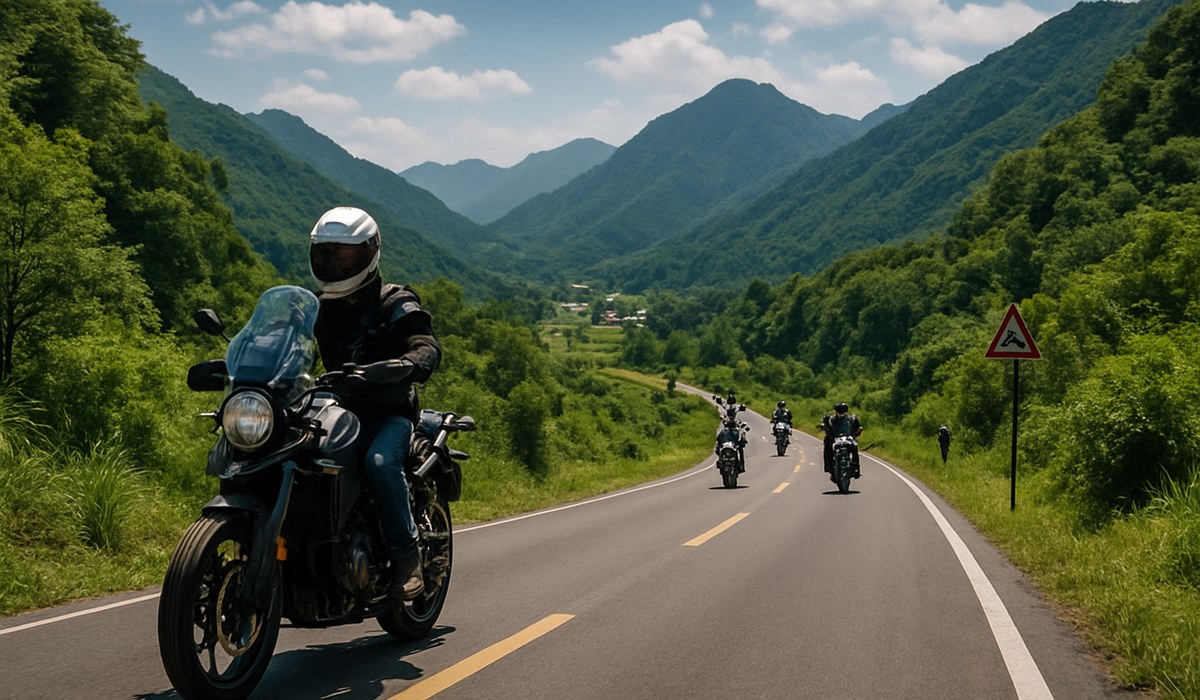
Image generated by AI
**> Quick Summary
- Jinyun is launching integrated motorcycle tourism infrastructure, reshaping China's position in the Asia adventure market
- The destination combines curated riding routes, hospitality partnerships, and safety protocols designed for international travelers
- Regional airline connectivity improvements are reducing travel friction to this emerging motorcycle hub
- The initiative aligns with global sustainable and experiential tourism frameworks for 2026 and beyond**
While seasoned adventure travelers have long pointed their bikes toward Thailand's winding northern highways and Vietnam's coastal roads, a quieter transformation is underway in central China. Jinyun County, nestled in Zhejiang Province's mountainous terrain, is assembling something Western guidebooks haven't yet caught up with: a purpose-engineered motorcycle tourism destination from the ground up. Not a retrofit. Not a makeshift collection of back roads. But a deliberate, infrastructure-first approach to capturing travelers who crave authentic riding experiences alongside developed safety standards and hospitality frameworks.
This shift matters because it signals how China is recalibrating its role in Asia's travel recovery. As Asia's slow travel circuit expansion gains momentum, destinations like Jinyun are proving that adventure tourism doesn't require a destination to have a 20-year reputation—it requires intentional design, connectivity, and a clear understanding of what contemporary motorcycle adventurers actually need.
The rollout of Jinyun's motorcycle tourism ecosystem reflects the broader patterns outlined in UNWTO sustainable tourism guidelines{target="_blank" rel="noopener noreferrer"}, particularly around community-centered development and responsible tourism management. Officials overseeing the initiative have publicly committed to limiting daily visitor volume, establishing environmental protection zones alongside popular routes, and ensuring that local hospitality workers receive formal training and fair compensation. This isn't accidental—it's foundational to how the destination intends to compete for quality-conscious travelers rather than volume alone.
Why Jinyun? China's Unlikely Motorcycle Capital
Geography plays the opening hand here. Jinyun sits at the intersection of Zhejiang, Anhui, and Jiangxi provinces—a position that grants riders access to some of China's most technically demanding road systems without requiring them to navigate the congestion of major metropolitan areas. The terrain oscillates between 800-meter elevation drops, hairpin passes that demand technical skill, and plateau straightaways that reward confident riders. Local topography mirrors what draws motorcyclists to northern Thailand's Golden Triangle or Vietnam's Dalat region, but with notably fewer overcrowded tourist corridors.
The county has invested heavily in road infrastructure over the past three years. Central authorities completed resurfacing on twelve major routes that feed into Jinyun's core riding network, with particular attention paid to bankings and sight lines that align with international safety standards. Separately, the local government established a Motorcycle Tourism Administration Bureau in January 2026—a dedicated office that handles everything from route certification to emergency medical coordination. This institutional commitment distinguishes Jinyun from destinations where motorcycle tourism exists but lacks formal governance.
Capacity matters too. Unlike established adventure destinations that often struggle with overtourism, Jinyun's infrastructure rollout is deliberately paced. The county has certified fifteen motorcycle-friendly lodging facilities for the 2026 season, including three properties specifically designed with secure parking, maintenance facilities, and rider-community gathering spaces. This is not Thailand's overcrowded tourism model; it's designed to feel like a curated club rather than an open bazaar.
Infrastructure That Changes the Game: What Sets Jinyun Apart
Most motorcycle destinations inherit their tourism infrastructure—roads were built for commerce or commuting, and riders simply discovered them. Jinyun has done the reverse. Every element of the destination's travel experience has been conceived with motorcyclists specifically in mind.
Start with route curation. Rather than offering a chaotic selection of rides, Jinyun's tourism authority has mapped and certified five signature routes ranging from 180 to 420 kilometers. Each route includes detailed difficulty ratings, technical briefing notes, fuel/service intervals, and weather-specific advisories. Riders can download these routes as GPS-compatible files—no guesswork, no reliance on sketchy crowd-sourced maps. This mirrors the professional approach National Geographic's adventure travel coverage{target="_blank" rel="noopener noreferrer"} typically highlights in mature adventure destinations, and it reflects how serious motorcycle tourism operators now differentiate themselves.
Hospitality alignment represents a second structural innovation. Rather than allowing tourism development to happen organically, Jinyun's government has implemented a voluntary certification program for restaurants, gas stations, and accommodations. Participating businesses receive training on motorcycle traveler needs—understanding proper chain maintenance, knowing how to manage a rider's dietary needs after eight hours in the saddle, basic English communication. In return, they gain prominent listing on the official tourism portal and access to group discounts from tour operators.
Medical and emergency protocols round out the infrastructure story. Jinyun established a dedicated motorcycle accident rapid-response team in early 2026, with trained personnel stationed at seven strategic points along major routes. The county hospital in Jinyun City upgraded its trauma and orthopedic capabilities specifically to handle motorcycle-related injuries. These aren't afterthought safety measures—they're foundational to how the destination competes for premium international travelers.
The Regional Context: How Jinyun Fits Into Asia's Adventure Tourism Boom
Jinyun's timing aligns with a broader Asia-Pacific recovery pattern. Throughout 2025-2026, adventure and experiential tourism categories have outpaced mainstream leisure travel in regional recovery metrics. Travelers who paused long-distance journeys during pandemic restrictions are returning with higher expectations: they want authenticity, intentional design, and destinations that haven't been hammered by mass tourism.
China's regional positioning is evolving too. Just as China's southwestern provinces emerging as European gateways are repositioning themselves within global travel networks, Jinyun represents how eastern and central China are targeting adventure travelers specifically. The county sits within three hours of Shanghai by rail and four hours by car—close enough for weekend escapes from China's wealthiest metropolitan area, yet remote enough to feel genuinely adventurous.
International connectivity has improved substantially. Hangzhou International Airport, 140 kilometers away, now receives direct flights from Bangkok, Singapore, and Kuala Lumpur. The expansion of Air Premia's Americas-Southeast Asia routes is incrementally improving visa flexibility and routing options for riders traveling from North America and Europe, though China's entry requirements still mandate advance visa planning.
Within the broader Asia motorcycle tourism conversation, Jinyun offers a distinct positioning. Thailand's riding communities are dominated by Western expat residents and gap-year travelers; Vietnam's motorcycle culture centers on Ho Chi Minh City and has become increasingly urban-facing. Jinyun is positioning itself for mid-career riders aged 35-55, travelers with disposable income, professional credentials that permit flexible scheduling, and a preference for curated experiences over backpacker logistics. This niche strategy—rather than competing for volume—appears to be the county's deliberate market positioning.
Planning Your Visit: Routes, Logistics, and Best Times to Ride
Getting There
Most international riders arrive through Shanghai Pudong International or Hangzhou Xiaoshan International airports. From Hangzhou, rental facilities are clustered near the airport; three operators now offer international motorcycle rentals with full insurance
Disclaimer
This article is for informational and educational purposes only. It does not constitute legal, financial, or professional advice. While we strive to provide accurate and up-to-date information, travel policies, regulations, and conditions change rapidly. Always verify information with official sources before making travel decisions. Nomad Lawyer makes no representations about the accuracy, reliability, completeness, or suitability of the information provided. Readers should consult qualified professionals for advice specific to their circumstances. The views expressed in this article are those of the author and do not necessarily reflect the views of Nomad Lawyer.
Kunal K Choudhary
Co-Founder & Contributor
A passionate traveller and tech enthusiast. Kunal contributes to the vision and growth of Nomad Lawyer, bringing fresh perspectives and driving the community forward.
Learn more about our team →