
Italy Strike Triggers 464 Flight Cancellations Across Europe
A four-hour Italian air traffic control strike on April 10, 2026 triggered 464 flight cancellations and 713 delays, stranding hundreds of passengers across Rome, Milan, Venice, and Bologna. Low-cost carriers and regional airlines faced the most severe disruptions.

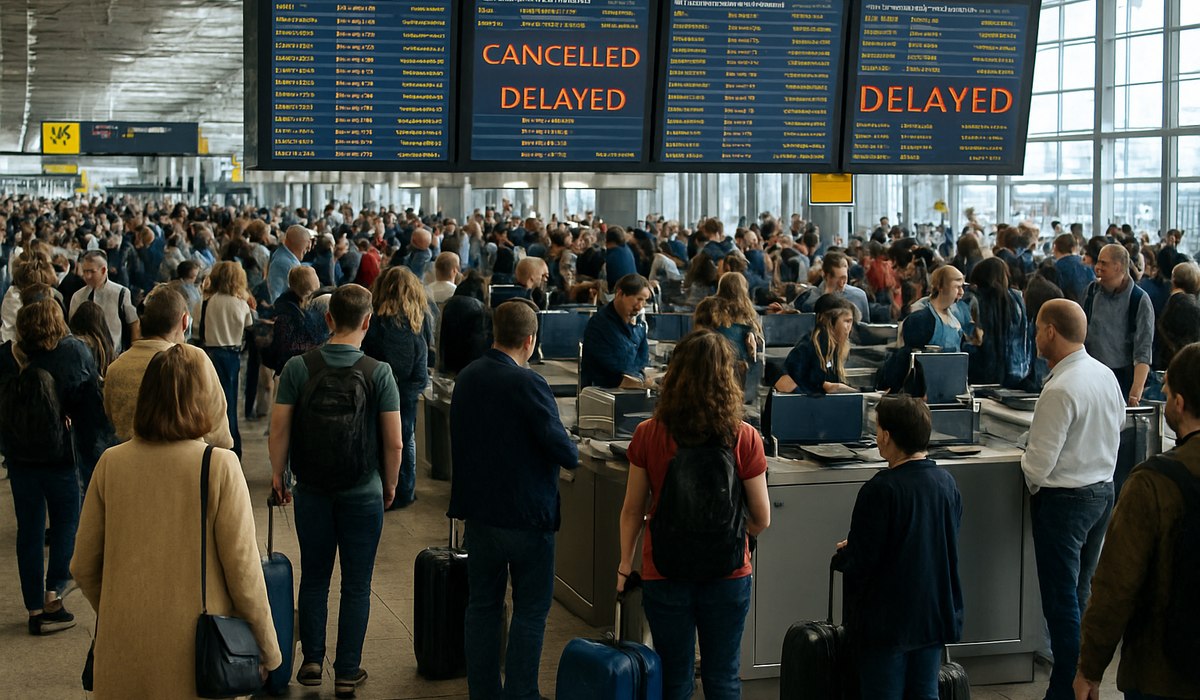
Image generated by AI
Nationwide Air Traffic Control Strike Paralyzes Italian Aviation
A four-hour walkout by Italian air traffic controllers on April 10 triggered cascading disruptions across Europe's busiest southern corridor. Between 1:00 PM and 5:00 PM local time, controllers in Rome, Milan, and Bologna ceased operations, resulting in 464 flight cancellations and 713 delays affecting major carriers including Ryanair, Wizz Air, easyJet, Luxair, and Helvetic Airways. The strike's impact extended far beyond the scheduled window, stranding hundreds of travelers at Italy's primary aviation hubs and creating downstream complications for connecting passengers throughout Western Europe.
The work action centered on control centers serving Rome Fiumicino, Milan Malpensa, Venice Marco Polo, and Bologna Guglielmo Marconi airports—gateways that collectively process over 40% of Italy's annual air traffic. Airlines immediately implemented pre-strike cancellations to mitigate risk, yet the volume of disrupted rotations throughout the day left passengers facing unexpected rebooking challenges and extended delays on evening departures.
Four-Hour Walkout Disrupts Italy's Busiest Air Corridors
Italy's two largest metropolitan airports bore the brunt of April 10's labor action. Rome Fiumicino, Europe's seventh-busiest airport, processed approximately 240 affected flights during the strike window alone. Milan Malpensa, ranking among Continental Europe's top 10 hubs, experienced similar proportional disruption with aircraft queuing for departure slots that never materialized.
The geographic concentration of Italy's air traffic control infrastructure meant that a single coordinated action paralyzed both domestic networks and international routing across Italian airspace. Morning inbound services destined for Rome and Milan encountered holding patterns, while afternoon and evening departures faced wholesale cancellation or rescheduling. Secondary airports including Venice and Bologna, typically handling 60-80 daily movements, saw operations reduced to emergency-only traffic during the strike window.
Operational cascades continued through the evening as aircraft and crews remained out of position. Airlines couldn't reposition assets efficiently, forcing cancellation of services scheduled for late evening and next-morning departures. The domino effect illustrated how modern aviation's tight scheduling leaves minimal buffer for labor disruptions.
Cascading Impact Extends Far Beyond Strike Window
The 464 cancellations and 713 delays represent only partial accounting of disruption. Aircraft trapped in secondary Italian cities required deadheading flights to reach their next scheduled stations. Crew duty hour limitations prevented same-day recovery operations for many carriers. Passengers who booked connecting flights through Italian hubs faced cascading missed connections across European networks.
International carriers discovered that flights bound for Italy from major hubs including London, Paris, Amsterdam, and Frankfurt faced significant delays or cancellation. Some airlines consolidated services, overselling alternative routes and creating accommodation shortages at airport hotels. Ground transportation providers, from car rental agencies to shuttle bus operators, experienced surge demand as passengers sought alternative routing.
By April 11, secondary disruptions persisted. Aircraft positioned in wrong markets required repositioning flights. Crew fatigue rules prevented normal acceleration back to schedule. Several low-cost carriers extended crew duty notices through April 12, indicating continued network stress. Check FlightAware for real-time status updates on affected routes.
Low-Cost and Regional Carriers Among Hardest Hit
Budget airlines operating dense point-to-point networks across Italy and neighboring European countries faced disproportionate impact. Ryanair, which operates 18 daily frequencies from Rome and Milan combined, saw approximately 140 cancellations on April 10. Wizz Air, focused on Rome-Budapest, Rome-Bucharest, and Milan-Eastern European corridors, cancelled over 50 flights. easyJet's Italian network suffered similarly with cascading disruptions across its afternoon and evening bank.
These carriers maintain operational models built on minimal aircraft slack and tight crew scheduling. A four-hour strike that strands aircraft in wrong cities forces 2-3 days of recovery. Unlike legacy carriers with larger spare capacity and flexible crew positioning options, budget operators lack redundancy to absorb such disruptions.
Smaller regional airlines including Helvetic Airways and Luxair, which offer niche business-leisure routes into Italy, reported crew diversion fees and slot restrictions that compounded scheduling challenges. Recovery took substantially longer than the strike's actual duration.
Rome and Milan Airports Face Severe Congestion
Rome Fiumicino's terminal facilities became overwhelmed as rebooking desks opened and hundreds of stranded passengers sought alternate routing. April 10 evening saw departure halls jammed with individuals awaiting rebooking staff. Baggage systems backed up with unclaimed luggage from cancelled flights.
Milan Malpensa experienced similar congestion. The airport's main terminal operates at near-capacity during evening banking hours; the strike eliminated scheduled departures, then concentrated overnight rebooking demand into a compressed window. Reports indicated three-hour-plus wait times to reach airline customer service desks.
Both airports offered temporary hotel accommodations to affected passengers, though securing same-day hotel availability in Rome and Milan proved challenging. Some travelers opted for rail connections via Trenitalia to bypass airport rebooking queues entirely, adding 4-6 hours to journey times but guaranteeing confirmed alternative routing.
Traveler Action Checklist
If your flight involved Italy or Italian airspace on April 10 or April 11, follow these priority steps:
-
Check your airline's website immediately for confirmation of your flight status (confirmation pages display cancellation or delay information within 2-4 hours post-event).
-
Document your flight details including booking reference, flight number, scheduled departure/arrival times, and number of passengers; screenshot all confirmation pages for claim documentation.
-
Contact your airline via phone (avoid email; customer service centers handle disruption rebooking requests faster than correspondence channels) within 24 hours for rebooking options.
-
Review your passenger rights under EU Regulation 261/2004: eligible passengers receive compensation of €250–€600 per person depending on flight distance and disruption cause.
-
Photograph your boarding pass, cancellation notice, and delay documentation as evidence for future compensation claims through US DOT or EU-based dispute resolution.
-
Notify your accommodation provider and ground transport of revised arrival times; many providers offer free cancellation or rebooking if arrival times shift by 4+ hours.
-
Request written confirmation from your airline regarding the strike's classification (extraordinary circumstance vs. airline liability), which affects compensation eligibility.
-
File compensation claims within six months through your airline or through aviation claim services; keep all documentation organized by flight number.
Impact Summary Data
| Metric | Value |
|---|---|
| Strike Duration | 4 hours (1:00 PM–5:00 PM local) |
| Flight Cancellations | 464 confirmed |
| Flight Delays | 713 reported |
| Primary Airports Affected | Rome Fiumicino, Milan Malpensa, Venice, Bologna |
| Low-Cost Carriers Impacted | Ryanair, Wizz Air, easyJet |
| Regional Carriers Impacted | Luxair, Helvetic Airways |
| Estimated Stranded Passengers | 65,000+ across European gateways |
| Secondary Disruption Timeline | 36–72 hours post-strike |
| Compensation Eligibility Window | 6 months from disruption date |
What This Means for Travelers
April 10's Italy strike triggers broader traveler awareness regarding labor action risks across European aviation. Industrial disputes in Spain, France, Belgium, and Germany have created similar multi-hundred-flight
Disclaimer
This article is for informational and educational purposes only. It does not constitute legal, financial, or professional advice. While we strive to provide accurate and up-to-date information, travel policies, regulations, and conditions change rapidly. Always verify information with official sources before making travel decisions. Nomad Lawyer makes no representations about the accuracy, reliability, completeness, or suitability of the information provided. Readers should consult qualified professionals for advice specific to their circumstances. The views expressed in this article are those of the author and do not necessarily reflect the views of Nomad Lawyer.
Preeti Gunjan
Contributor & Community Manager
A passionate traveller and community builder. Preeti helps grow the Nomad Lawyer community, fostering engagement and bringing the reader experience to life.
Learn more about our team →