
Italy Air Travel Disrupted by 417 Flight Delays and 21 Cancellations at Rome Fiumicino and Milan Malpensa Airports
Air travelers in Italy faced major disruptions after Rome Fiumicino and Milan Malpensa recorded 417 flight delays and 21 cancellations.

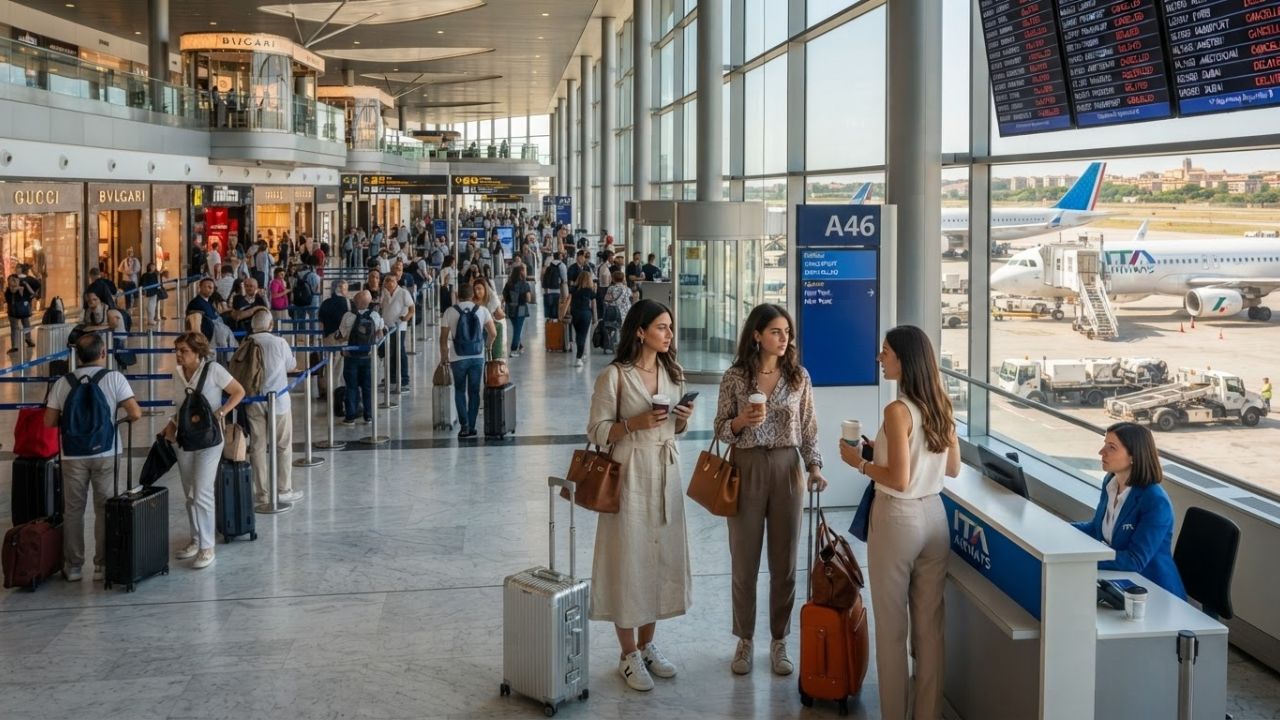
Image generated by AI
Severe flight disruptions across Italy's primary aviation gateways have affected hundreds of routes. Leonardo da Vinci-Fiumicino in Rome and Malpensa in Milan reported 417 delays and 21 cancellations in a single operational cycle.
Italy's Primary Aviation Hubs Face Peak Season Congestion
According to reports, the summer holiday season is testing the capacity of European airspace.
Operational reports released by Rome Fiumicino Airport (ADR) confirm that airspace bottlenecks have caused significant scheduling delays.
Passenger protection guidelines monitored by the Italian Civil Aviation Authority (ENAC) state that airlines must provide assistance during extended waits.
However, the sheer volume of delayed flights has left many travelers waiting in crowded terminal corridors.
The table below outlines the scope of the delays and cancellations across Italy's main hubs.
Flight Disruptions at Italy's Primary Aviation Hubs
| Airport Node | IATA Code | Delayed Departures / Arrivals | Canceled Flights | Primary Affected Carriers |
|---|---|---|---|---|
| Rome Fiumicino | FCO | 268 | 2 | ITA Airways, Wizz Air Malta, Ryanair, Legacy European Carriers, Intercontinental Lines |
| Milan Malpensa | MXP | 149 | 19 | Ryanair, easyJet, Wizz Air Malta, Neos, Long-Haul Carriers |
Rome Fiumicino Faces Intense Operational Pressures
Fiumicino Airport recorded the highest share of delays, affecting both domestic and intercontinental routes.
ITA Airways experienced the most disruptions at the capital hub, accounting for 109 delayed departures.
Low-cost carriers Wizz Air Malta and Ryanair also logged 54 and 12 delays, respectively.
- Legacy European Carriers: British Airways, Air France, KLM, and TAP Air Portugal reported multiple delayed flights to London, Paris, and Amsterdam.
- Intercontinental Routes: Transatlantic and Asian carriers including American Airlines, United, Cathay Pacific, and Hainan Airlines faced schedule adjustments.
- Cascading Effects: While Fiumicino logged only 2 cancellations, the high delay volume disrupted crew rotations and gate spacing.
Milan Malpensa Logs High Cancellation Rates on European Routes
Milan Malpensa experienced a different disruption pattern, logging 19 cancellations alongside its 149 delays.
Low-cost and leisure carriers bore the brunt of the cancellations, with Ryanair cancelling 10 flights.
EasyJet recorded 47 delayed flights, making it one of the most heavily affected airlines in Milan.
Wizz Air Malta and Neos also reported delays on routes to vacation spots and secondary European airports.
Long-haul carriers like Delta Air Lines, Emirates, United, and American Airlines reported delays for flights departing to North America and the Middle East.
Travel Networks and Passenger Operations Experience Widespread Delays
The combination of delays and cancellations has affected thousands of business and leisure travelers.
In Rome, passengers connecting through European hubs faced missed flights due to late arrivals.
In Milan, the cancellations led to urgent rebooking requests and placed high demand on local hotel rooms.
- Business Travel: Corporate passengers on routes to Paris, Frankfurt, and London faced lost work hours.
- Leisure Corridors: Vacationers traveling to Mediterranean beaches and Alpine resorts encountered long terminal waits.
- Network Volatility: Because Italian hubs connect to France, Spain, Germany, and the UK, the delays rippled across the continent.
Regional Tourism and Transport Links Feel the Impact
Industry observers note that sustained airport congestion can temporarily impact regional tourism economies.
Rome and Milan serve as the main entry points for international tourists heading to Florence, Venice, and Lake Como.
When flights are delayed, local tour operators and hotels face short-notice reservation changes.
Some travelers are turning to high-speed rail links like the Frecciarossa to complete domestic journeys between Rome and Milan.
However, international passengers connecting to intercontinental flights must remain at the airport to resolve their itineraries.
Why This Matters
Our analysis of the flight data indicates that European air traffic control capacity is reaching its limits. During peak summer weeks, slot allocations are so tight that a delay in Rome immediately impacts Milan's schedule.
Because low-cost carriers rely on quick 30-minute turn times, they have no buffer to absorb delays.
When a Ryanair or easyJet plane arrives late from Paris, its next three flights that day will also be delayed.
This pattern suggests that European hubs must coordinate slot allocations more dynamically to prevent total schedule collapse.
Ultimately, these disruptions show that regional air corridors require structural upgrades to handle summer tourism volumes.
Forward Outlook
Market trends suggest that European aviation authorities will implement stricter slot controls during peak holiday weekends. Airlines are expected to increase reserve crew staffing at major Italian hubs to accelerate recovery.
Expect flight schedules to return to normal parameters as the current peak traffic cycle clears. The Mediterranean leisure market is projected to maintain strong demand despite ongoing airspace congestion.
Disclaimer
This article is for informational and educational purposes only. It does not constitute legal, financial, or professional advice. While we strive to provide accurate and up-to-date information, travel policies, regulations, and conditions change rapidly. Always verify information with official sources before making travel decisions. Nomad Lawyer makes no representations about the accuracy, reliability, completeness, or suitability of the information provided. Readers should consult qualified professionals for advice specific to their circumstances. The views expressed in this article are those of the author and do not necessarily reflect the views of Nomad Lawyer.
Kunal K Choudhary
Co-Founder & Contributor
A passionate traveller and tech enthusiast. Kunal contributes to the vision and growth of Nomad Lawyer, bringing fresh perspectives and driving the community forward.
Learn more about our team →