
Boeing 777X Can Land Without Reverse Thrust: What This Means for Modern Aviation
Breaking airline news and aviation industry updates for 2026.

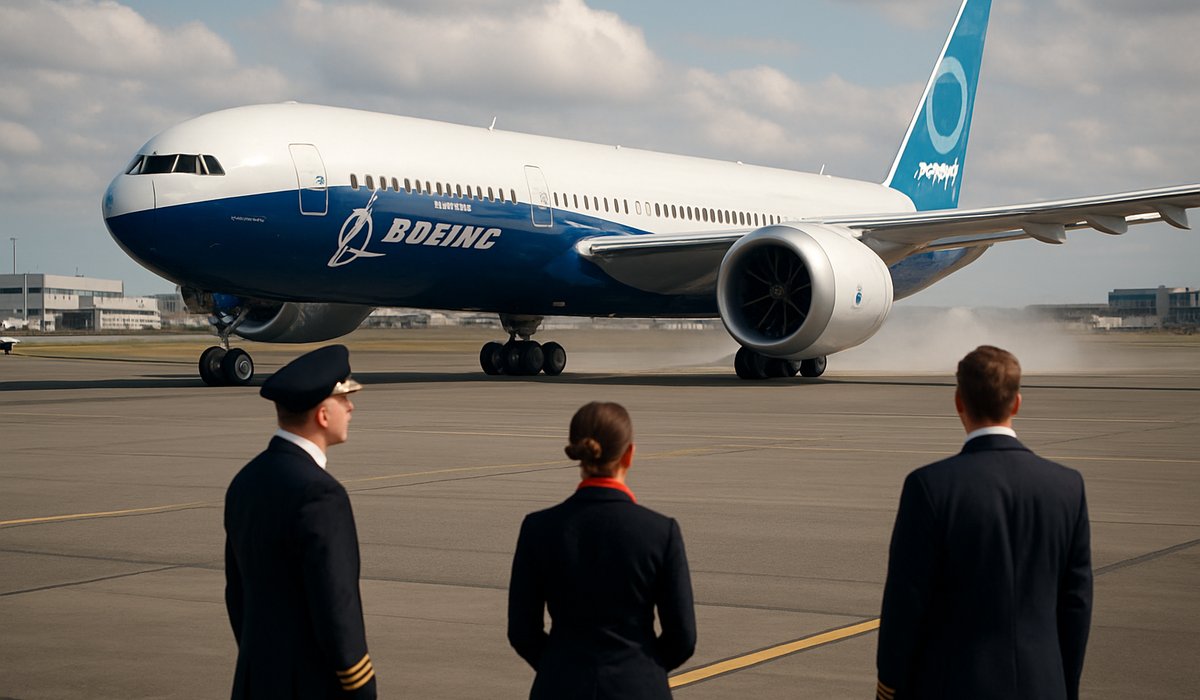
Image generated by AI
Boeing 777X Can Land Without Reverse Thrust: What This Means for Modern Aviation
Advanced aerodynamic design and braking systems challenge decades-old landing procedures
Revolutionary Landing Technology Changes Aviation Standards
The Boeing 777X, the aerospace manufacturer's latest wide-body flagship, has achieved a remarkable engineering milestone: the aircraft can achieve a complete stop without deploying reverse thrust—a capability that fundamentally challenges conventional landing procedures developed over decades of commercial aviation.
While passengers have long associated the dramatic roar of reversing engines with aircraft deceleration, the 777X demonstrates that modern engineering has rendered this traditional safety mechanism optional rather than essential. This advancement stems from sophisticated aerodynamic design, advanced braking systems, and deployment of high-efficiency spoiler configurations that work in concert to dissipate kinetic energy far more effectively than previous generations.
How Advanced Systems Replace Reverse Thrust
The 777X's capability relies on three interconnected technological improvements. First, the aircraft's refined wing design and advanced spoiler systems generate substantial aerodynamic drag upon landing, slowing the massive airframe without engine intervention. Second, the twinjet incorporates state-of-the-art carbon-ceramic braking systems with superior heat dissipation and stopping power compared to conventional brake assemblies. Third, the aircraft's weight distribution and landing gear configuration optimize tire grip and braking efficiency on runway surfaces.
This represents a significant evolution from previous wide-body aircraft, where reverse thrust remained a critical component of the landing sequence. Pilots routinely deployed reversers as a primary deceleration method, particularly on shorter runways or in adverse weather conditions.
Implications for Airlines and Operations
The technical achievement carries substantial operational and economic implications for airlines operating the 777X. Reduced reliance on reverse thrust means lower engine wear, decreased maintenance costs, and extended engine service intervals. Additionally, the elimination of reverse thrust deployment reduces noise pollution at airports—an increasingly important factor as communities near major aviation hubs push back against noise regulations and environmental concerns.
However, aviation authorities and Boeing emphasize that pilots retain full reverse thrust capability for emergency situations, go-around procedures, and challenging landing scenarios. The system represents an option rather than a requirement, providing operational flexibility for crews across varying conditions.
Industry-Wide Impact on Future Aircraft Design
This innovation signals a broader shift in aviation engineering toward passive safety systems and reduced mechanical complexity. As manufacturers develop next-generation aircraft to meet sustainability goals and reduce operational costs, similar advancements in aerodynamics and braking efficiency will likely become industry standards.
The 777X's achievement demonstrates that modern commercial aviation continues evolving in fundamental ways, with each new platform introducing capabilities that reshape how pilots operate these machines and how airlines manage fleet economics.
Frequently Asked Questions
Can the Boeing 777X really land without reverse thrust? Yes, the aircraft's advanced aerodynamic design, sophisticated spoiler systems, and state-of-the-art braking technology enable it to achieve complete stops without reverse thrust deployment, though the capability remains optional rather than mandatory.
Does this mean airlines will stop using reverse thrust on the 777X? No. Pilots retain full reverse thrust capability for emergency situations, adverse weather, and challenging runway conditions. The technology simply provides operational flexibility and reduces wear when conditions permit.
How does this reduce airline costs and fuel expenses? Decreased reverse thrust usage lowers engine stress, extends maintenance intervals, and reduces overall propulsion system wear, translating to meaningful cost savings across an aircraft's operational lifespan.
Will other aircraft manufacturers adopt similar landing technologies? Likely yes. As environmental regulations tighten and airlines demand operational efficiencies, similar aerodynamic and braking improvements will become standard features on future wide-body aircraft platforms.
What are the environmental benefits of reduced reverse thrust usage? Lower reverse thrust deployment significantly reduces noise pollution at airports while marginally improving fuel efficiency, supporting broader aviation sustainability initiatives.
Related Travel Guides
- Australia-India Flight Chaos Averted: Air India Confirms 42 Flights Amid West Asia Disruption, Ensuring Stability for Thousands of Travelers
- Chicago O'Hare Tops Ranking of America's Most Stressful Airports in 2026
- United Airlines Unleashes Massive Fleet Expansion at IPW 2026 to Shield Global Travelers From Travel Chaos
Disclaimer
This article is for informational and educational purposes only. It does not constitute legal, financial, or professional advice. While we strive to provide accurate and up-to-date information, travel policies, regulations, and conditions change rapidly. Always verify information with official sources before making travel decisions. Nomad Lawyer makes no representations about the accuracy, reliability, completeness, or suitability of the information provided. Readers should consult qualified professionals for advice specific to their circumstances. The views expressed in this article are those of the author and do not necessarily reflect the views of Nomad Lawyer.
Kunal K Choudhary
Co-Founder & Contributor
A passionate traveller and tech enthusiast. Kunal contributes to the vision and growth of Nomad Lawyer, bringing fresh perspectives and driving the community forward.
Learn more about our team →