
Ireland Travel Shifts 2026: Why Rising Visitor Numbers and Shorter Stays Are Transforming the Emerald Isle
Ireland welcomed a record 788,700 overseas visitors in August 2026 as European arrivals jumped 9%, while travelers pivoted toward shorter, high-impact regional itineraries.

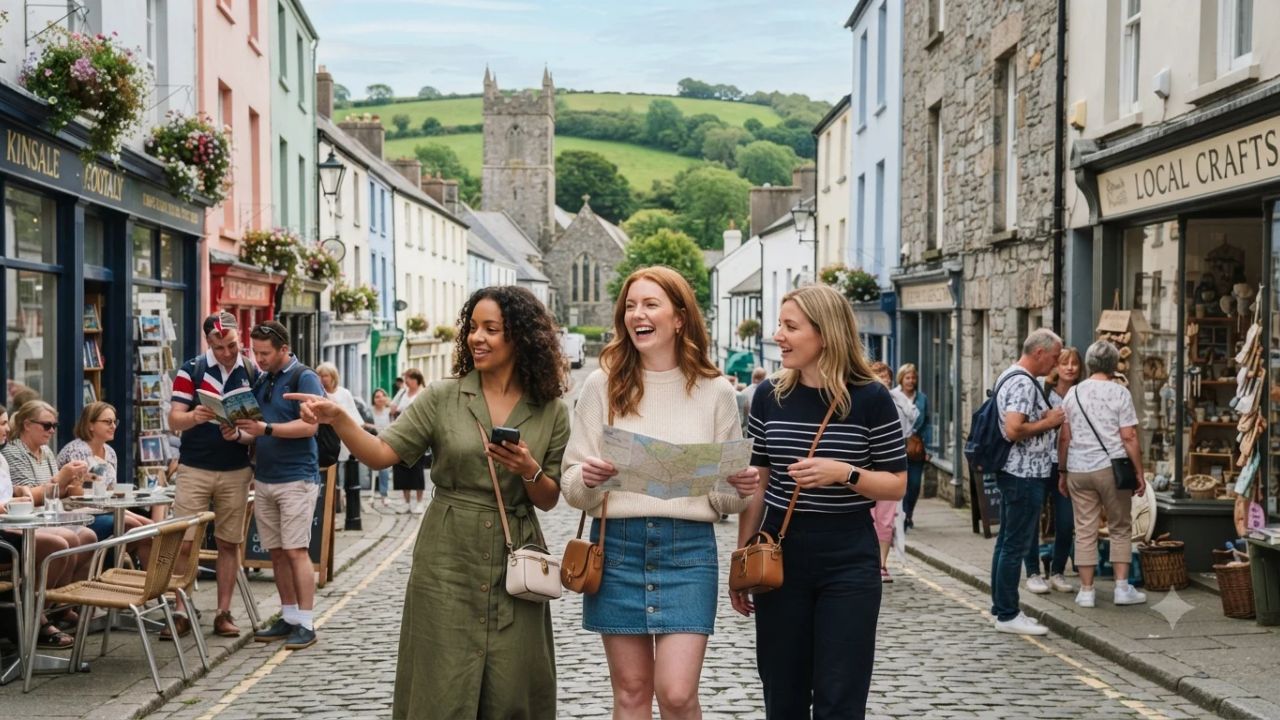
Image generated by AI
While international arrivals to Ireland reached a record 788,700 travelers in August 2026, visitors compressed their journeys into an average of 8.3 nights and managed budgets more closely, spending €729 million excluding air and ferry fares. According to detailed monthly passenger research released by the Central Statistics Office (CSO), total overseas arrivals grew 2% compared to August 2025 and 3% over August 2024, signaling robust global appeal alongside a distinct structural shift toward focused, regional micro-itineraries.
The Evolution of the Irish Summer Itinerary
Travel dynamics across Ireland are changing as visitors trade month-long grand tours for tightly curated regional breaks. Across the first eight months of 2026, international travelers completed 4.7 million overnight trips—an impressive 11% increase over the 4.2 million recorded across the same period in 2025 and 1% above 2024 benchmarks.
However, the August peak revealed an interesting consumer pivot. Total overnight stays settled at 6.6 million nights, marking a 2% decline compared to previous years as the average length of stay trimmed down from 8.6 nights in 2025 to 8.3 nights. When accounting for international and domestic passenger fares (€261 million), total visitor expenditure reached €989 million. Direct in-country spending saw daily expenses account for €372 million, commercial accommodation claim €324 million, and advance pre-arranged payments contribute €33 million.
This €729 million in ground spending represented a 2% contraction from August 2025 (€744 million) and an 11% decrease compared to August 2024 (€820 million), demonstrating that while international guests continue prioritizing Irish holidays, they are managing on-the-ground outlays with increased precision.
What Drives the New Geographic Mix Across Irish Counties
The geographic source of travelers entering Ireland is shifting toward short-haul European connectivity. Great Britain retained its position as Ireland's primary market, representing 36% of all foreign visitors with a 1% annual increase. Continental Europe followed closely at 34%, expanding by a remarkable 9% year-on-year to become the fastest-growing source market.
In contrast, long-haul corridors experienced moderate softening: North American arrivals represented 25% of the total (a 3% contraction), while visitors from the rest of the world accounted for 5% (down 6%).
Leisure and holidaymaking remained the dominant motivator, capturing 51% of all foreign overnight travelers. Visiting friends and relatives (VFR) constituted the second-largest category at 33%, while international business travel accounted for 8%. In accommodation, commercial hotels accommodated 39% of overnight guests, followed closely by private stays with relatives or personal properties at 37%, and rented self-catering cottages at 8%.
For travelers exploring beyond Dublin's historic quarters, this creates unique opportunities in western counties like Galway, Clare, Kerry, and Donegal, where local bed-and-breakfasts and heritage guesthouses offer intimate hospitality away from capital congestion.
Visitor Insider Tips
Experiencing the genuine character of Ireland during peak and shoulder travel windows requires smart logistical planning and local insight.
- Explore the Wild Atlantic Way in the Shoulder Window: Avoid summer coach congestion at landmark sites like the Cliffs of Moher by visiting in late September or October. Coastal light is exceptional for photography, sea breezes remain mild, and coastal roads along Connemara are uncrowded.
- Support Regional Heritage Pubs with Live Trad Sessions: Look past generic tourist pubs in temple-bar districts to find authentic village taverns in Doolin, Westport, or Kinsale. Arrive by 8:30 PM, order a local craft cider or stout, and listen to unamplified fiddles and uilleann pipes. Never interrupt musicians mid-tune or place drinks on instruments.
- Venture Beyond Traditional Hotel Chains: With 37% of visitors utilizing private lodgings, consider historic farm stays, converted coastal lighthouses, or traditional stone cottages in County Mayo and the Ring of Beara for deeper community connections.
- Navigating Irish Roads and Transit: While Iarnród Éireann rail links Dublin with Cork, Galway, and Belfast efficiently, exploring coastal peninsulas requires renting a compact vehicle. Remember that driving is on the left, rural boreens (narrow lanes) require yielding at designated passing bays, and manual transmissions are standard.
- Tipping Etiquette and Dining Customs: In sit-down Irish restaurants, a service charge is often included on parties of six or more; otherwise, leaving a 10% to 12% tip for attentive table service is customary. Tipping bartenders at pub counters is not standard unless ordering complex table service.
Ireland Tourism August 2026 Performance Matrix
| Metric / Travel Indicator | August 2026 Volume / Share | Comparison vs. 2025 | Comparison vs. 2024 | Key Economic Insight |
|---|---|---|---|---|
| Total Overseas Visitor Trips | 788,700 Arrivals | +2% Increase | +3% Increase | Strong global demand for Irish destinations |
| Total Overnight Stays | 6.6 Million Nights | -2% Decrease | -2% Decrease | Shift toward shorter leisure breaks |
| Average Length of Stay | 8.3 Nights | Down from 8.6 Nights | Down from 8.6 Nights | Travelers compressing travel itineraries |
| Direct Tourism Expenditure | €729 Million (excl. fares) | -2% (€744M in 2025) | -11% (€820M in 2024) | Tighter visitor on-the-ground budgeting |
| Total Spend (incl. Fares) | €989 Million | N/A | N/A | Major contributor to transport & hospitality |
| Great Britain Market Share | 36% of Arrivals | +1% Growth | Stable | Ireland's largest single source market |
| Continental Europe Share | 34% of Arrivals | +9% Growth | Strong Expansion | Fastest-growing inbound travel region |
| North America Market Share | 25% of Arrivals | -3% Contraction | Moderate Softening | High-spending long-haul market adjustment |
| Year-to-Date Trips (Jan–Aug) | 4.7 Million Overnight Trips | +11% (+500k vs 2025) | +1% Growth | Substantial multi-season recovery |
Cultural and Environmental Context
Managing high visitor numbers across sensitive rural landscapes is a primary focus for Tourism Ireland and local county councils. Popular scenic corridors, including UNESCO-recognized biosphere reserves and heritage landscapes documented by the UNESCO World Heritage Centre, require active environmental stewardship to prevent peatland erosion and protect coastal ecosystems.
Initiatives encouraging dispersal into Ireland's Hidden Heartlands and Ancient East help balance economic benefits across rural towns. Travelers support local sustainability by utilizing public rail routes where available, purchasing goods directly from traditional wool weavers and craft potters, and respecting Leave No Trace guidelines along coastal cliff paths and national park trails.
FAQ: Traveling to Ireland in 2026
What is the best time of year to visit Ireland for mild weather and uncrowded trails?
May through June and September through October offer ideal conditions, with extended daylight, pleasant temperatures, and fewer crowds than the peak July-August summer window.
Do visitors need a visa to travel to the Republic of Ireland?
Citizens of the European Union, the United Kingdom, the United States, and Canada do not require a visa for short tourist stays up to 90 days. Ireland is not part of the Schengen Area, so separate border passport checks apply.
What is the most scenic way to explore rural Ireland?
Renting a compact car provides the greatest flexibility for exploring coastal routes like the Wild Atlantic Way, the Dingle Peninsula, and the remote glens of County Donegal.
How does Ireland track its official inbound tourism data?
The Central Statistics Office conducts the monthly CSO Passenger Survey across international airports and seaports, interviewing approximately 13,000 departing travelers (including 3,000 to 4,000 foreign visitors) to capture real traveler expenditures and patterns.
The true warmth of Ireland is discovered when you step off the main highway into a village snug where stories are shared beside a glowing turf fire.
Related Travel Guides
Northern Ireland Tourism Week £1.5 Billion Investment Transit Guide 2026
UK Free National Museums Cultural Travel Germany France Spain Guide 2026
The 10 Best Traditional Music Pubs Along the Wild Atlantic Way, According To Reddit
Disclaimer
This article is for informational and educational purposes only. It does not constitute legal, financial, or professional advice. While we strive to provide accurate and up-to-date information, travel policies, regulations, and conditions change rapidly. Always verify information with official sources before making travel decisions. Nomad Lawyer makes no representations about the accuracy, reliability, completeness, or suitability of the information provided. Readers should consult qualified professionals for advice specific to their circumstances. The views expressed in this article are those of the author and do not necessarily reflect the views of Nomad Lawyer.
Naina Thakur
Contributor & Travel Specialist
Travel enthusiast and legal writer covering visa regulations, responsible tourism, and cultural journeys across global destinations.
Learn more about our team →