
Iran Warns UAE Residents Away from Key Sites — Dubai, Abu Dhabi on Alert

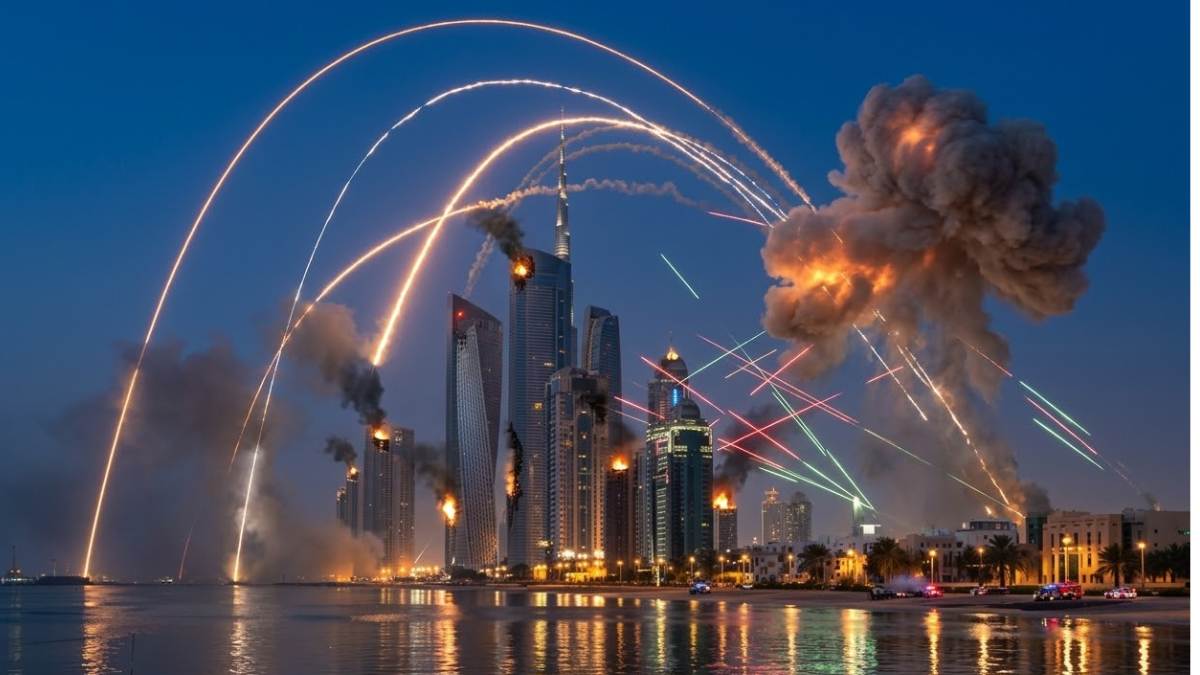
Image generated with AI
🚨 Quick Summary
- • Iran has officially warned residents and visitors to stay away from certain public places across the UAE, including Dubai, Abu Dhabi, Palm Jumeirah, Jebel Ali, and Al Dhafra
- • Iranian officials have stated they claim the right to strike missile sources in shipping ports and warehouses linked to American military operations
- • UAE authorities have raised security levels at aviation hubs, port facilities, financial districts, and coastal tourism zones in response
- • Residents and visitors are being urged to monitor official channels, move indoors immediately during alerts, and avoid non-essential visits to strategic locations
Iran has issued an official warning urging residents and travelers to stay away from specific public places across the United Arab Emirates, directly naming Dubai, Abu Dhabi, Palm Jumeirah, Jebel Ali, and Al Dhafra as locations under elevated risk. Iranian officials stated that they consider shipping ports and warehouses associated with US military assets to be legitimate targets in the context of the ongoing conflict, citing the right to strike missile sources at such facilities. The warning has prompted UAE authorities to sharply increase security across aviation hubs, maritime infrastructure, financial districts, and major tourism zones.
The alerts follow a period of escalating missile and drone exchanges across the Gulf, with regional airspace already heavily disrupted and international flight schedules operating under severe restrictions.
Dubai: Aviation Hub and Tourism Districts on Heightened Alert
Dubai International Airport (DXB) — the world's busiest international aviation hub — is operating under strengthened security protocols following the Iranian warning. Authorities are increasing surveillance, reinforcing emergency shelter procedures inside terminals, and coordinating with airlines and civil-defence teams. Travelers transiting through DXB are advised to allow additional time, follow airport announcements closely, and be prepared to move to secure indoor zones at short notice.
Downtown Dubai and its high-rise districts, including the city's tallest towers and major visitor attractions, are reinforcing building-level safety procedures. Evacuation protocols are being reviewed, internal shelter areas designated, and occupants advised to remain away from windows and balconies during security incidents. Companies in the district are encouraging remote working where operationally feasible.
Palm Jumeirah, Dubai's iconic tourism island with its concentration of luxury hotels and beachfront resorts, has been specifically identified in the warning. Its proximity to maritime shipping lanes adds to the elevated risk profile. Hotels across the island are reinforcing emergency response procedures, briefing guests on indoor shelter locations, and advising visitors to limit time in exposed outdoor areas during periods of heightened tension.
The Jumeirah coastal strip — including Jumeirah Beach, JBR, and the Burj Al Arab area — is under increased monitoring given its proximity to shipping lanes and coastal infrastructure. Hotels and beachfront businesses are preparing contingency plans to guide guests indoors rapidly if alerts are issued. Visitors are urged to avoid gathering in large outdoor crowds near the shoreline.
Dubai International Financial Centre (DIFC), one of the Gulf's most prominent banking and corporate hubs, has strengthened building access controls, reinforced security for staff, and begun implementing contingency plans. Many organisations are enabling flexible or remote working arrangements. Staff are being briefed on evacuation routes and assembly points.
Abu Dhabi, Al Dhafra, and Strategic Infrastructure
Abu Dhabi's coastal districts, including the Corniche waterfront, are reinforcing public safety protocols. Officials are advising anyone in open waterfront areas to move indoors immediately if sirens or emergency notifications are activated and to avoid gathering in exposed outdoor zones.
Al Dhafra Air Base and Zayed International Airport — a combined aviation and defence zone — have been placed under heightened monitoring. The airbase hosts military operations, while the adjacent airport is a major international travel gateway. Authorities have increased security patrols, strengthened perimeter monitoring, and issued advisories to residents to limit movement near sensitive infrastructure. Travelers using Zayed International Airport should check airline updates frequently and be prepared for potential schedule changes.
Jebel Ali Port and its surrounding industrial zone represent one of the Middle East's most strategically important maritime logistics centres. Given the Iranian warning's explicit reference to shipping ports and military-linked warehouse facilities, Jebel Ali has been placed under particularly close monitoring. Maritime patrols have been increased, access controls tightened around container terminals, and public access to port viewing areas restricted. Workers at the facility are being briefed on shelter locations and participating in emergency drills.
UAE-Wide Security Measures Now in Force
Across all seven emirates, commercial ports and dockyards are operating under heightened security — with restricted access zones, increased surveillance, and direct coordination with national security agencies. Residents and visitors are advised to avoid port areas for non-essential activities such as tourism or recreation until conditions improve.
Financial and banking infrastructure across the UAE has similarly moved to elevated protective postures. Security teams have increased monitoring around office towers, many employers have activated work-from-home policies, and evacuation procedures for all major financial buildings have been reinforced.
Parks, beaches, and outdoor public promenades across Dubai and Abu Dhabi are being closely monitored by civil-defence agencies, which are reminding residents not to gather near any incident locations and to keep emergency access routes clear.
Key Facts
- Warning source: Iranian officials, citing the right to strike missile sources in shipping ports and US military-linked warehouses
- Locations specifically identified: Dubai, Abu Dhabi, Palm Jumeirah, Jebel Ali, Al Dhafra
- Airports on alert: Dubai International (DXB), Zayed International Airport / Al Dhafra Air Base area
- Financial districts on alert: DIFC (Dubai), major banking infrastructure across UAE
- Ports on alert: Jebel Ali Port (primary), all UAE commercial ports and dockyards
- Coastal zones on alert: Palm Jumeirah, Jumeirah Beach / JBR, Abu Dhabi Corniche
- Resident/visitor guidance: Move indoors immediately on sirens; avoid non-essential port and financial district visits; follow official channels only
What This Means for Travelers in the UAE
If you are currently in Dubai or Abu Dhabi: Follow all official UAE government and Civil Defence alerts immediately. Avoid spending extended time in outdoor areas near ports, the coastline, or high-profile financial districts. Hotels across the UAE have been briefed on emergency procedures — familiarize yourself with your property's shelter and evacuation plan.
If you are transiting through Dubai International Airport: Allow extra time for enhanced security checks. Stay inside terminal buildings and be prepared to follow rapid shelter instructions from airport staff if alerts are announced.
If you have a trip to the UAE planned: Check your government's official travel advisory for the UAE before departure. UK travelers should consult the FCDO; US travelers the State Department; Australian travelers the Smart Traveller portal. All three are monitoring the situation in real time.
Avoid non-essential visits to: Jebel Ali Port and its surrounding zone; areas immediately adjacent to Al Dhafra Air Base; and any location that your government's travel advisory specifically identifies as elevated risk.
FAQ: Iran's Warning to UAE and What Travelers Need to Know
What exactly has Iran warned about in the UAE?
Iranian officials have warned residents and travelers to stay away from certain public places in the UAE — specifically locations linked to shipping ports and warehouses associated with US military operations. Iran has stated it considers such facilities legitimate targets during the ongoing regional conflict.
Which UAE locations are under the highest risk according to the warning?
The warning specifically identifies Dubai, Abu Dhabi, Palm Jumeirah, Jebel Ali, and Al Dhafra. Jebel Ali Port, Al Dhafra Air Base, Dubai International Airport, and the DIFC financial district are the most strategically significant locations currently under heightened security protocols.
Is it still safe to travel to Dubai and Abu Dhabi?
UAE authorities and airlines are maintaining operations, but with significantly enhanced security. Travelers should consult their government's latest official travel advisory before and during travel, stay alert to emergency notifications, and follow hotel and airport instructions promptly. The situation remains fluid and advice may change rapidly.
What should I do if I am already in the UAE and an emergency alert is issued?
Move indoors immediately and away from windows and balconies. Follow instructions from hotel staff, airport personnel, or civil-defence agencies. Do not gather in outdoor public areas. Rely only on official UAE government sources and your country's embassy or consulate for information — avoid social media rumors during active alerts.
Related Travel Coverage
Asia: 594 Cancellations and 2,476 Delays Hit 12 Major Airports from Doha to Delhi
India Grants 30-Day Visa Extension, Waives Penalties for West Asia Stranded Travelers
Middle East Crisis Drags Down Holiday Bookings to Turkey, Greece, Cyprus, and Egypt
Disclaimer
This article is for informational and educational purposes only. It does not constitute legal, financial, or professional advice. While we strive to provide accurate and up-to-date information, travel policies, regulations, and conditions change rapidly. Always verify information with official sources before making travel decisions. Nomad Lawyer makes no representations about the accuracy, reliability, completeness, or suitability of the information provided. Readers should consult qualified professionals for advice specific to their circumstances. The views expressed in this article are those of the author and do not necessarily reflect the views of Nomad Lawyer.
Preeti Gunjan
Contributor & Community Manager
A passionate traveller and community builder. Preeti helps grow the Nomad Lawyer community, fostering engagement and bringing the reader experience to life.
Learn more about our team →