
Iran Suspends All Incoming Flights at Tehran Khomeini Airport After Israeli Missile Strikes: Middle East Aviation Crisis Deepens June 2026
Tehran Khomeini International Airport halts all incoming flights following Iranian missile strikes on Israel, triggering massive regional flight cancellations, $600M daily tourism losses, and global aviation chaos across Middle East hubs.

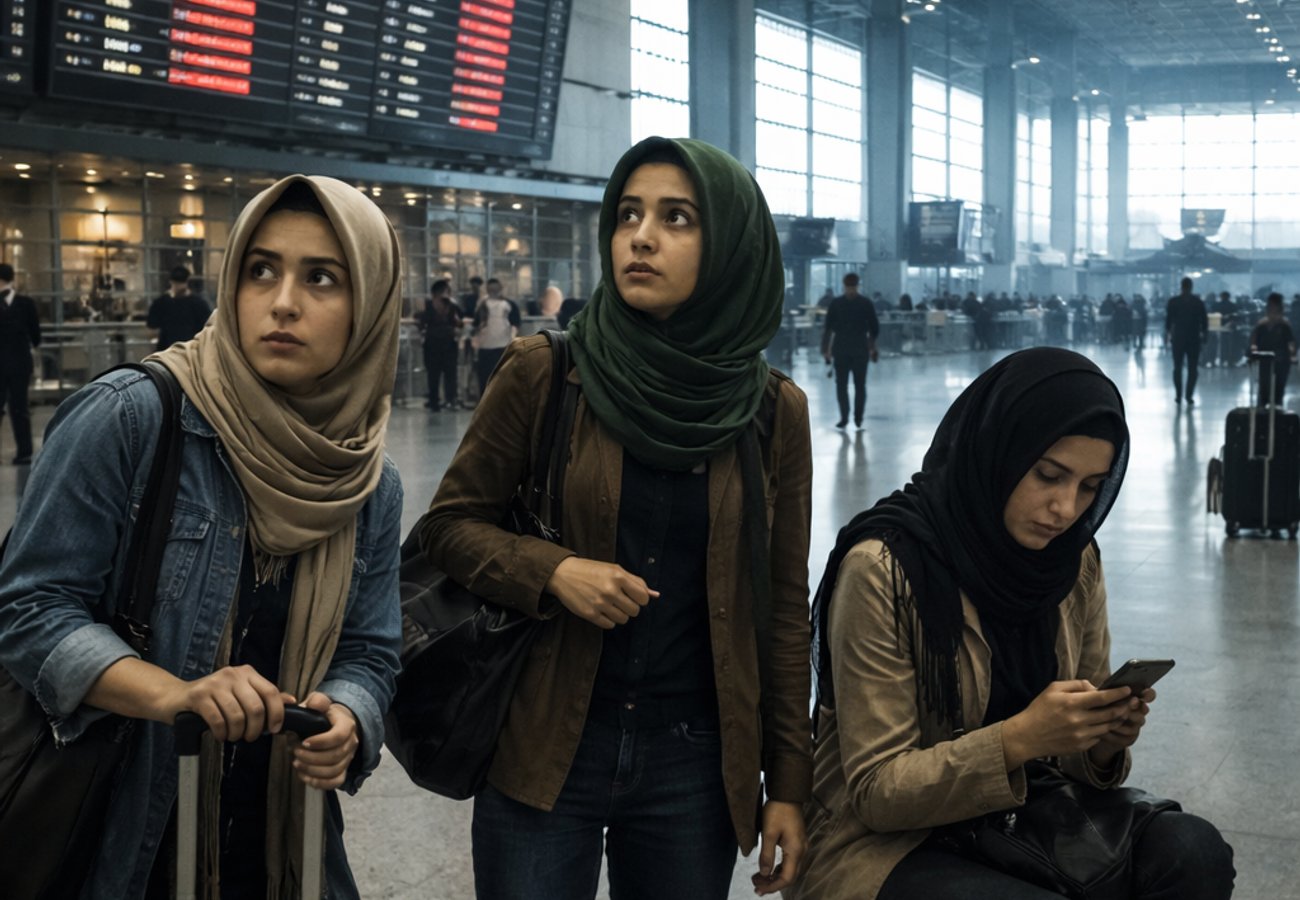
Image generated by AI
The Day Everything Stopped: Tehran's Airport Shuts Down
On June 8, 2026, civil aviation authorities at Tehran's Khomeini International Airport enacted an unprecedented halt on all incoming flights. The decision came in the aftermath of Iranian missile strikes on Israel—a geopolitical escalation that would reshape global aviation overnight.
What started as a regional security concern rapidly spiraled into one of the most severe disruptions to international air travel in recent history.
Why Did Iran Close Its Airspace?
The suspension wasn't arbitrary. Civil aviation authorities cited immediate safety concerns following the missile strikes, declaring all inbound flights halted "until further notice." The closure impacted one of Iran's two primary international gateways—a facility that had only recently reopened to civil traffic after previous conflicts.
The decision reflected heightened air defense alert levels and legitimate concerns over civilian aircraft transiting contested airspace. The Tehran Flight Information Region (OIIX) effectively closed to international commercial aviation, forcing every airline to recalculate routing.
Reddit: "I was supposed to land in Tehran on June 9th. Got the cancellation notification at 3 AM. No explanation, no rebooking options yet." — r/travel
Airlines didn't wait for official orders. Emirates, Qatar Airways, Turkish Airlines, Fly Dubai, and Pegasus immediately suspended or cancelled all Iran-bound services. Lufthansa and KLM followed suit, suspending regional operations entirely.
The Domino Effect: 5,000+ Cancellations in 48 Hours
The numbers were staggering.
Within the first two days of escalation, over 5,000 flights were cancelled globally. Major transit hubs—Dubai, Doha, and Abu Dhabi—experienced complete operational shutdowns. Airlines had depended on these Middle Eastern corridors for decades; suddenly, those routes vanished.
The knock-on effects rippled through every connected network. European carriers rerouting to avoid the region experienced cascading delays. U.S. and Canadian airlines circumvented the conflict zone entirely, adding hours to flights and exponentially increasing fuel costs.
Longer flight paths meant higher fuel consumption. Higher fuel consumption meant reduced airline profitability. The economic math was brutal and immediate.
The Money Disappears: $600 Million Lost Daily
The World Travel & Tourism Council (WTTC) released analysis that should have shocked every travel executive globally: the industry was hemorrhaging a minimum of $600 million every single day due to flight cancellations and blocked international travel.
But that was just the immediate crisis.
Oxford Economics projected far grimmer scenarios. If the conflict extended, inbound arrivals to the Middle East could plummet by 11–27%, translating to 23–38 million fewer visitors and losses between $34–$56 billion. The Airports Council documented that 27 million fewer travelers passed through major Middle Eastern airports in just the first two months.
These weren't abstract projections. Tourism infrastructure investments—hotels, attractions, services—built over years were suddenly generating zero revenue.
Which Regions Felt the Pain?
The damage extended far beyond Iran's borders:
United Arab Emirates — sustained reduced flight bookings and historic cancellation rates at Dubai International.
Saudi Arabia — tourism and business travel collapsed as flight connections evaporated.
Qatar — Doha's position as a global transit hub was compromised overnight.
Bahrain, Kuwait, and Iraq — experienced cascading flight cancellations and tourist arrivals plummeted.
Turkey, Europe, and Africa — travelers desperately sought alternate routes to avoid the entire Middle Eastern corridor, adding days and hundreds of dollars to journey costs.
Airlines faced an existential routing problem. Long-haul routes that had traditionally relied on Gulf hubs needed complete redesigns. The global aviation network, optimized over 40 years around these corridors, suddenly required wholesale restructuring.
What Airlines Actually Did
Carriers didn't just cancel flights—they implemented comprehensive operational restructuring.
Emirates eliminated all Iran services and began aggressive rerouting around risk zones. Qatar Airways decimated its Doha hub traffic, losing its competitive advantage overnight. Turkish Airlines, a critical Europe-Asia connector, experienced severe delays and cancellations cascading through its entire network.
Check real-time flight status through official aviation authorities to verify current corridor restrictions and safety designations.
The pattern was identical across every major carrier: suspend service, reroute where possible, communicate disruptions, absorb losses.
Practical Guidance for Trapped Travelers
If you're caught in this crisis—and thousands were—here's what actually works:
Monitor official airline communications first. Rely on your carrier's website or app, not social media rumors. Airlines update restrictions before public announcements reach news outlets.
Contact your airline or travel agent immediately about refund and rebooking options. Early contact increases flexibility; delayed contact means you're competing with thousands for limited alternative routing.
Check international travel advisories from your government before booking anything new. The U.S. State Department, UK Foreign Office, and EU travel services maintain updated regional security assessments.
Actively seek alternate routes that avoid Middle Eastern airspace entirely. Asia-Europe routes via African corridors, Russian airspace (if available), or southern Pacific pathways all avoid the conflict zone.
Purchase comprehensive travel insurance covering geopolitical disruptions. Standard policies exclude "acts of war"; specialized coverage exists specifically for these scenarios.
Monitor airport and airline updates constantly. Reopening announcements come with minimal warning; being informed means you can rebook before general awareness creates bottlenecks.
The Timeline and What Travelers Can Expect
No official reopening date exists for Khomeini International Airport's incoming flight suspension. Safety assessments are ongoing. Expect:
Short term (weeks): Continued suspension of all inbound civil traffic; severe flight cancellations across the region; pricing spikes on alternate routes.
Medium term (months): Gradual restoration if conditions permit; pricing normalization as airlines reestablish capacity; persistent bottlenecks at alternative hubs.
Long term (2026+): Partial recovery with residual caution; conservative airline forecasting; reduced Middle East tourism through year-end.
No timeline is guaranteed. Each airport suspension in recent history—Beirut in 2020, Baghdad in 2003—required months to years for full restoration.
The Bigger Picture: How Geopolitics Reshapes Global Travel
This crisis exposes a fundamental vulnerability in international aviation. Our networks are efficient precisely because they concentrate traffic through regional megahubs. Dubai, Doha, Abu Dhabi—these aren't just airports. They're economic arteries.
When one corridor closes, the entire system suffers.
Airlines will eventually adapt. Routes will be redesigned. New hubs will emerge. But the psychological damage is immediate: corporate travel planners will avoid the region for months even after reopening; tourists will rebook to alternative destinations; competitive advantage shifts.
The World Economic Forum estimates that aviation network disruptions of this magnitude take 18–36 months to fully resolve, even after security conditions normalize.
This isn't just an airline problem. Hotels lose bookings. Restaurants lose customers. Tourism workers lose jobs. The ripple effects penetrate every community dependent on travel.
Reddit: "Booked a family trip to Dubai in August. Just cancelled everything. Not risking it. Rebooking to Greece instead." — r/travel
That decision—multiplied across thousands of travelers—fundamentally reshapes tourism economics for 2026.
The Tehran airport suspension is a stark reminder that in our interconnected world, one closed runway can ground the dreams of millions.
Related Travel Guides
Disclaimer
This article is for informational and educational purposes only. It does not constitute legal, financial, or professional advice. While we strive to provide accurate and up-to-date information, travel policies, regulations, and conditions change rapidly. Always verify information with official sources before making travel decisions. Nomad Lawyer makes no representations about the accuracy, reliability, completeness, or suitability of the information provided. Readers should consult qualified professionals for advice specific to their circumstances. The views expressed in this article are those of the author and do not necessarily reflect the views of Nomad Lawyer.
Preeti Gunjan
Contributor & Community Manager
A passionate traveller and community builder. Preeti helps grow the Nomad Lawyer community, fostering engagement and bringing the reader experience to life.
Learn more about our team →