
Boeing 777 Freighter's Hidden Crew Rest Area: Inside Aviation's Most Spacious Cockpit Sanctuary
Breaking airline news and aviation industry updates for 2026.

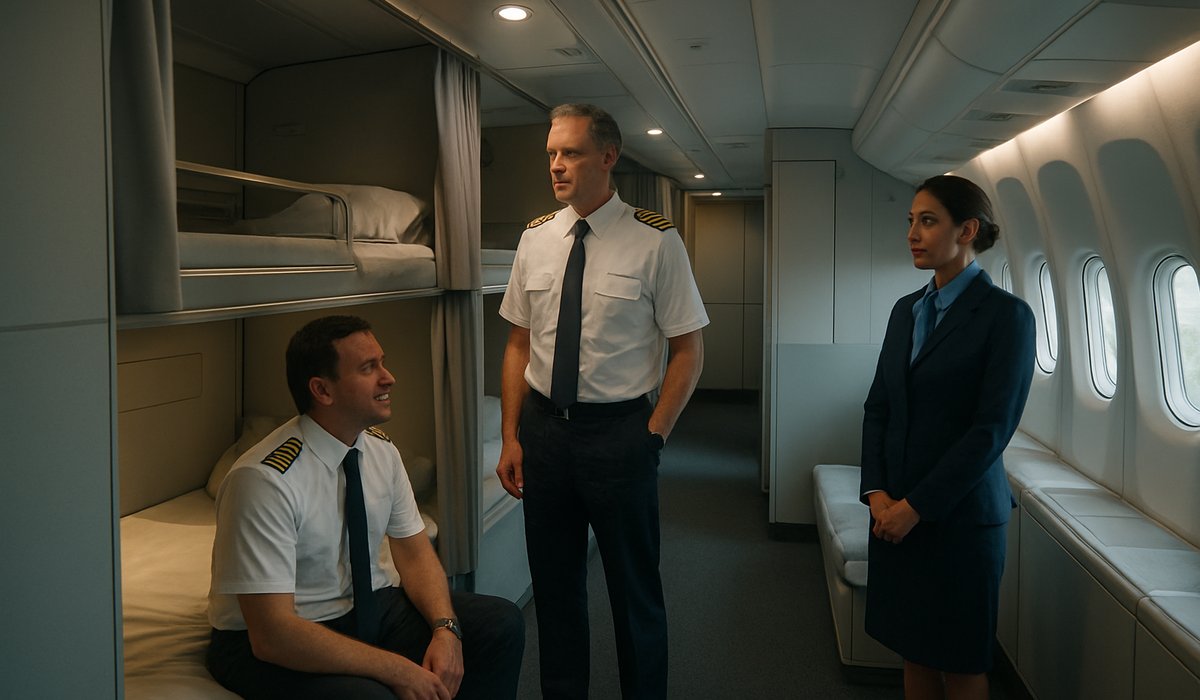
Image generated by AI
Boeing 777 Freighter's Hidden Crew Rest Area: Inside Aviation's Most Spacious Cockpit Sanctuary
Cargo pilots enjoy unprecedented comfort features in this specialized long-haul freighter design
The Unsung Advantage of Long-Haul Freight Operations
The Boeing 777 Freighter has earned its reputation as a workhorse of global logistics, capable of hauling massive payloads across continents without refueling. Yet industry insiders recognize that one of its most underappreciated assets lies not in its cargo hold, but in the expansive crew rest compartment hidden above the flight deck—a feature that fundamentally distinguishes freight operations from their passenger-carrying counterparts.
While commercial 777 passengers remain oblivious to the compact rest spaces integrated into the upper fuselage, freighter pilots operating these aircraft benefit from an entirely reimagined workspace. The 777F's supernumerary area represents a significant departure from standard airliner design, offering operational advantages that directly impact crew safety, fatigue management, and mission performance across extended transpacific and transcontinental routes.
A Purpose-Built Design for Extended Missions
The specialized crew rest compartment in the 777 Freighter reflects the unique demands of long-haul freight operations. Unlike passenger aircraft where rest facilities serve as emergency backup provisions, the 777F's design prioritizes crew welfare as a core operational requirement. The compartment provides sufficient space to accommodate relief pilots and flight engineers during ultra-long-range missions that can exceed 16 hours of continuous flight time.
This architectural distinction carries significant implications for aviation safety and operational efficiency. Extended rest periods during flight reduce pilot fatigue—a documented factor in aviation incidents—while enabling airlines to maximize aircraft utilization on high-value cargo routes. The spacious configuration allows crews to rotate through rest cycles that comply with increasingly stringent international fatigue management regulations.
Industry Impact on Global Logistics
The 777F's crew amenities underscore a broader evolution in freight aviation. As demand for rapid cargo transport surges—driven by e-commerce expansion and supply chain disruptions—operators are increasingly competing on operational efficiency and crew retention. Comfortable rest facilities have become a tangible recruitment and retention advantage for cargo carriers competing for experienced pilots in a tightening labor market.
The aircraft's design also reflects growing recognition within the aviation industry that crew welfare directly correlates with operational reliability. Airlines operating these freighters report improved scheduling flexibility and reduced cancellation rates when pilots have access to proper rest facilities during rotations.
What Separates Freighter Operations From Passenger Service
The distinction between 777 passenger and 777F freighter configurations extends far beyond cargo capacity. While both share the same fuselage envelope, the elimination of passenger seating in the freighter variant allows engineers to optimize the upper deck space specifically for crew comfort—creating what amounts to a premium rest sanctuary at 35,000 feet.
This design philosophy reflects the specialized nature of freight aviation and the operational realities of moving time-sensitive cargo across global markets.
FAQ: Boeing 777 Freighter Crew Operations
What is the crew rest area on a Boeing 777 Freighter? The crew rest compartment is a spacious supernumerary area located above the flight deck, designed to provide comfortable rest facilities for relief pilots and flight engineers during extended long-haul cargo missions exceeding 12-16 hours.
How does the 777F crew rest compare to passenger 777 aircraft? Freighter variants feature significantly expanded rest compartments compared to the compact emergency rest spaces in commercial 777s, reflecting the operational necessity of crew rotation during lengthy transpacific freight routes.
Why is crew rest important in cargo aviation? Extended rest periods during flight reduce pilot fatigue, improve flight safety, enable better crew scheduling, and enhance operational reliability—directly impacting an airline's ability to maintain consistent freight service.
How do improved crew facilities affect cargo airline operations? Enhanced crew amenities improve pilot recruitment and retention, reduce fatigue-related operational disruptions, and allow carriers to maximize aircraft utilization on high-value international cargo routes.
Are crew rest requirements standardized across all freighter operations? International aviation authorities including EASA and FAA establish fatigue management regulations, though specific rest facility standards vary by aircraft type and operator, with the 777F setting industry benchmarks for spaciousness and functionality.
Related Travel Guides
Flight Delay Compensation Guide 2026
Understanding Airline Route Changes
Airport Security Process Updated (2026)
External Resources
Disclaimer: Airline announcements, route changes, and fleet information reflect official corporate communications as of April 2026. Schedules, aircraft specifications, and service details remain subject to airline modifications.
Raushan Kumar
Founder & Lead Developer
Full-stack developer with 11+ years of experience and a passionate traveller. Raushan built Nomad Lawyer from the ground up with a vision to create the best travel and law experience on the web.
Learn more about our team →