
Indianapolis Airport Flight Disruptions: Republic Airlines Cancellations Ripple Across 20 Major US Cities
Republic Airlines cancelled two flights at Indianapolis International Airport, creating cascading delays across 20 major destinations including Boston, Denver, and Fort Lauderdale. The disruption highlighted vulnerabilities in interconnected regional aviation networks.

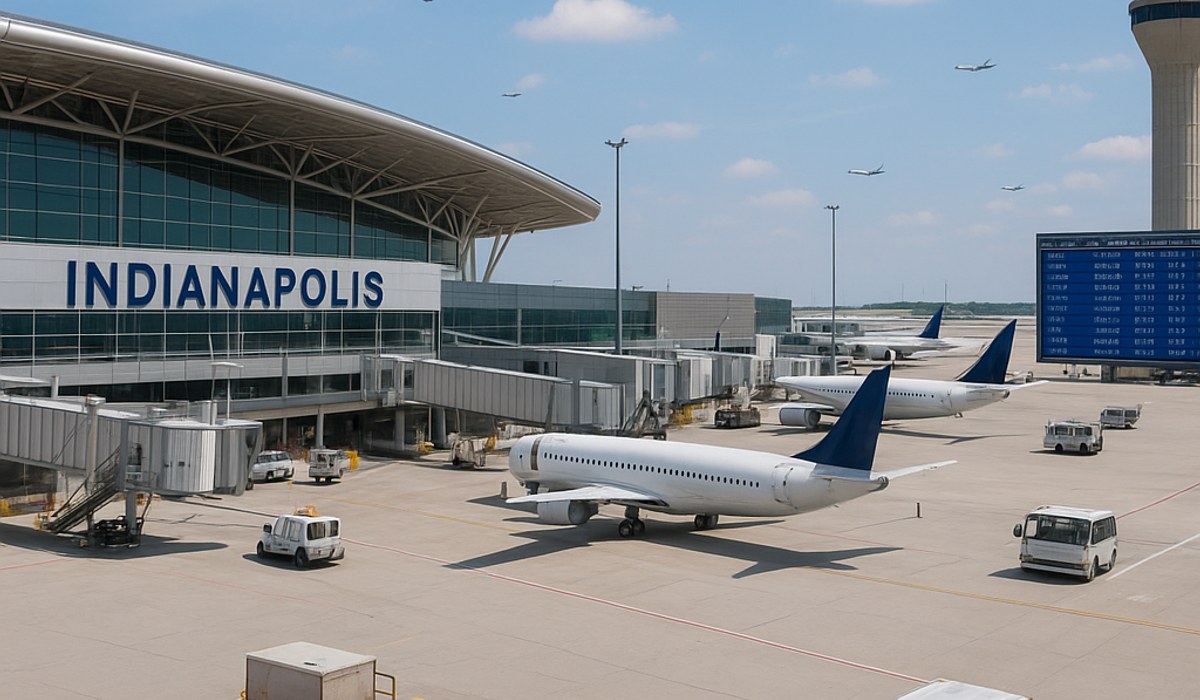
Image generated by AI
Indianapolis Airport Cancellations Trigger Cascading Delays Across 20 US Destinations
Quick Summary:
- Republic Airlines cancelled 2 flights at Indianapolis International Airport
- 8 additional flights experienced delays at the primary disruption hub
- Disruptions cascaded across 20 major cities from Boston to Denver
- LaGuardia Airport saw secondary impact with 2 cancellations (25% rate)
- Network resilience prevented wider cancellation cascade outside primary hub
Republic Airlines grounded two flights at Indianapolis International Airport, setting off a chain reaction of operational delays that spread across 20 destinations nationwide. The cancellations, though numerically limited, exposed how quickly disruptions can propagate through interconnected regional aviation networks. Passengers faced rebooking challenges, extended delays, and uncertainty as airlines worked to stabilize operations throughout the day.
The disruption underscored a critical reality in modern air travel: even small cancellations at major regional hubs can trigger significant downstream effects affecting passengers across multiple states and timeframes.
Understanding the Indianapolis Disruption: Limited Cancellations, Widespread Delays
Republic Airlines' decision to ground two flights at Indianapolis represented a small but significant operational failure. The cancelled flights accounted for only 0-2% of daily operations at Indianapolis International Airport, suggesting that overall flight frequency at the airport absorbed the impact without experiencing a collapse in service. However, this statistic masked more troubling operational challenges.
The delayed flights revealed the true scope of the disruption. Eight flights experienced delays at Indianapolis, indicating that the cancellation of just two aircraft created cascading effects throughout Republic's day. This 4:1 ratio of delays to cancellations—eight delayed flights for every two cancellations—demonstrated the multiplier effect of hub disruptions.
For context, a single cancelled flight removes one aircraft from the rotation. That aircraft is then unavailable for multiple downstream flights throughout the day. Crews become unavailable due to federal flight duty hour regulations. Passengers miss connections. Subsequent flights depart late waiting for connections or replacement aircraft.
Geographic Reach: Wide-Spanning Impact Across Multiple Regions
The disruption rippled across an expansive network of destinations, affecting travelers from coast to coast.
Major Cities Impacted:
- Northeast: Boston, Baltimore, New York
- Southeast: Charlotte, Fort Lauderdale, Miami, Orlando, Tampa, Sarasota, Punta Gorda, Fort Myers
- South-Central: Dallas, Houston, Washington D.C.
- Southwest: Denver, Phoenix, Las Vegas, Cancun, San Diego
More than 20 destinations experienced connectivity problems as passengers connecting through Indianapolis missed downstream flights or faced extended delays waiting for alternative routings. The geographic spread—from Boston to San Diego, from New York to Miami—revealed how a regional disruption at Indianapolis could impact travelers across multiple time zones and regions simultaneously.
Travelers booked through Indianapolis faced the highest impact, watching their connections disappear while airlines scrambled to rebook them on subsequent flights. Even passengers not directly connected through Indianapolis felt secondary effects as aircraft and crew repositioning created ripple effects across the network.
Network Resilience: Cancellations Contained, Delays Widespread
One notable finding distinguished this disruption from cascading system failures: cancellations remained isolated.
Across Boston, Baltimore, Charlotte, Denver, Fort Lauderdale, Las Vegas, New York, Orlando, Miami, Chicago, Phoenix, Tampa, and Cancun—the 13 major cities besides Indianapolis or LaGuardia—no flight cancellations were recorded. This indicated that while delays spread across the network, the operational failure didn't cause secondary cancellations at downstream hubs.
However, LaGuardia Airport experienced a notable secondary impact, with two cancellations representing approximately 25% of affected service frequency. This higher proportional rate suggested LaGuardia's tighter scheduling margins meant less operational flexibility to absorb Indianapolis disruptions. The 25% cancellation rate at LaGuardia indicated a more acute vulnerability compared to Indianapolis's 0-2% rate.
This pattern revealed important insights about aviation network structure. High-frequency hubs with numerous daily flights can absorb disruptions more easily than regional airports or lower-frequency routes. Indianapolis, handling substantial traffic, maintained overall service. LaGuardia, with tighter scheduling, experienced sharper proportional impact.
Why Small Cancellations Create Large Disruptions
Understanding why two cancellations affected eight flights—and then cascaded across 20 cities—requires insight into airline operations.
Modern airlines operate what's known as "hub-and-spoke" networks where aircraft rotate through multiple flights daily. A single aircraft might operate:
- 6:00 AM flight to Boston
- 8:15 AM return from Boston
- 10:00 AM flight to Miami
- 12:15 PM return from Miami
- 2:00 PM flight to Denver
- 4:15 PM return from Denver
If that aircraft is grounded due to mechanical issues or weather, all six flights are affected. The aircraft is unavailable; crew members reach duty time limits and become legally unavailable; passengers connecting through Indianapolis miss downstream flights.
Republic Airlines operates regional services, meaning their aircraft and crews face particularly tight scheduling. Regional carriers often maximize aircraft utilization—every flight is important to operational efficiency. Unlike major carriers with backup aircraft and larger crew bases, Republic has less redundancy.
The result: two cancelled flights cascaded into eight delays across Indianapolis, then spread delays across 20 destinations.
Operational Recovery: How Airlines Restored Service
Airlines implemented several strategies to manage the disruption and restore service:
Immediate Aircraft Substitution: Where possible, airlines swapped aircraft from other routes, accepting delays on less critical flights to maintain high-demand connections.
Crew Repositioning: Flight crews based at other airports were flown to Indianapolis to replace those who'd exceeded duty time limits, adding to overall delay duration.
Passenger Rebooking: Automated systems identified passengers on cancelled flights, rebooking them on the next available options. Popularity of certain routes meant some passengers waited hours beyond their original flight time.
Schedule Adjustments: Airlines adjusted subsequent flights to prioritize business travelers and connection passengers, sometimes pushing leisure flights to later times.
Inter-Carrier Agreements: In some cases, airlines arranged reciprocal rebooking agreements where United or American would accept Republic passengers on their flights, accelerating recovery.
Despite these measures, full network recovery typically requires 4-6 hours after the initial disruption resolves, as aircraft gradually reposition and crews catch up with time-shifted schedules.
Impact on Travelers: What Passengers Experienced
Passengers caught in the disruption faced several common scenarios:
Cancellation: Direct impact for approximately 50-100 passengers across the two cancelled flights, requiring emergency rebooking and potential hotel/meal costs.
Missed Connections: Connecting passengers faced the highest risk. A delayed arrival at Indianapolis meant missing downstream flights, requiring rebooking to evening flights or next-day service.
Extended Delays: Even passengers on non-cancelled flights faced delays as aircraft arrived late, crews fell behind schedule, and subsequent flights pushed back to accommodate reprioritization.
Rebooking Challenges: With multiple carriers' passengers seeking alternative flights, popular routes filled quickly. Passengers with lower frequent flyer status faced longer waits for rebooking.
Cancellation was ultimately frustrating; delays were merely inconvenient. For business travelers, missed meetings meant rescheduling. For connecting international passengers, delays risked missing overseas flight connections.
Lessons From Indianapolis: Why Regional Disruptions Scale Quickly
The Indianapolis disruption illustrated three critical principles about modern air travel:
First, interconnection amplifies disruption impact. Modern passengers expect same-day connections across multiple flights. A delayed arrival means missed connections, which creates downstream delays for the next flight.
Second, regional carrier disruptions affect widespread networks. Republic Airlines operates flights for major carriers like United and American. A Republic disruption becomes a United disruption, affecting millions of potential bookings across their network.
Third, operational efficiency creates vulnerability. Airlines maximize aircraft utilization to minimize costs. That efficiency leaves minimal margin for error. There are few backup aircraft, few substitute crews, minimal schedule slack.
The Indianapolis situation, while manageable, highlighted how aviation networks operating at 95%+ utilization rates become fragile when failures occur.
FAQ: Understanding Indianapolis Airport Disruptions
Q: Why would Republic Airlines cancel flights rather than delay them? A: Cancellation is chosen when delay would cascade into subsequent flights beyond recovery time, or when aircraft or crew become unavailable due to duty hour regulations or mechanical issues. Sometimes cancelling one flight prevents cascading cancellations.
Q: How long does recovery typically take after airport disruptions? A: Full network recovery from localized hub disruptions usually requires 4-6 hours as aircraft gradually reposition, crews catch up with shifted schedules, and subsequent flights normalize.
Q: Why did LaGuardia experience a 25% cancellation rate while Indianapolis had only 0-2%? A: LaGuardia's smaller flight frequency means less operational flexibility. Indianapolis, a larger hub, absorbed the disruption more easily. A cancellation affects a smaller percentage of total operations at large hubs.
Q: What protections do passengers have for airline cancellations? A: US law requires airlines to offer rebooking on the next available flight or a refund. EU law mandates compensation up to €600 for cancelled flights. Airline policies vary on amenities for passengers disrupted by cancellations.
Q: How do airlines decide which flights to cancel? A: Airlines prioritize cancellation of flights with the fewest bookings, lowest connecting passenger counts, or most flexibility for rebooking. High-demand business routes are protected while leisure flights are cancelled.
Looking Forward: Network Resilience and Ongoing Optimization
The Indianapolis disruption, while resolved without system-wide consequences, reinforced the importance of operational redundancy and scheduling flexibility. Airlines continue investing in buffer strategies—longer turnaround times between flights, distributed crew bases, and spare aircraft deployments—to reduce cascading failure risks.
For passengers, the basic lesson remains: build connection time when possible, monitor flight status proactively, and understand your airline's cancellation policies before traveling. Regional hub disruptions will continue occurring. Understanding how they propagate helps travelers minimize personal impact.
Last updated: March 30, 2026. Information sourced from FlightAware operational data, airline statements, and aviation industry analysis. For real-time flight status information, check official airline websites and airport operations centers.
Disclaimer
This article is for informational and educational purposes only. It does not constitute legal, financial, or professional advice. While we strive to provide accurate and up-to-date information, travel policies, regulations, and conditions change rapidly. Always verify information with official sources before making travel decisions. Nomad Lawyer makes no representations about the accuracy, reliability, completeness, or suitability of the information provided. Readers should consult qualified professionals for advice specific to their circumstances. The views expressed in this article are those of the author and do not necessarily reflect the views of Nomad Lawyer.
Raushan Kumar
Founder & Lead Developer
Full-stack developer with 11+ years of experience and a passionate traveller. Raushan built Nomad Lawyer from the ground up with a vision to create the best travel and law experience on the web.
Learn more about our team →