
The 5 Best Natural Wonders to Visit in Indiana: Exploring the Hidden Midwest Anomalies
Completely shattering the illusion of the flat Midwestern plains, Indiana harbors massive glacial lakes, towering sand dunes, and deep subterranean cave systems.

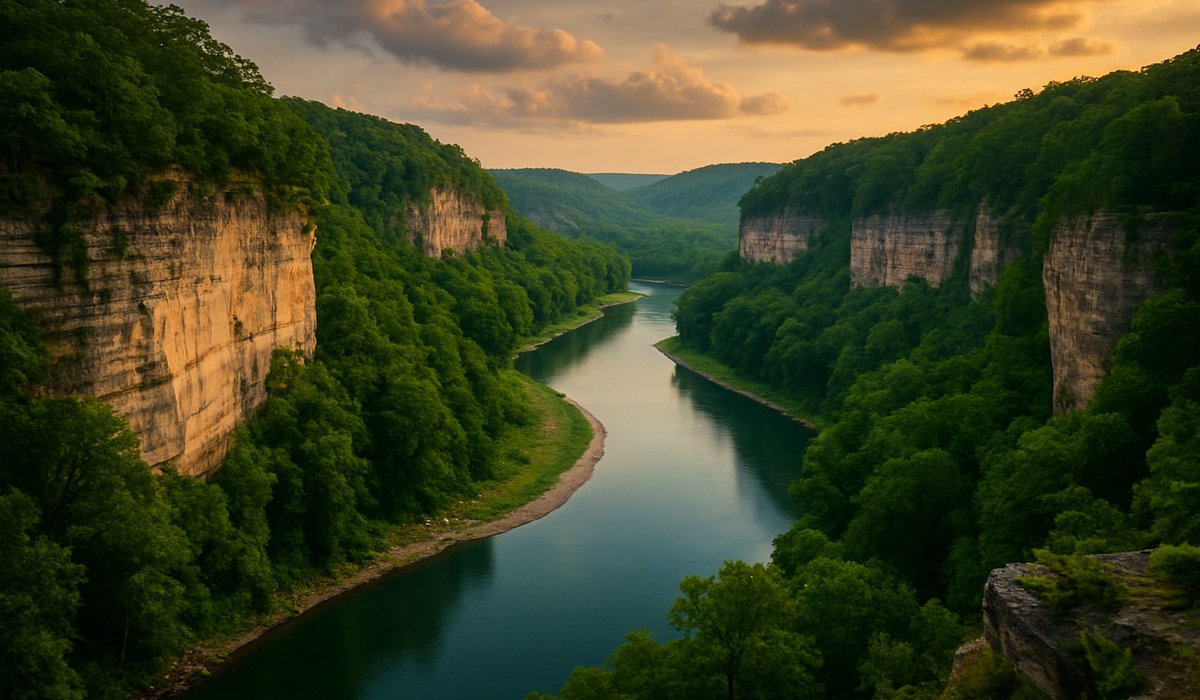
Image generated by AI
Breaking the Midwestern Topographical Stereotype
Fundamentally rejecting the deeply ingrained, coastal misconception that the American Midwest is entirely composed of endless, flat agricultural grids, Indiana secretly possesses a heavily concentrated collection of extreme geological anomalies. Due to massive, ancient glacial shifting and the incredible power of the Great Lakes, the state physically harbors towering oceanic-style sand dunes, plunging limestone canyons, and some of the most expansive subterranean cave networks on the continent. For the modern luxury explorer in 2026, bypassing the heavily congested national parks of the American West and pivoting to these underrated Indiana phenomena provides an incredibly serene, historically rich travel experience.
The allure of Indiana's natural wonders lies in their sheer contrast to the surrounding terrain. A tourist can drive for hours across perfectly flat soybean fields, only to suddenly crest a ridge and find themselves staring down a heavily forested, 300-foot gorge or standing before a massive, dark limestone cavern entrance. These specific geographical deviations create intense, localized micro-climates that support incredibly rare, heavily protected flora and fauna completely foreign to standard Midwestern biology.
Indiana Dunes National Park: The Absolute Geological Apex
Recently recognized by the federal government and mathematically upgraded to full "National Park" status, the Indiana Dunes represent the absolute crown jewel of the state.
Situated aggressively on the southern edge of the massive, ocean-like Lake Michigan, this park features an incredibly chaotic, violently diverse ecosystem. Over thousands of years, the lake winds have dynamically piled the sand into towering, highly unstable hills. Tourists hiking the brutally exhausting "Cowles Bog Trail" execute a punishing vertical climb up a massive dune, only to be rewarded with a sweeping, panoramic view of the Chicago skyline hovering majestically across the water. The park brilliantly forces arctic habitats, desert-like sand fields, and dense deciduous forests to mathematically intersect within mere yards of one another.
The Premier Indiana Geological Cohort
| Natural Wonder | Geographic Zone | The Defining Geological Feature |
|---|---|---|
| Indiana Dunes National Park | Northern Shoreline | Massive, shifting lakeside sand hills clashing with rare oak savannas. |
| Marengo Cave | Southern Indiana | A U.S. National Natural Landmark featuring hyper-massive subterranean limestone crystal formations. |
| Brown County State Park | Central Ridgeline | Known as the "Little Smokies," featuring deep, undulating ravines causing extreme autumn color explosions. |
| Hemlock Cliffs | Hoosier National Forest | A dramatic, plunging box canyon featuring ancient sandstone rock shelters and seasonal waterfalls. |
| Cataract Falls | West Central | The largest mathematical waterfall system in the state by absolute volume, plummeting violently over multi-stepped limestone drops. |
What Guests Get
- Redefining the Midwest — realizing that Indiana is not just a fly-over state; it is a heavily layered geological mosaic featuring massive ancient glaciers and ancient seas.
- Subterranean immersion — grasping that Southern Indiana sits atop thousands of miles of hollow limestone, offering some of the most accessible cavern exploration in the country.
- Micro-economic accessibility — understanding that visiting these national and state-level parks costs a microscopic fraction of the massive entry fees and lodging costs associated with Yellowstone or Yosemite.
What This Means for Travelers
If you are mapping an itinerary to the Indiana Dunes: You must heavily understand the physical reality of "Dune Hiking." Walking uphill through loose, deep sand is mathematically three times as physically exhausting as walking on a paved incline. Do not attempt the infamous "3-Dune Challenge" at midday in the brutal heat of July without a minimum of one gallon of water per person. Furthermore, the parking infrastructure near the beach is heavily limited; to secure a spot for sunset over Lake Michigan, you must physically arrive significantly before 4:00 PM.
The Southern Cave Corridor: If your itinerary focuses on the extreme geological formations of Southern Indiana (like Marengo Cave or Wyandotte Caves), you must bring dedicated, heavy warm-weather layering regardless of the surficial temperature. The subterranean climate inside these massive limestone networks mathematically remains a permanent, chilling 52°F (11°C) year-round. A light jacket is absolutely mandatory for survival, completely discarding whatever summer clothing you required on the surface.
FAQ: Exploring Indiana's Anomalies
Can you swim at the Indiana Dunes? Absolutely. The park features 15 miles of pristine coastline along Lake Michigan. However, the lake frequently produces highly aggressive, ocean-like rip currents. Always obey local flag warnings; if the red flags are flying, the water is mathematically lethal.
Are the caves hard to walk through? It varies heavily. Commercial caves like Marengo offer beautifully paved, heavily lit pathways perfect for casual tourists. However, deep-exploration tours frequently require true "spelunking," forcing you to army-crawl through freezing mud in complete darkness.
When is the best time to visit Brown County? October is the absolute apex. As the "Little Smokies," the massive forests in Brown County produce an intense, globally recognized autumn color change. You must book local cabin rentals nearly a year in advance to view the foliage.
Related Travel Guides
- Salvador's Festival da Primavera 2026: Month-Long Afro-Brazilian Music, Sunset Serenades, and Street Gastronomy
- Cuba Deploys Tarea Vida 100-Year Climate Master Plan to Defend Varadero and Cayo Coco Resort Infrastructure Against Shoreline Erosion
- Provence-Alpes-Côte d'Azur Regional Tourism Board Expands Off-Season Rail and Heritage Routes as France Targets 102 Million European Winter Travelers
Disclaimer
This article is for informational and educational purposes only. It does not constitute legal, financial, or professional advice. While we strive to provide accurate and up-to-date information, travel policies, regulations, and conditions change rapidly. Always verify information with official sources before making travel decisions. Nomad Lawyer makes no representations about the accuracy, reliability, completeness, or suitability of the information provided. Readers should consult qualified professionals for advice specific to their circumstances. The views expressed in this article are those of the author and do not necessarily reflect the views of Nomad Lawyer.
Raushan Kumar
Founder & Lead Developer
Full-stack developer with 11+ years of experience and a passionate traveller. Raushan built Nomad Lawyer from the ground up with a vision to create the best travel and law experience on the web.
Learn more about our team →