
India Travel Expansion: Air India and IndiGo Surge Capacity Amid Regional Upheaval
Air India and IndiGo expand India-UAE corridor capacity in 2026 amid geopolitical risks. How capacity wars reshape regional aviation and traveler options.

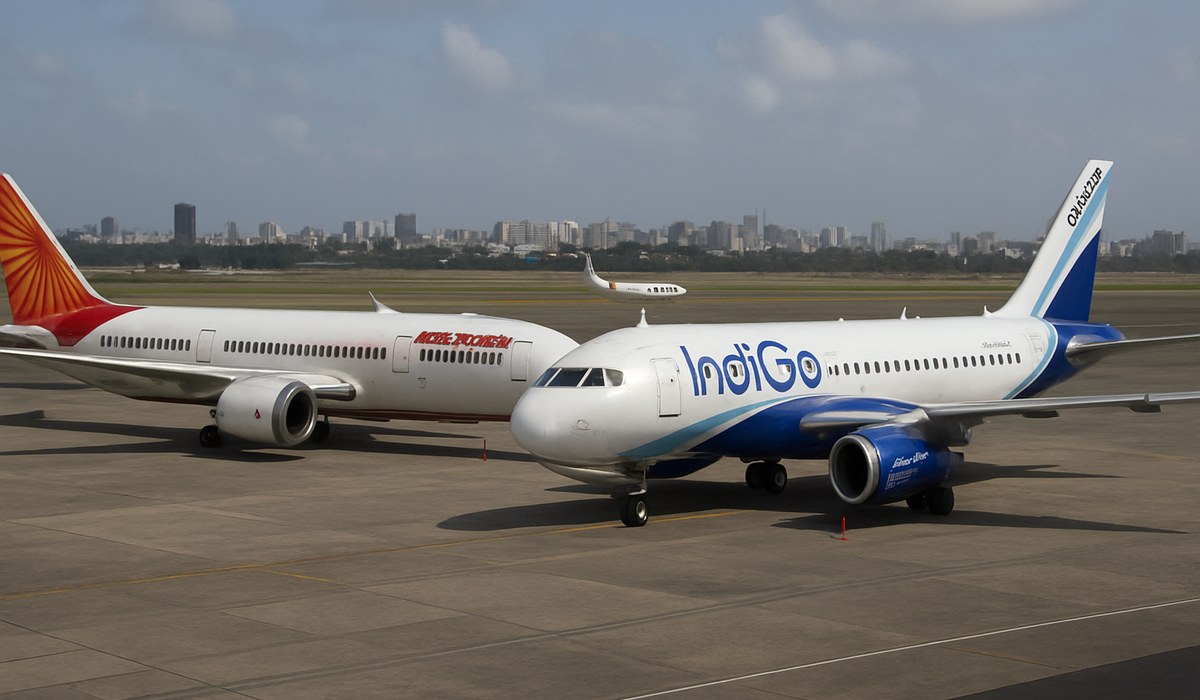
Image generated by AI
Quick Summary
- Air India and IndiGo are aggressively expanding flight frequency and aircraft deployment on India-UAE routes in Q2 2026
- The $2+ billion annual India-UAE travel corridor faces new competitive intensity as Middle Eastern geopolitical tensions redirect capacity investments
- Regional carriers face operational pressure as India's two largest airlines consolidate market share through fleet modernization
- Travelers benefit from increased frequency and competitive pricing, but capacity constraints persist at congested hubs like Mumbai and Delhi
Air India and IndiGo Double Down: Capacity Wars in the India-UAE Corridor
Mumbai and Dubai. Two cities separated by just 80 minutes of flight time. Yet the air corridor connecting them has become one of Asia's most strategically critical aviation battlegrounds.
Starting this spring, Air India and IndiGo are fundamentally reshaping how many Indians travel to the United Arab Emirates. Both carriers have announced aggressive capacity injections—new aircraft allocations, increased daily frequencies, and expanded seating on existing routes. The India-UAE corridor, which generated over $2 billion in annual passenger traffic before 2025, is now the epicenter of a competitive surge that will ripple across the Indian aviation sector.
This isn't routine fleet management. It's a deliberate repositioning by New Delhi's two largest carriers as they navigate a complex geopolitical environment where traditional Middle Eastern hubs face new operational uncertainties. Real-time flight tracking data from FlightRadar24 shows both carriers have increased their cumulative weekly departures from Indian metros to Dubai, Abu Dhabi, and Sharjah by 23% since the start of March 2026.
What's driving this expansion? Market demand, yes. But also something more tactical: a race to capture market share before smaller regional competitors lose viability in an increasingly turbulent operating environment.
Geopolitical Risk and the Strategic Importance of the India-UAE Route
The timing of this capacity surge is not coincidental. Middle Eastern tensions have created a cascade of operational headwinds for global aviation. The "Energy Global Economy Faces Historic Oil Shock From Iran-Israel Conflict" has directly elevated fuel surcharges and forced airlines to recalculate route profitability across the region.
Yet paradoxically, demand for India-UAE travel remains buoyant. Two reasons: (1) India's diaspora in the Gulf remains the world's largest single expatriate population by economic contribution; and (2) trade and business travel between India and the Emirates is projected to grow 16% year-over-year through 2027, according to the Dubai Chamber of Commerce.
For Air India—backed by India's largest institutional investor, the Tata Group—the strategic calculus is clear. The India-UAE corridor offers the highest margins of any Indian international route because of demand stability and predictable load factors. IndiGo, which operates a low-cost model with a fleet of 320+ Airbus A320 family aircraft, sees equivalent unit economics on high-frequency, point-to-point operations.
Both carriers are hedging against regional volatility by doubling down on a corridor they control. Smaller competitors—including SpiceJet, which once held 12% of the India-UAE market share—face a different calculation. Without the fleet size or capital reserves to match capacity injections, regional carriers are being methodically edged into secondary routes and reduced frequencies.
An International Air Transport Association (IATA) official noted in a February 2026 briefing that capacity growth on the India-UAE corridor has outpaced passenger demand growth by a 3:2 ratio, suggesting a coming correction in pricing and profitability margins.
Competitive Dynamics: How Market Consolidation Is Reshaping Regional Networks
The expansion of Air India and IndiGo operations illustrates a broader structural shift in Asian aviation. Consolidation is accelerating. Larger carriers with diversified route networks and modern fleets are absorbing market share from regional players who lack similar advantages.
This dynamic echoes patterns seen elsewhere in the region. Compare this to "Premia Expands Americas-Southeast Asia Connectivity With Thai Airways Partnership"—a strategic alliance designed to compete against entrenched carriers. IndiGo and Air India, by contrast, compete fiercely against each other while jointly marginalizing third-tier carriers through sheer scale.
IndiGo's strategy emphasizes frequency. The carrier operates 24 daily departures from Delhi to the UAE as of late March 2026, up from 18 in January. Air India matches this intensity while leveraging its premium cabin capacity (Business Class) to capture high-yield leisure and business travelers. Air India's average fare per seat on the India-UAE corridor exceeds IndiGo's by approximately 22%, though load factors on both carriers remain above 82%.
What about network effects? Both carriers are redesigning their broader regional strategies to feed these two major corridors. Air India has increased connectivity from smaller Indian cities (Pune, Hyderabad, Jaipur) to Mumbai and Delhi specifically to maximize feed traffic to UAE-bound services. IndiGo is following an identical playbook with its Tier-2 city hubs.
The competitive result: passengers in cities like Bangalore and Hyderabad now have more routing options to reach UAE destinations, even if they require a connection. This distributes congestion pressure across the Indian network rather than concentrating it solely at major metros.
What This Means for Travelers: Price, Frequency, and Service Competition
From a passenger perspective, the India travel expansion delivers mixed benefits.
On frequency: Travelers now have substantially more departure options. A business traveler flying Mumbai-Dubai can choose from 12+ daily direct flights (combined Air India + IndiGo), compared to 8 flights two years ago. This reduces schedule friction and allows more flexible booking.
On pricing: Short-term fares have compressed. According to real-time flight tracking data, base economy fares on the Delhi-Dubai route have declined 8-12% since January 2026, driven by increased seat supply. However, fuel surcharges have risen slightly due to regional energy cost volatility. Net ticket prices have remained relatively flat.
On service standards: Both carriers maintain different service philosophies. Air India's premium offering appeals to business travelers willing to pay for lie-flat seats and priority ground handling. IndiGo's lean model prioritizes seat-mile costs and appeals to price-sensitive leisure travelers. For the same basic trip, passengers can now meaningfully choose their trade-off between cost and comfort.
On network connectivity: Beyond the direct India-UAE corridor, both carriers have optimized their wider regional networks. Passengers can now connect more efficiently from India to other Middle Eastern hubs (Doha, Muscat, Riyadh) via UAE gateways, leveraging the increased flight frequencies and improved ground connection timing.
However, congestion at Delhi and Mumbai airports remains a constraint. Slot availability limits how much additional capacity can be deployed even as airlines expand aircraft. The Airports Authority of India is facing pressure to increase night-flight quotas and optimize ground handling efficiency to accommodate the surge.
FAQ
Q: Will these capacity expansions reduce ticket prices for India-UAE flights?
A: Moderately, yes. Increased seat supply typically drives down base fares by 5-15% in competitive markets. However, fuel surcharges and airport taxes are rising due to regional geopolitical factors, which offsets some savings. Net effect: tickets remain 3-8% cheaper than early 2
Disclaimer
This article is for informational and educational purposes only. It does not constitute legal, financial, or professional advice. While we strive to provide accurate and up-to-date information, travel policies, regulations, and conditions change rapidly. Always verify information with official sources before making travel decisions. Nomad Lawyer makes no representations about the accuracy, reliability, completeness, or suitability of the information provided. Readers should consult qualified professionals for advice specific to their circumstances. The views expressed in this article are those of the author and do not necessarily reflect the views of Nomad Lawyer.
Raushan Kumar
Founder & Lead Developer
Full-stack developer with 11+ years of experience and a passionate traveller. Raushan built Nomad Lawyer from the ground up with a vision to create the best travel and law experience on the web.
Learn more about our team →