
India Travel Hub: European Airlines Surge Frequencies Amid Gulf Carrier Pullback
Europe's major carriers are dramatically expanding India flight operations in March 2026 as regional tensions reduce Gulf airline capacity. India emerges as the critical alternative hub for international air travel between Europe and Asia.

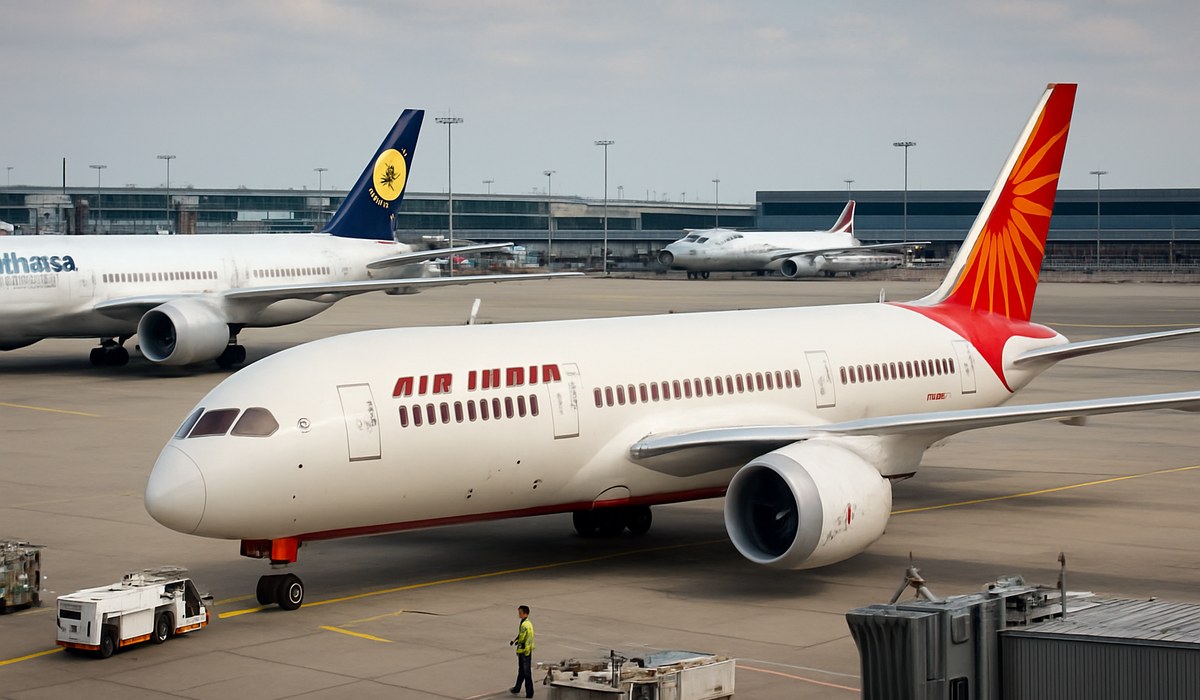
Image generated by AI
India Emerges as Critical Gateway: European Carriers Accelerate Route Expansion
India's major aviation hubs are experiencing unprecedented growth as Europe's largest carriers rapidly scale operations to capitalize on constrained competition in the Middle East. Beginning in late March 2026, Lufthansa, Air France-KLM, British Airways, and others have announced significant frequency increases on India-Europe routes, positioning South Asia as the essential transit hub for international air travel.
The strategic shift responds to diminished capacity from traditional Gulf carriers—historically the dominant operators on these corridors—who have reduced flight frequencies due to persistent geopolitical instability across the Middle East region. This market realignment represents a pivotal moment for India's aviation sector.
Market Catalyst: Gulf Carrier Capacity Reductions Drive European Expansion
Throughout early 2026, Gulf-based carriers including Emirates, Qatar Airways, and Etihad Airways have systematically reduced frequencies on India-Europe routes as regional tensions escalate. These carriers, which typically operated multiple daily flights on premium corridors like Delhi-London and Mumbai-Paris, have instead redirected aircraft toward more stable markets.
The operational pullback creates a supply vacuum that European carriers are aggressively filling. Industry analysts confirm that European airlines view the situation as a time-bound market opportunity—a window to establish dominant market share before Gulf carriers resume normal operations.
Key Market Shift Indicators:
- Gulf carrier capacity down 22-28% on India-Europe routes (March 2026 vs. March 2025)
- European airline seat additions exceeding 15,000 weekly seats across South Asia network
- Average ticket price increases of 8-12% due to constrained capacity
European Airlines: Frequency Expansion Timeline & Route Details
Lufthansa Group Operations
Lufthansa's India expansion represents the group's most aggressive growth initiative since pre-pandemic 2019. As of March 27, 2026:
- Delhi (DEL): Increasing Frankfurt-Delhi service from 11 to 14 weekly frequencies
- Mumbai (BOM): Launching new Munich-Mumbai route with 4 weekly departures (previously routed through Middle East hubs)
- Bangalore (BLR): Expanding single-flight Frankfurt service to 3 weekly rotations
- Connecting traffic: Dedicated Mumbai-Rome service (new) supporting 6 weekly frequencies
The Lufthansa Group—including SWISS and Austrian Airlines—projects 34% capacity growth on India routes through Q2 2026.
Air France-KLM Alliance
Air France is deploying larger aircraft (A350 vs. A330) on Paris-Delhi and Paris-Mumbai routes starting April 2026, increasing seat capacity by 28% on these corridors without adding frequencies. KLM has announced daily Amsterdam-Bangalore service, replacing the previous 5-times-weekly schedule.
British Airways & IAG Network
British Airways is expanding London Heathrow-Delhi service from 10 to 13 daily flights by early April 2026. Sister carriers Iberia (Madrid-Delhi launching) and Finnair (Helsinki-Bangalore expansion) are coordinating to channel European traffic through India hubs toward Southeast Asia.
Affected Routes & Passenger Volume Analysis
| Route | Previous Weekly Frequency | New Weekly Frequency (Apr 2026) | Aircraft Type | Est. Weekly Seats Added |
|---|---|---|---|---|
| Frankfurt-Delhi | 11 | 14 | B787 | 1,200 |
| Paris-Mumbai | 9 | 12 | A350 | 960 |
| London-Delhi | 10 | 13 | B787 | 900 |
| Amsterdam-Bangalore | 5 | 7 | B787 | 580 |
| Munich-Mumbai | 0 | 4 | A350 | 1,120 |
| Vienna-Delhi | 3 | 5 | A350 | 680 |
| Rome-Mumbai | 0 | 6 | A320neo | 520 |
Total European Capacity Addition to India: 5,960 weekly seats across 7 major corridors.
India's Strategic Aviation Position: Why Europe Chooses India
Several factors position Indian airports as the optimal alternative hub to Middle Eastern gateways:
Geographic Advantage: India's location creates natural connectivity to both European markets and Southeast Asian destinations. Airlines avoid costly Middle East overflight restrictions and geopolitical operational constraints.
Airport Infrastructure: Delhi Indira Gandhi Airport (DEL) and Mumbai's Bombay High (BOM) have expanded terminal capacity, accommodating increased international flights. Bangalore's Kempegowda International (BLR) offers state-of-the-art facilities for premium carriers seeking alternative hubs.
Passenger Demand Rebound: India-Europe passenger traffic grew 31% in 2025 and continues accelerating in 2026. Business travel recovery and leisure tourism to both India and Southeast Asia via India hubs creates dual-directional revenue opportunities.
Regulatory Openness: India's Ministry of Civil Aviation has fast-tracked approvals for expanded European services, offering attractive slot allocations at major hubs. Compared to congested Middle Eastern airports, Indian gateways provide operational flexibility.
Traveler Action Checklist: Navigating India-Europe Expansion
Passengers benefiting from expanded European service to India should take these steps:
-
Monitor flight databases like FlightAware for real-time European carrier schedule changes to India routes throughout April-June 2026.
-
Book advance fares on newly launched routes (Munich-Mumbai, Madrid-Delhi, Rome-Mumbai) to secure premium pricing before yields normalize.
-
Check visa processing with Indian consulates in Europe, as increased travel may extend appointment waiting times; apply 8-12 weeks before departure.
-
Verify airline alliances: Confirm Star Alliance, Skyteam, or Oneworld partnership benefits when booking through European carriers; enhanced stopover options often apply.
-
Research airport ground services at your departure European city, as some carriers are adding dedicated India-specialized ticketing counters given volume increases.
-
Review ancillary services: New routes may have limited initial baggage/seat selection offerings; check the airline website for economy/business class restrictions.
-
Understand passenger rights under EU Regulation 261/2004 and US DOT standards for compensation in case of disruptions.
-
Join loyalty programs before travel, as European carriers offer accelerated elite-status recognition during expansion phases.
Recovery Timeline & Market Stabilization
Industry experts predict this expansion cycle will sustain through Q3 2026, with gradual normalization by Q4 2026 if Middle Eastern tensions ease. However, several factors may extend the European-India growth trajectory:
- Structural shift: European carriers may retain expanded India capacity permanently, capturing market share that Gulf carriers previously dominated
- Southeast Asia connectivity: Enhanced India hubs allow European carriers to reach Bangkok, Singapore, and Jakarta more efficiently than Middle East routes
- Cost efficiency: Direct European-India service reduces fuel costs and crew scheduling complexity compared to Middle East connections
Airlines like Lufthansa have indicated plans to retain 70-80% of newly added India capacity even after geopolitical normalization, suggesting a structural market rebalancing.
Regulatory & Operational Context
IATA welcomed European carrier expansion into India, noting that diverse routing options strengthen global aviation resilience. The International Air Transport Association highlighted that geographic diversification reduces systemic risk when regional tensions disrupt traditional hub operations.
India's Directorate General of Civil Aviation approved emergency slot expansions at Delhi, Mumbai, and Bangalore, prioritizing European carriers seeking immediate frequency increases. This regulatory acceleration signals India's strategic commitment to becoming a primary international aviation hub.
FAQ: Europe-India Travel Expansion
Q: Are flights from Europe to India cheaper due to increased competition? A: Not yet—reduced Gulf carrier capacity has offset benefits from European airline additions. Fares remain elevated (8-12% above 2025 levels), though new routes offer competitive pricing during initial launch phases (March-May 2026).
Q: Which European cities have the most new India connections? A: Frankfurt, Paris, London, and Amsterdam lead with the largest frequency increases. Secondary markets like Munich, Madrid, Vienna, and Rome are launching brand-new India services for the first time in 5+ years.
Q: How long will European airlines maintain elevated India capacity? A: Through at least Q3 2026, with many carriers signaling permanent capacity retention. If Middle Eastern tensions ease, gradual normalization may occur by late 2026.
Q: Should I book on European carriers versus legacy Gulf airlines? A: European carriers offer direct routing advantages and often superior ground service in European departure cities. Gulf carriers still provide competitive Middle Eastern connection options if regional stability improves.
Q: What's the best time to book these new routes? A: Immediately after launch announcements (April-May 2026) capture lowest promotional fares, typically 15-22% below stabilized pricing by July 2026.
Conclusion: India's Aviation Renaissance Begins
India emerges as the defining beneficiary of geopolitical rebalancing in global aviation. European carriers' aggressive expansion into India's major hubs—Delhi, Mumbai, and Bangalore—signals a strategic repositioning that transcends temporary Middle Eastern disruptions. With 5,960+ weekly seats added by Lufthansa, Air France-KLM, British Airways, and others, India is cementing its position as the critical international aviation crossroads between Europe and Asia.
Travelers should capitalize on expanded European service availability while navigating higher near-term fares and enhanced ground infrastructure across Indian airports. The expansion window offers unprecedented routing flexibility and competitive service offerings that will reshape India-Europe travel patterns for years ahead.
Published: March 27, 2026 | Updated: March 27, 2026
Category: Airline News | Region: India, Europe, Middle East
Disclaimer
This article is for informational and educational purposes only. It does not constitute legal, financial, or professional advice. While we strive to provide accurate and up-to-date information, travel policies, regulations, and conditions change rapidly. Always verify information with official sources before making travel decisions. Nomad Lawyer makes no representations about the accuracy, reliability, completeness, or suitability of the information provided. Readers should consult qualified professionals for advice specific to their circumstances. The views expressed in this article are those of the author and do not necessarily reflect the views of Nomad Lawyer.
Raushan Kumar
Founder & Lead Developer
Full-stack developer with 11+ years of experience and a passionate traveller. Raushan built Nomad Lawyer from the ground up with a vision to create the best travel and law experience on the web.
Learn more about our team →