
IATA Unveils Digital Ground Operations Strategy to Eradicate Airport Disruptions and Prevent Widespread Travel Chaos
IATA launches an aggressive ground operations overhaul at the IGHC in Cairo, targeting severe airport disruptions, flight cancellations, and travel chaos.

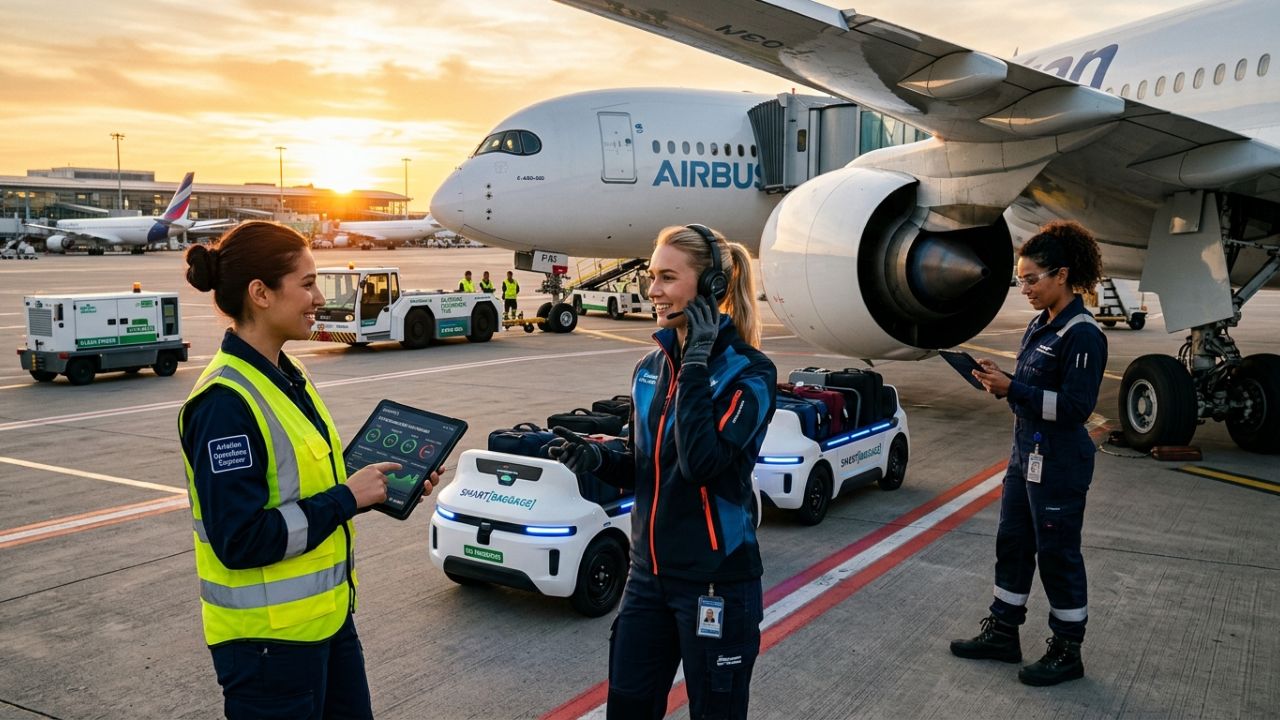
Image generated by AI
As massive legacy airlines completely buckle under the excruciating operational strain of sudden flight cancellations and severe travel chaos, the International Air Transport Association (IATA) has aggressively demanded a total, immediate modernization of global airport ground handling. Recognizing that chaotic tarmac operations actively trigger catastrophic airport disruptions, IATA is heavily enforcing stronger global standards, vastly cleaner electric equipment, and highly integrated digital systems as the ultimate defense mechanism. This massive strategic declaration was officially launched at the towering 38th IATA Ground Handling Conference (IGHC) in Cairo, heavily hosted by EgyptAir, where terrified aviation stakeholders urgently gathered to confront the terrifying operational pressure violently suffocating the global aviation network. This breaking airline news and aviation updates report explores exactly how IATA plans to completely eradicate ramp accidents and devastating delays.
Expanded Overview: The Standardization Defense
IATA deeply emphasized that the incredibly consistent physical application of strict global standards remains the absolute most effective weapon to violently reduce operational risk and immediately prevent travel chaos. Highly critical technical frameworks—specifically including the IATA Ground Operations Manual (IGOM) and the Airport Handling Manual (AHM)—are completely available worldwide, yet their physical execution varies violently between isolated regional operators, causing massive airport disruptions.
To violently force global alignment and actively prevent devastating flight cancellations, IATA has massively expanded its centralized Operational Portal. This heavily critical digital platform is now physically utilized by well over 1,000 airlines and elite ground service organizations. The platform is explicitly engineered to violently eradicate deadly inconsistencies by actively helping ground crews follow totally unified safety procedures.
Furthermore, extremely rigorous safety auditing conducted strictly through the ISAGO programme heavily continues to play a massive role in aggressively strengthening compliance and averting physical disaster.
Section-Wise Breakdown: The Dangers of the Ramp
Aircraft ground damage remains a highly terrifying, deeply persistent issue actively plaguing global airport operations and directly triggering catastrophic flight cancellations.
The 2025 Ramp Disasters
The sheer volume of physical destruction is absolutely staggering. More than 29,000 aircraft ground damage incidents were officially recorded globally in 2025 alone. This incredibly terrifying metric heavily reflects the extreme physical complexity and massive high-risk nature of daily ramp activities, specifically including aircraft servicing, massive heavy towing, rapid baggage loading, and high-speed turnaround coordination. When a massive aircraft suffers a physical ramp strike, it is instantly grounded, instantly triggering massive, highly expensive travel chaos across the affected airline's entire rotation.
Deploying Advanced and Electric GSE
To aggressively neutralize these incredibly violent physical risks, IATA is heavily mandating the rapid, incredibly widespread deployment of highly advanced ground support equipment (GSE) heavily equipped with state-of-the-art anti-collision technology, vastly improved proximity sensors, and totally automated safety braking features. These massive digital systems are physically intended to completely eliminate incredibly dangerous reliance on highly flawed manual judgment inside high-pressure ramp environments.
Simultaneously, the massive industry is desperately executing a radical shift completely toward electric ground support equipment. Depending entirely upon the specific equipment type and localized energy mix, massive physical electrification can violently slash physical turnaround-related carbon emissions by an astonishing 35% to 52%. Beyond the massive environmental benefits, modern electric GSE aggressively reduces terrifying engine noise and highly expensive mechanical maintenance requirements.
However, incredibly uneven global adoption perfectly persists due to incredibly severe physical infrastructure constraints. To heavily accelerate these incredibly vital transition efforts, IATA launched the Enhanced GSE Recognition Program to financially reward highly compliant operators.
Ground Operations Data: The Verification Metrics
The following table explicitly details the verified auditing statistics, exact ground damage incident metrics, and GSE recognition applications actively tracked by IATA to violently combat operational gridlock.
| Operational Safety Metric | Verified IATA Data |
|---|---|
| ISAGO Audits Completed (2025) | Close to 300 Audits |
| ISAGO Service Providers Audited | 230 Providers |
| ISAGO Airport Stations Audited | 441 Stations Worldwide |
| Aircraft Ground Damage Incidents | More Than 29,000 Incidents (2025) |
| Electric GSE Emissions Reduction | 35% to 52% Drop in Turnaround Emissions |
| Operational Portal Reach | More Than 1,000 Airlines and Ground Services |
| Enhanced GSE Program Applications | More Than 450 Applications |
| Enhanced GSE Stations Validated | 187 Stations Validated |
| Enhanced GSE Stations Recognized | 75 Formally Recognized |
Industry Analysis: The Digital Transformation
Massive, incredibly aggressive digitalization is officially emerging as the absolute defining factor in violently destroying ground handling inefficiencies. Highly terrified airports still desperately rely on dangerously disconnected IT systems and severely flawed manual processes, directly leading to massive physical delays, terrifying miscommunication, and catastrophic flight cancellations during highly critical aircraft turnaround operations.
IATA is heavily promoting massive, completely integrated digital solutions strictly across three highly critical physical areas: baggage handling, incredibly heavy aircraft loading, and dangerous winter de-icing operations. The massive IATA Baggage Community System (BCS) aggressively enables fully real-time information sharing actively between legacy airlines and ramp operators, severely reducing the highly terrifying likelihood of completely mishandled baggage triggering severe passenger travel chaos.
Furthermore, in heavy aircraft loading, the highly critical X565 standard is currently being aggressively mandated to violently eradicate terrifyingly dangerous human errors in massive aircraft weight and balance calculations. This incredible standard is aggressively gaining massive industry support directly from towering aerospace manufacturers, specifically including Boeing and Airbus. Additionally, fully digital tools are actively revolutionizing physical de-icing processes. Totally new monitoring dashboards physically provide totally real-time visibility straight into severe weather conditions, actively preventing horrific winter airport disruptions specifically across North America and isolated parts of Asia.
Conclusion: A Data-Driven Tarmac
Despite this incredibly massive technological progress, IATA aggressively warns that far too many ground handling operations remain incredibly dependent on heavily fragmented IT systems that absolutely refuse to communicate effectively. This terrifying lack of digital integration violently forces heavily duplicated physical work, incredibly delayed runway decisions, and severely reduced situational awareness during highly critical turnaround windows. The combination of much stronger global standards, completely modern electric equipment, and highly integrated digital platforms is absolutely expected to permanently redefine exactly how massive airports physically manage aircraft on the ground, ultimately terminating the horrifying era of massive airport disruptions.
Key Takeaways
- The IGHC Summit: IATA demanded a massive overhaul of global ground operations at the 38th IGHC in Cairo (hosted by EgyptAir).
- The Ground Threat: Over 29,000 aircraft ground damage incidents violently occurred in 2025 alone.
- Electric Revolution: Electrified GSE can massively slash turnaround emissions by 35% to 52%.
- The Audits: Almost 300 ISAGO safety audits were successfully completed across 441 global airport stations in 2025.
- The Tech Shield: Advanced GSE heavily utilizes anti-collision sensors to actively prevent flight cancellations.
- Digital Baggage: The IATA Baggage Community System (BCS) violently eradicates mishandled luggage errors.
- The X565 Standard: Boeing and Airbus actively support new digital aircraft weight and balance calculation platforms.
Related Travel Guides
- Breaking Airline News: Kuwait Airport Battles Terrifying Travel Chaos as Missile Threats Trigger Massive 2-Hour Emergency Airspace Shutdown
- America's Airport Capacity Crisis: Why the Nation's Busiest Hubs Can't Keep Pace With Rising Demand
- Emirates Dominates 2026 Awards While Retrofitting 219 Aircraft: The Premium Aviation Power Play Dubai Doesn't Want You to Miss
Disclaimer
This article is for informational and educational purposes only. It does not constitute legal, financial, or professional advice. While we strive to provide accurate and up-to-date information, travel policies, regulations, and conditions change rapidly. Always verify information with official sources before making travel decisions. Nomad Lawyer makes no representations about the accuracy, reliability, completeness, or suitability of the information provided. Readers should consult qualified professionals for advice specific to their circumstances. The views expressed in this article are those of the author and do not necessarily reflect the views of Nomad Lawyer.
Kunal K Choudhary
Co-Founder & Contributor
A passionate traveller and tech enthusiast. Kunal contributes to the vision and growth of Nomad Lawyer, bringing fresh perspectives and driving the community forward.
Learn more about our team →