Hundreds Of Travelers Disrupted Across The Middle East As Riyadh, Doha, And 12 Other Airports Cancel 50 And Delay 1,561 Flights

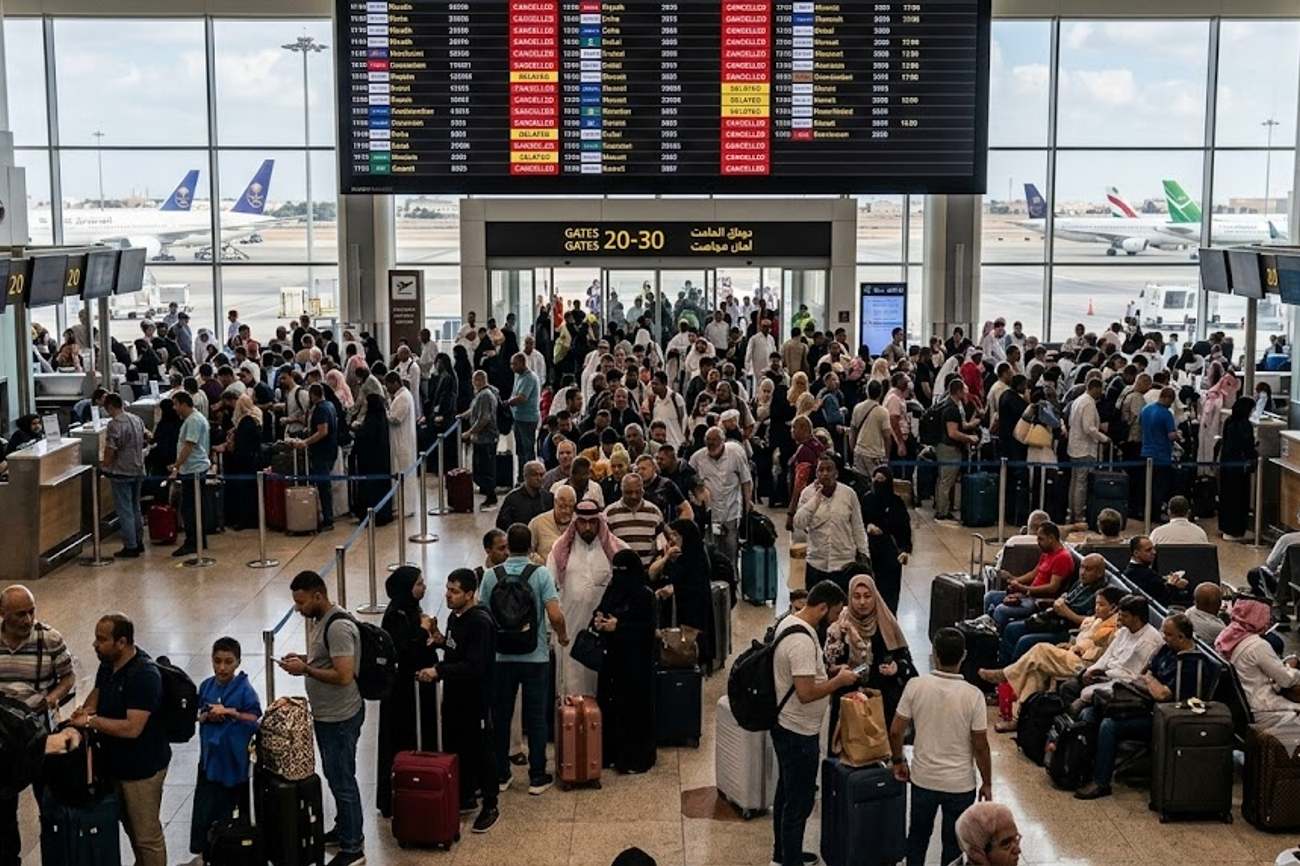
Image generated by AI
[Istanbul, September 24, 2026] — Flight operations across the Middle East have collapsed into widespread instability, with 1,561 delays and 50 cancellations recorded across 14 airports in nine countries. The disruption centers on the region's primary aviation hubs, where systemic bottlenecks are triggering significant knock-on effects for thousands of passengers.
The crisis spans Saudi Arabia, Oman, the United Arab Emirates, Syria, Türkiye, Egypt, Qatar, Jordan, and Kuwait. Data indicates that the highest concentrations of instability are currently focused at Istanbul, Dubai, Riyadh, and Jeddah. The operational failures involve a mix of national flag carriers and low-cost operators, with Turkish Airlines and Saudia bearing the heaviest burden of the disruptions.
Systemic Operational Failures
The current volatility is the result of a convergence of operational pressures. While no single event was cited, the scale of the disruptions points to failures in aircraft availability, crew planning, and air-traffic management. Because major hubs like Dubai and Istanbul operate on tight connection windows, a single delayed arrival often triggers a cascade of subsequent delays across the network.
Airport capacity limits and maintenance requirements are further compounding the issue. In hubs like Riyadh and Jeddah, the high volume of scheduled movements means that any minor scheduling change by a dominant carrier rapidly saturates the available slots, leading to the high delay rates currently observed.
Markets and Hubs Under Pressure
The disruption is not uniform, but specific corridors and airlines are seeing critical failure rates.
Primary Hub Disruptions
| Airport | Total Delays | Total Cancellations | Primary Driver |
|---|---|---|---|
| Istanbul | 344 | 6 | Turkish Airlines (248 delays) |
| Dubai | 291 | 6 | FlyDubai (122 delays) / Emirates (100 delays) |
| Riyadh | 252 | 7 | Flynas (90 delays) / Saudia (74 delays) |
| Cairo | 172 | 3 | Egypt Air (53 delays) |
| Jeddah | 170 | 5 | Saudia (50 delays) |
| Abu Dhabi | 119 | 2 | Etihad Airways (91 delays) |
| Doha | 86 | 2 | Qatar Airways (71 delays) |
Secondary Airport Impact
- Abha: 33 delays, 4 cancellations.
- Kuwait City: 28 delays, 1 cancellation.
- Amman: 27 delays, 1 cancellation.
- Seeb: 26 delays, 4 cancellations.
- Damascus: 13 delays, 2 cancellations.
- Najran: 0 delays, 4 cancellations.
- Gizan: 0 delays, 3 cancellations.
Airline Performance Breakdown
- Turkish Airlines: 248 delays, 2 cancellations (all Istanbul-based).
- Flynas: 171 delays across Abha, Jeddah, Riyadh, Dubai, Damascus, Cairo, and Amman.
- Saudia: 147 delays and 18 cancellations (the highest cancellation rate in the region), impacting Abha, Jeddah, Riyadh, Dubai, Najran, Gizan, Cairo, and Doha.
- FlyDubai: 129 delays, 4 cancellations (concentrated in Dubai).
- Emirates: 100 delays (all Dubai-based).
- Etihad Airways: 95 delays across Abu Dhabi, Riyadh, and Seeb.
Practical Traveler Advisory and Strategic Insights
For passengers currently booking or traveling through the Middle East, these figures represent a high probability of itinerary failure. The most critical risk is the "connection collapse"—where a delay in one city makes a connecting flight in another hub impossible to catch.
Immediate Passenger Impact:
- Departure Risks: If you are flying out of Istanbul, nearly 30% of departures are delayed. In Dubai, that rate sits at 27%.
- Arrival Bottlenecks: Riyadh is currently the most difficult city to fly into, with a 34% arrival delay rate.
- Cancellation Vulnerability: Passengers flying with Saudia are at the highest risk of total flight cancellation, as the airline recorded 18 scrapped flights—more than double any other carrier in the region.
- Documentation Needs: Travelers must retain all boarding passes and receipts for meals or hotels, as the high volume of disruptions will likely lead to a surge in insurance claims and refund requests.
Passengers are urged to monitor their flight status via the FlightAware tracking system or the official portals of the General Authority of Civil Aviation (GACA) for Saudi Arabian airspace updates.
Recovery Timeline and Next Steps
Aviation analysts expect the volatility to persist until crew rotations are reset and aircraft maintenance backlogs are cleared. The high delay rates at Istanbul Airport suggest that Turkish Airlines is struggling to recover its schedule, which will likely cause ripple effects for flights entering and leaving Europe and Asia.
Travelers should allow at least three to four additional hours for airport procedures. Those with tight connections through Dubai or Doha should proactively contact their airlines to explore rebooking options before arriving at the terminal.
FAQ: Middle East Flight Disruptions 2026
What should I do if my Saudia flight is cancelled? Contact the airline immediately to request rebooking. Because Saudia has the highest cancellation rate (18 flights), availability on alternative flights will be limited. Keep all receipts for unplanned expenses to claim reimbursement.
Which airport has the worst delay rate right now? Istanbul currently records the highest volume of delays (344), while Riyadh has the highest arrival delay rate at 34%. If you are connecting through these hubs, expect significant wait times.
Are low-cost carriers like Flynas and FlyDubai affected? Yes. Flynas has recorded 171 delays across seven different cities, and FlyDubai has 129 delays, primarily concentrated in Dubai. Low-cost carriers often have less "buffer" in their schedules, making them susceptible to these cascades.
Will my travel insurance cover these delays? Most comprehensive policies cover "travel delay" or "trip interruption." Ensure you save your boarding passes and obtain a written statement of the delay from the airline or the Dubai Airports authority to support your claim.
Airspace remains volatile; verify all departures in real-time.
Related Travel Guides
- Flights Cancelled Around US As Washington, Boston, And Others Face 103 Cancellations And 2,408 Delays
- Sri Lanka Targets Three Million Tourists in 2026 With Focus On High Value Travel Growth: All You Need to Know
- Paris Joins Seoul, London and More as Las Vegas Expands International Flight Network with Sydney Set to Become First Scheduled Australia Nonstop
This article is for informational purposes. Flight routes, passenger regulations, visa rules, and transit advisories are subject to change by airlines and aviation authorities. Readers are advised to verify schedules and travel documentation with relevant carriers and border agencies before departure.
Related Stories

Qatar Expands Travel Horizons as Japan Airlines Codeshare Opens Hawaii Connections

Brazil and Four More Countries Witness LATAM Travel Boom Across New International Routes