
Travel HSMAI Mike Leven Leadership Summit: Reshaping Cruise Industry Standards in 2026
HSMAI's 2026 Los Angeles leadership conference drives cruise industry transformation through awards, strategic planning, and hospitality innovation. What executives decided will reshape your 2026 travel plans.

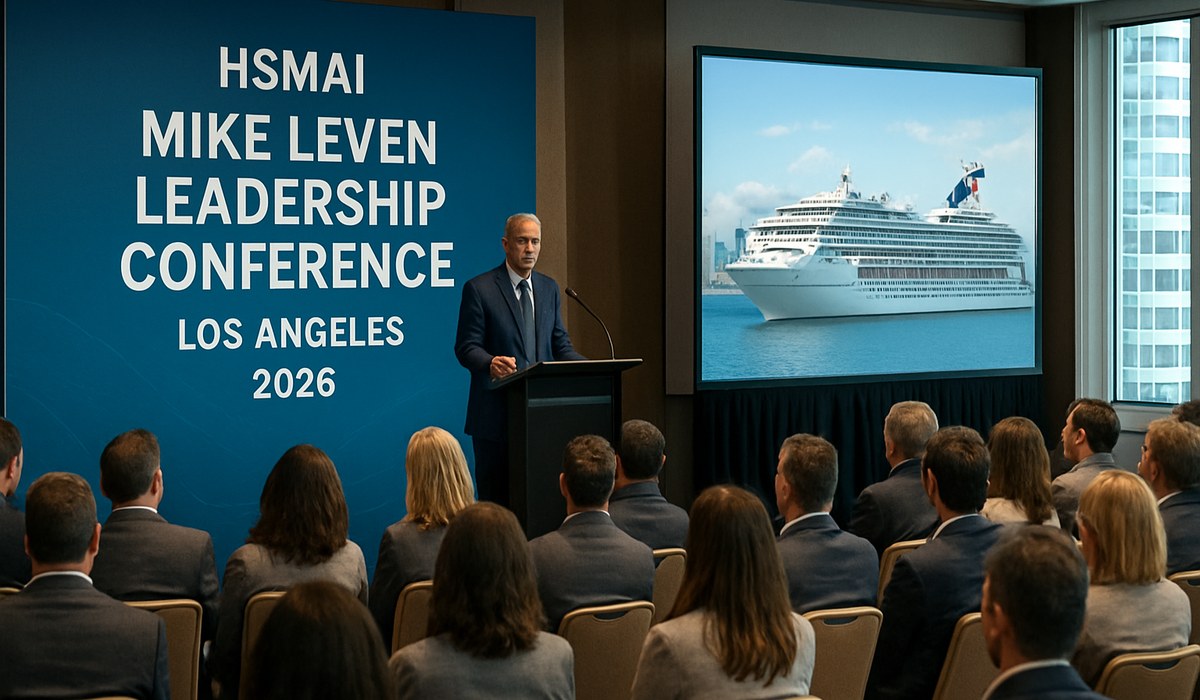
Image generated by AI
Quick Summary
- The Hotel Sales & Marketing Association International convened top cruise and hospitality executives in Los Angeles to establish industry benchmarks for 2026 operations
- Recognition programs honored cruise lines and hospitality brands demonstrating excellence in guest experience and operational resilience
- Strategic discussions at the conference will influence cruise route planning, health protocols, and pricing models through the remainder of 2026
- Cruise operators are prioritizing sustainability and technological innovation following post-pandemic recovery discussions
HSMAI 2026 Conference: Setting the Hospitality Industry's New North Star
Los Angeles played host this month to one of hospitality's most consequential gatherings. The Hotel Sales & Marketing Association International assembled decision-makers from cruise lines, resorts, and travel companies to chart the industry's trajectory through a transformative year. This wasn't merely a networking event. The conversations unfolding across conference sessions will directly shape how cruise operators price tickets, design itineraries, and respond to evolving passenger expectations.
The cruise sector enters 2026 riding genuine momentum. Booking patterns suggest travelers are ready to invest in maritime vacations again. Yet the industry faces headwinds that weren't present five years ago. Geopolitical tensions—including the ongoing Red Sea situation affecting traditional shipping lanes and Mediterranean routing—require cruise operators to rethink itinerary logistics. Meanwhile, sustainability expectations from environmentally conscious travelers demand fleet modernization and operational overhauls. The HSMAI conference provided a forum where executives could address these realities head-on rather than react in isolation.
Mike Leven's legacy looms large over such gatherings. The veteran hospitality strategist championed the principle that leadership means understanding your customer's deepest needs before they articulate them. That philosophy animated discussions throughout the Los Angeles event. Cruise lines aren't simply selling cabins anymore. They're marketing experiences, safety assurances, and value propositions in a competitive marketplace where consumers possess unprecedented information access.
Awards and Recognition: What the Conference Reveals About Cruise Industry Excellence
Recognition programs at major industry conferences serve as windows into what the sector values most. The awards distributed during the HSMAI gathering spotlighted organizations excelling in passenger satisfaction, revenue management, and crisis response. These weren't participation trophies. Each honoree had demonstrated measurable performance improvements and strategic foresight.
One clear pattern emerged: cruise lines investing in crew training and onboard technology received disproportionate recognition. This signals the industry's collective understanding that passenger safety and seamless digital experiences drive loyalty and repeat bookings. As the Cruise Lines Industry Association (CLIA) has emphasized, operational excellence begins with employee development.
Several award categories emphasized sustainability achievements. Lines that reduced fuel consumption through fleet optimization or implemented waste-reduction programs earned prominent mention. This recognition validates a broader market trend: affluent travelers—the demographic most likely to book premium cruises—increasingly factor environmental responsibility into destination and cruise line selection. One panelist noted that properties incorporating sustainability into their core narrative saw booking inquiry increases of 15-20% year-over-year.
The recognition extended beyond major cruise corporations. Regional operators and boutique cruise companies received acknowledgment for innovation in niche market segments. Expedition cruising, adult-only voyages, and culturally-focused itineraries all garnered awards. This diversity of recognition reflects the industry's maturation beyond the mega-ship model that dominated previous decades.
Strategic Initiatives: How Los Angeles Conference Will Shape Cruise Operations Through 2026
Executive strategy sessions at the conference tackled challenges that will reverberate through every cruise booking for months ahead. Health and safety protocols dominated substantive discussions. While the pandemic fades into institutional memory, cruise lines remain hyperaware that public confidence in their operations depends on transparent communication and rigorous safeguards. Representatives from multiple operators discussed how evolving CDC cruise ship health guidelines should inform internal policies, even where regulatory requirements end.
Itinerary planning received intense focus. The ongoing disruption to Red Sea shipping and the evolving security situation affecting that crucial maritime corridor means cruise operators must reassess their 2026 sailings and beyond. Red Sea shipping risks in 2026 have forced many lines to reroute vessels around the Cape of Good Hope—adding sailing time, fuel costs, and logistical complexity to Mediterranean and Asia itineraries. Conference attendees discussed mitigation strategies: dynamic pricing models that account for extended voyages, enhanced onboard amenities to justify longer journeys, and transparent communication about geopolitical factors influencing route changes.
Pricing strategy emerged as perhaps the most contentious topic. Fuel costs remain volatile. Labor expenses continue climbing. Capacity constraints at popular ports create bottlenecks. Yet cruise lines must remain price-competitive in a leisure market where consumers can quickly compare options. The strategic consensus leaning from the conference: transparency about cost drivers will outperform attempts to obscure pricing through confusing surcharge structures. Operators who clearly explain why a 2026 cruise costs more than 2025's equivalent voyage—attributing differences to enhanced sustainability measures, increased health protocols, or geopolitical routing adjustments—will maintain customer trust.
Economic headwinds affecting air travel present both threat and opportunity. As detailed in our analysis of summer 2026 travel alerts regarding crude oil impacts on airfares, soaring fuel surcharges may price some consumers out of fly-to destinations. Cruise operators see an opening: position maritime vacations as more economical alternatives to distant flying-required vacations. This messaging strategy dominated several panel discussions, with marketing directors sharing tactics for capturing budget-conscious travelers shifted away from traditional airfare-dependent trips.
Hospitality Growth Surge: Why Cruise Lines Are Betting Big on Leadership Investment
The conference title itself—emphasizing leadership—reflects a deliberate industry choice. Cruise operators are investing substantially in executive development, talent recruitment from hospitality's upper ranks, and organizational transformation. Why? Because growth markets demand sophisticated decision-making.
Data presented at the conference showed that cruise booking velocity among first-time passengers remains exceptionally strong. Millennials and Gen Z travelers view cruising not as their parents' vacation model but as an efficient mechanism for multi-destination travel without constant hotel switching. Lines catering to younger demographics with social experiences, wellness programming, and entertainment innovation are capturing disproportionate market share growth.
This growth surge extends to emerging markets. Southeast Asian cruise demand has accelerated dramatically. Caribbean sailings remain robust. Even as traditional European cruise markets show maturation, operators are finding explosive growth in previously underpenetrated regions. These opportunities demand experienced leadership teams capable of navigating cultural differences, regulatory variations, and logistical innovations unique to each market.
Recruitment discussions at the conference revealed serious talent competition. Luxury hospitality brands, high-end resort chains, and boutique cruise operators are all pursuing the same leadership talent pool. Compensation packages have escalated. Remote work options that seemed impossible in maritime environments five years ago are now common. Companies promoting ambitious leaders through clear pathways to executive suites are winning the talent wars. One cruise line executive disclosed her company implemented quarterly leadership development cohorts specifically to signal commitment to internal advancement—a mechanism directly inspired by broader hospitality industry best practices.
What Travelers Should Expect: Practical Takeaways from Conference Announcements
Abstract strategic discussions yield concrete consequences for travelers. Here
Disclaimer
This article is for informational and educational purposes only. It does not constitute legal, financial, or professional advice. While we strive to provide accurate and up-to-date information, travel policies, regulations, and conditions change rapidly. Always verify information with official sources before making travel decisions. Nomad Lawyer makes no representations about the accuracy, reliability, completeness, or suitability of the information provided. Readers should consult qualified professionals for advice specific to their circumstances. The views expressed in this article are those of the author and do not necessarily reflect the views of Nomad Lawyer.
Raushan Kumar
Founder & Lead Developer
Full-stack developer with 11+ years of experience and a passionate traveller. Raushan built Nomad Lawyer from the ground up with a vision to create the best travel and law experience on the web.
Learn more about our team →