
Engineering Marvel: How the SR-71 Blackbird's Titanium Skin Solved Aviation's Most Extreme Heat Challenge
Breaking airline news and aviation industry updates for 2026.

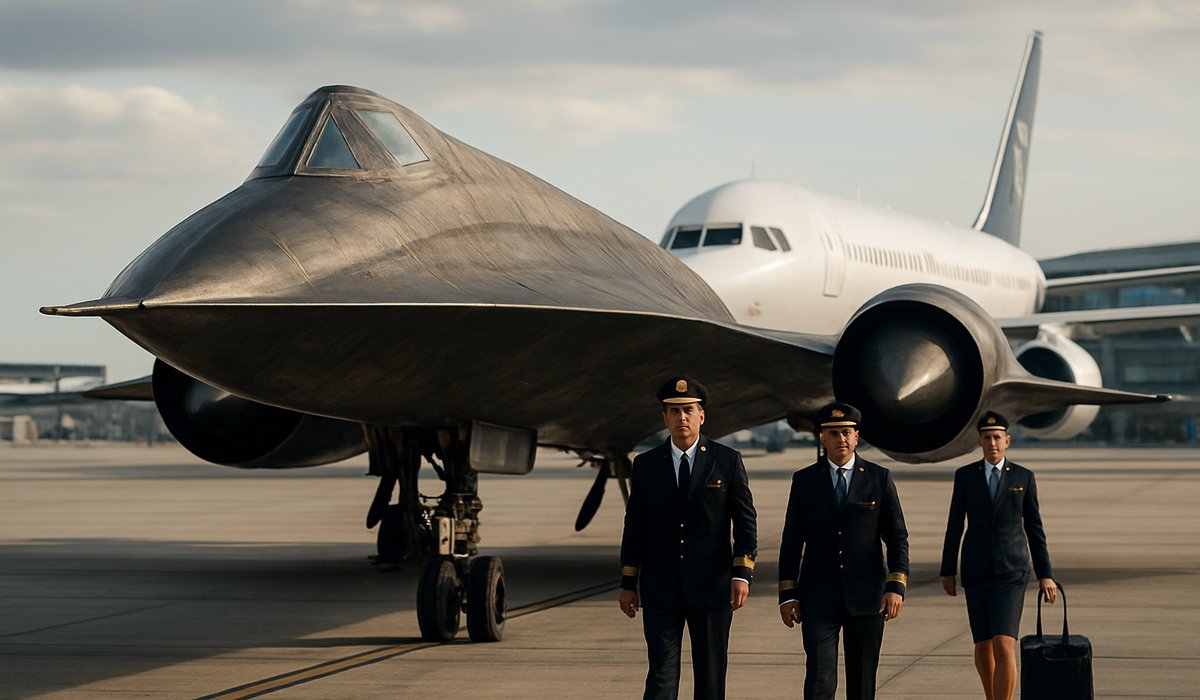
Image generated by AI
Engineering Marvel: How the SR-71 Blackbird's Titanium Skin Solved Aviation's Most Extreme Heat Challenge
The Cold War reconnaissance aircraft's revolutionary thermal protection system remains a benchmark for aerospace innovation
Extreme Velocities Demand Revolutionary Solutions
When Lockheed's legendary SR-71 Blackbird pierced the upper atmosphere at speeds exceeding Mach 3, aerodynamic friction transformed its exterior into a furnace, pushing surface temperatures beyond 600 degrees Fahrenheit—a threshold that would instantly incapacitate any conventional aircraft and its crew. The challenge facing aerospace engineers wasn't merely to build a faster plane; it was to create a flying machine capable of sustaining conditions that fundamentally threatened human survival.
The solution lay in an engineering breakthrough that would define high-speed aviation for decades: a specially engineered titanium airframe coupled with an advanced thermal management system developed by Lockheed's elite Skunk Works division.
Titanium: The Foundation of High-Speed Flight
Titanium's exceptional properties made it the only viable material for the SR-71's construction. Unlike conventional aluminum alloys that lose structural integrity at elevated temperatures, titanium maintains its strength while remaining lighter than steel—a critical advantage when every pound affects performance at supersonic speeds.
The aircraft's skin functioned as more than a protective barrier; it became an integral component of an active cooling apparatus. As the jet encountered atmospheric friction at extreme velocities, the titanium exterior absorbed and distributed enormous thermal loads while special fuel circulation systems channeled coolant through internal passages, dissipating heat generated by both aerodynamic forces and onboard systems.
A Cooling System Ahead of Its Time
The thermal management innovation represented a paradigm shift in aviation engineering. Rather than insulating pilots from heat, Lockheed's designers created a system that actively converted thermal energy into a functional asset. Fuel flowing through the aircraft's structure absorbed excess heat before reaching the engines, effectively serving dual purposes: cooling the airframe while pre-warming fuel for combustion.
This sophisticated approach maintained cabin temperatures within survivable ranges despite external conditions exceeding 300 degrees Celsius—a feat that would have been impossible with conventional aircraft design or materials.
Legacy and Modern Applications
The SR-71's thermal engineering principles continue influencing contemporary aerospace development, from next-generation military aircraft to hypersonic research vehicles. The Blackbird demonstrated that extreme performance demands innovation at every structural level, establishing standards that remain relevant in modern aviation engineering.
FAQ: SR-71 Blackbird's Thermal Protection System
Q: What temperatures did the SR-71 Blackbird actually reach during flight? A: External surface temperatures exceeded 600°F (approximately 300°C) due to aerodynamic friction at Mach 3+ speeds.
Q: Why was titanium essential for the SR-71's construction? A: Titanium maintains structural strength at extreme temperatures where aluminum alloys would fail, while offering superior weight-to-strength ratios critical for high-speed flight.
Q: How did the aircraft's cooling system function? A: The system circulated fuel through internal passages to absorb and dissipate heat from both aerodynamic friction and onboard systems, simultaneously cooling the airframe and pre-warming fuel for engines.
Q: Are SR-71 thermal engineering concepts still used in modern aircraft? A: Yes, contemporary military jets and hypersonic research vehicles utilize principles developed from Blackbird technology for managing extreme thermal conditions.
Q: Could conventional aircraft materials withstand SR-71 operating conditions? A: No—standard aluminum alloys lose structural integrity at such temperatures, making specialized titanium construction the only viable solution for sustained Mach 3+ flight.
Related Travel Guides
Flight Delay Compensation Guide 2026
Understanding Airline Route Changes
Airport Security Process Updated (2026)
External Resources
Disclaimer
This article is for informational and educational purposes only. It does not constitute legal, financial, or professional advice. While we strive to provide accurate and up-to-date information, travel policies, regulations, and conditions change rapidly. Always verify information with official sources before making travel decisions. Nomad Lawyer makes no representations about the accuracy, reliability, completeness, or suitability of the information provided. Readers should consult qualified professionals for advice specific to their circumstances. The views expressed in this article are those of the author and do not necessarily reflect the views of Nomad Lawyer.
Preeti Gunjan
Contributor & Community Manager
A passionate traveller and community builder. Preeti helps grow the Nomad Lawyer community, fostering engagement and bringing the reader experience to life.
Learn more about our team →