
Boeing's 64-Year-Old Chinook Achieves Milestone: Over 150 Fully Automated Landings in Historic Army Test
Breaking airline news and aviation industry updates for 2026.

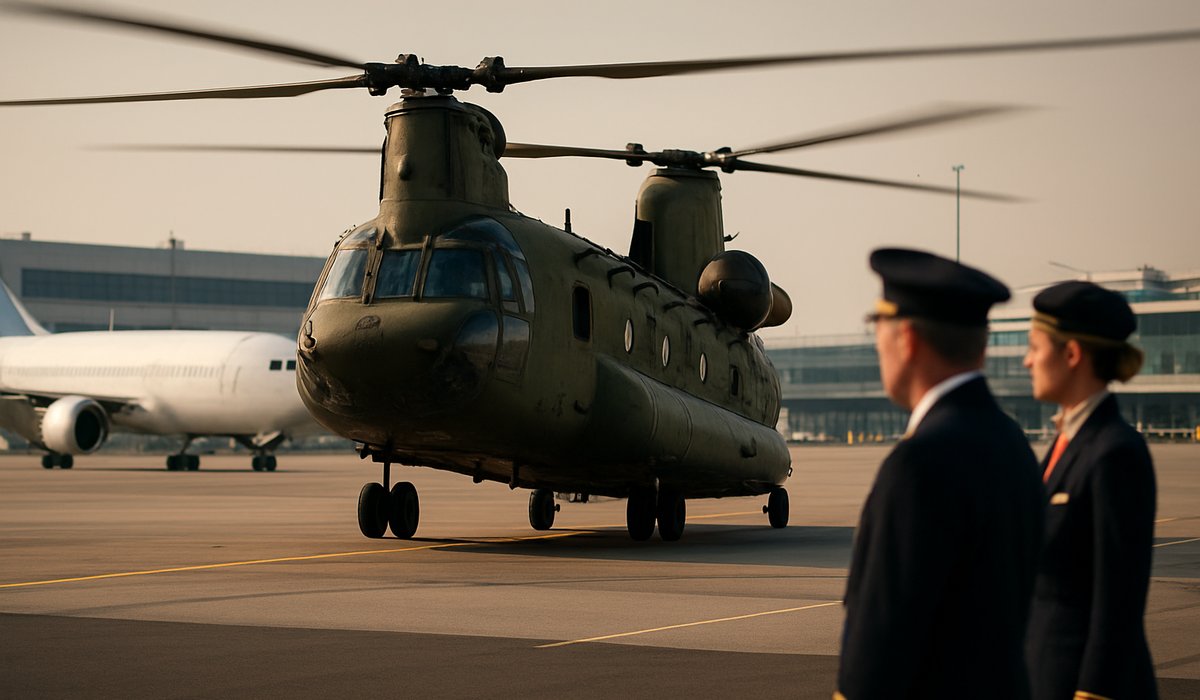
Image generated by AI
Boeing's 64-Year-Old Chinook Achieves Milestone: Over 150 Fully Automated Landings in Historic Army Test
Military helicopter autonomy reaches new threshold as legacy aircraft demonstrates precision landing technology
Autonomous System Completes Unprecedented Test Series
A Boeing CH-47F Chinook helicopter—a platform that has served military aviation for nearly seven decades—has successfully executed more than 150 fully autonomous landings with remarkable precision, achieving an average touchdown error of less than five feet. The groundbreaking demonstration, conducted during U.S. Army flight tests in early 2026, marks a watershed moment for military helicopter automation and signals a fundamental shift in how armed forces approach piloting, operational safety, and mission efficiency.
The automated landings were achieved through Boeing's proprietary A2X (Approach-to-X) software, integrated into the aircraft's existing Digital Automatic Flight Control System. Critically, the system enabled complete approach and landing sequences without any pilot intervention on the flight controls—a feat that underscores the maturity of autonomous aviation technology in military platforms.
What This Milestone Means for Military Aviation
The test results carry substantial implications beyond technical achievement. The Chinook, which entered service in 1962, has become the proving ground for next-generation autonomous capabilities that could reshape military helicopter operations worldwide. By demonstrating that legacy aircraft can be retrofitted with cutting-edge autonomy systems, Boeing and the U.S. Army have opened pathways for modernizing existing fleets rather than requiring wholesale platform replacements.
The precision—landing within five feet repeatedly across 150+ operations—exceeds human pilot performance averages in standardized conditions and suggests autonomous systems may eventually enhance flight safety while simultaneously reducing pilot workload during high-stress combat or rescue missions.
The Broader Strategic Implications
This achievement reflects the U.S. military's accelerating pivot toward autonomous systems across aviation platforms. As geopolitical tensions rise and operational demands intensify, reduced-crew or crewless operations become strategically valuable. The technology enables extended mission duration, increased operational flexibility, and the potential for missions in environments deemed too hazardous for manned flight.
For the broader aerospace industry, the Chinook's success validates that autonomy is no longer theoretical—it is operationally proven. Commercial aviation, particularly in cargo and specialized transport segments, will likely follow military advances in autonomous capabilities, though regulatory frameworks remain the primary constraint.
The demonstration also underscores Boeing's commitment to autonomous aviation following years of quality and safety scrutiny, positioning the company as a serious contender in the expanding autonomous systems market.
Key Takeaways
- 150+ successful landings with sub-five-foot precision margins
- A2X software integration demonstrates retrofit capability for legacy aircraft
- Military autonomy accelerates amid global security realignment
- Future implications extend to crew reduction and extended mission profiles
FAQ: Military Helicopter Autonomy and Aviation Technology
Q: Can the Chinook fly without any pilot in the cockpit? A: The demonstrated system handles approach and landing autonomously, but current military protocols require pilot oversight during other flight phases. Full unmanned operation requires additional certification and regulatory approval.
Q: How does this technology affect aviation safety standards? A: Autonomous systems can maintain precision beyond human capability in standardized conditions, potentially reducing accidents. However, aviation safety regulators must establish new certification standards for autonomous military platforms.
Q: Will commercial airlines use similar technology? A: Commercial aviation autonomy advances more slowly due to regulatory requirements, passenger safety standards, and public acceptance. Military demonstration creates pathways commercial operators may eventually follow.
Q: What does this mean for military helicopter pilots? A: Rather than replacing pilots, autonomy shifts their role toward mission management and decision-making, particularly valuable during complex operations or high-threat environments.
Q: How old is the CH-47F Chinook platform being tested? A: The Chinook first entered service in 1962, making this 2026 test a validation that legacy military aircraft can be modernized with contemporary autonomous technology rather than retired.
Related Travel Guides
Flight Delay Compensation Guide 2026
Understanding Airline Route Changes
Airport Security Process Updated (2026)
External Resources
Disclaimer
This article is for informational and educational purposes only. It does not constitute legal, financial, or professional advice. While we strive to provide accurate and up-to-date information, travel policies, regulations, and conditions change rapidly. Always verify information with official sources before making travel decisions. Nomad Lawyer makes no representations about the accuracy, reliability, completeness, or suitability of the information provided. Readers should consult qualified professionals for advice specific to their circumstances. The views expressed in this article are those of the author and do not necessarily reflect the views of Nomad Lawyer.
Kunal K Choudhary
Co-Founder & Contributor
A passionate traveller and tech enthusiast. Kunal contributes to the vision and growth of Nomad Lawyer, bringing fresh perspectives and driving the community forward.
Learn more about our team →