
How Ryanair Mastered Profitability by Deliberately Rejecting Passenger Comfort
Breaking airline news and aviation industry updates for 2026.

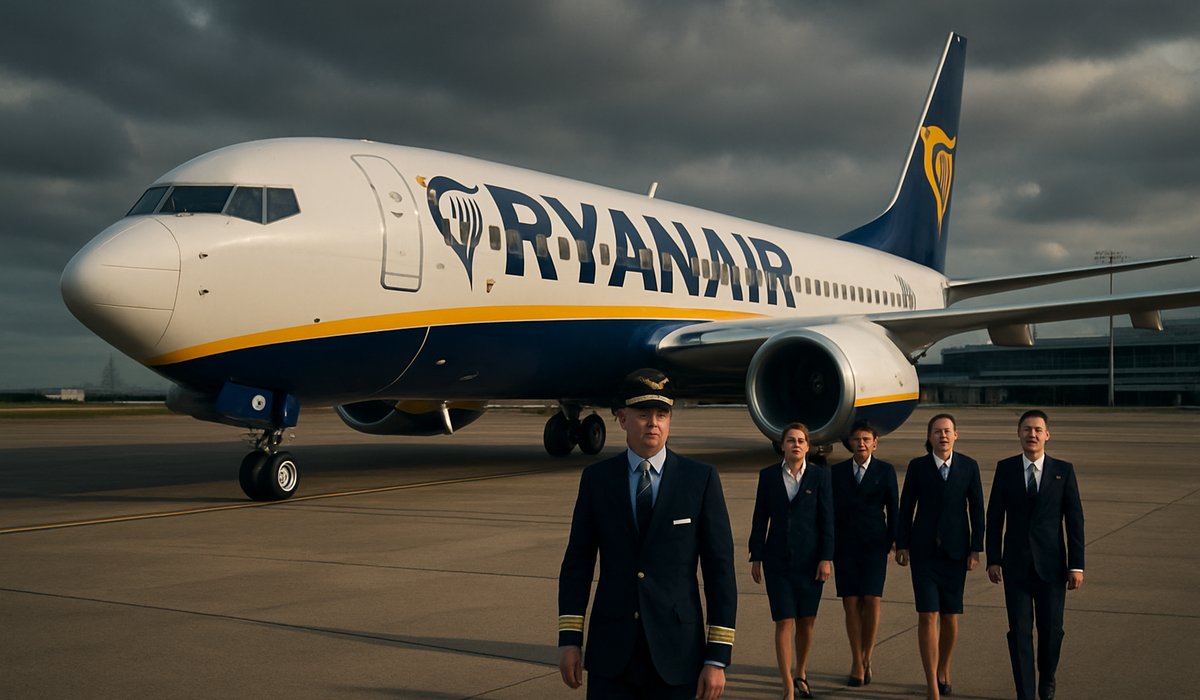
Image generated by AI
How Ryanair Mastered Profitability by Deliberately Rejecting Passenger Comfort
The Irish carrier's austere model continues to outpace legacy airlines spending billions on luxury—exposing a fundamental shift in how European aviation generates returns
The Uncomfortable Truth Behind Europe's Most Profitable Airline
Ryanair has engineered what appears to be a commercial contradiction: an airline that systematically eliminates passenger comfort has become Europe's most consistently profitable carrier. While legacy airlines invest billions annually in premium seating, in-flight amenities, and customer service enhancements, the Irish low-cost operator strips these elements to their bare minimum—yet continues to dominate regional aviation economics across the continent.
The strategy challenges everything conventional hospitality management teaches. Ryanair charges passengers for hand luggage, provides minimal cabin services, and operates high-density seating configurations that maximize occupancy over comfort. Traditional airline executives predicted this model would collapse under competitive pressure. Instead, Ryanair's financial performance systematically outperforms heritage carriers spending substantially more on passenger experience.
The Low-Cost Carrier Model as Strategic Advantage
The foundation of Ryanair's success rests on treating flying as a pure transportation commodity rather than a hospitality service. By ruthlessly eliminating discretionary amenities, the carrier reduced operational complexity and cost structures that burden full-service competitors.
This approach yields measurable advantages: accelerated aircraft turnaround times, simplified crew scheduling, reduced catering expenses, and streamlined ground operations. Each eliminated service layer translates directly into lower unit costs per flight hour—a mathematical advantage full-service carriers struggle to match without fundamental restructuring.
The revenue model extends beyond base fares. Ancillary income from seat selection, baggage fees, boarding priority, and onboard purchases generates substantial margins on routes where base ticket pricing remains intensely competitive. This diversified revenue strategy allows Ryanair to maintain lower advertised fares while achieving superior overall profitability.
Market Impact and Industry Implications
Ryanair's sustained financial outperformance has exposed structural vulnerabilities in legacy carrier business models. While traditional airlines maintain extensive route networks, premium lounges, and loyalty programs requiring significant capital investment, these expenditures don't consistently translate into superior returns.
The carrier's dominance reflects broader market realities: price-sensitive European travelers increasingly prioritize cost over comfort on short-haul routes. Legacy carriers facing margin compression have struggled to rationalize maintaining expensive service standards for routes where demand is predominantly cost-driven.
Ryanair's approach demonstrates how operational discipline and customer expectation management can generate sustainable competitive advantages in mature, commoditized markets. The model forces industry competitors to confront uncomfortable questions about the actual financial return on discretionary passenger comfort investments.
FAQ: Understanding Ryanair's Business Model
How does Ryanair remain profitable while charging less than competitors? Through aggressive cost reduction across all operational areas—simplified routes, high-density seating, rapid turnaround times, and ancillary fee generation that competitors haven't fully replicated.
Why haven't other airlines successfully copied Ryanair's model? Legacy carriers face structural obstacles: existing loyalty programs, labor agreements, established route networks, and shareholder expectations for premium positioning make rapid transformation difficult.
What are airline baggage charges and why do they exist? Ancillary fees like baggage charges represent revenue diversification, allowing carriers to offer lower base fares while recovering costs from passengers requiring specific services.
How do jet fuel prices affect low-cost carriers differently? While fuel costs impact all airlines, Ryanair's efficiency and high load factors provide relative insulation; legacy carriers' higher cost bases amplify fuel price impacts on margins.
Is the low-cost model sustainable long-term? Ryanair's consistent profitability suggests the model remains viable where price-sensitive demand predominates, though customer satisfaction metrics and regulatory pressures present ongoing challenges.
Related Travel Guides
Flight Delay Compensation Guide 2026
Understanding Airline Route Changes
Airport Security Process Updated (2026)
External Resources
Disclaimer
This article is for informational and educational purposes only. It does not constitute legal, financial, or professional advice. While we strive to provide accurate and up-to-date information, travel policies, regulations, and conditions change rapidly. Always verify information with official sources before making travel decisions. Nomad Lawyer makes no representations about the accuracy, reliability, completeness, or suitability of the information provided. Readers should consult qualified professionals for advice specific to their circumstances. The views expressed in this article are those of the author and do not necessarily reflect the views of Nomad Lawyer.
Raushan Kumar
Founder & Lead Developer
Full-stack developer with 11+ years of experience and a passionate traveller. Raushan built Nomad Lawyer from the ground up with a vision to create the best travel and law experience on the web.
Learn more about our team →