
Houston IAH Airport Chaos: United, American, PSA, SkyWest Cancel 7 Flights, Disrupt 50+ Cities Across US, Canada, Europe in June 2026
Major flight cancellations at Houston Bush Intercontinental Airport cascade across North America and Europe. United, American, PSA, and SkyWest ground 7 flights, affecting routes to New York, Toronto, Frankfurt, and beyond.

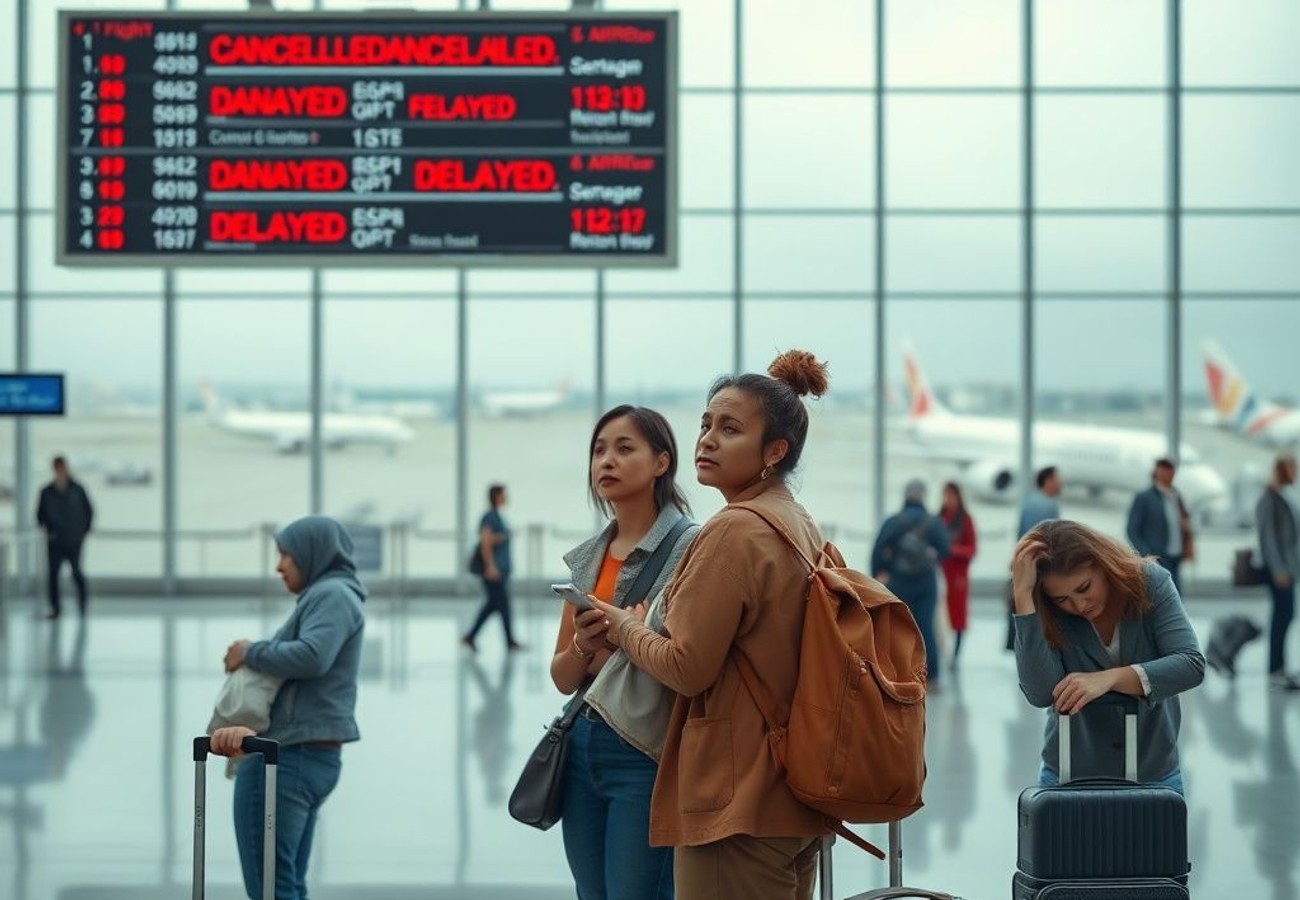
Image generated by AI
The Cascade Effect: When One Hub's Problems Become Everyone's Problem
Houston Bush Intercontinental Airport (IAH) — one of the nation's busiest aviation gateways — descended into operational chaos on June 23, 2026, as four major carriers grounded flights and reported cascading delays. United Airlines, American Airlines, PSA Airlines, and SkyWest collectively cancelled seven flights, triggering a domino effect that rippled across more than 50 cities spanning five continents.
This wasn't just a Houston problem anymore. Passengers heading to New York City, Dallas, Nashville, Toronto, Frankfurt, London, Istanbul, and Mexico City found themselves caught in a web of rebooking nightmares and extended wait times. The disruption underscores a critical reality in modern aviation: a single hub's operational failure can paralyze global travel networks within hours.
Breaking Down the Numbers: Which Airlines Were Hit Hardest
The cancellation burden fell unevenly across carriers, with some managing far worse delay cascades than others.
United Airlines reported the highest absolute delays, with 73 delayed flights stemming from just two cancellations. This suggests systemic ripple effects across their network, as crews and aircraft struggled to recover from the initial groundings.
American Airlines logged two direct cancellations with 10 additional delays, compounded by the operational impact on its regional partner PSA Airlines (operating as American Eagle), which cancelled another two flights and reported one delay. The interconnection between legacy carriers and regional partners often amplifies disruption across both networks.
SkyWest Airlines, traditionally one of the more operationally stable regional carriers, grounded a single flight but faced 15 delayed flights — suggesting downstream effects from connections to other carriers or competing for gate space at IAH.
Reddit: "Lost my connection to Frankfurt. Spent 14 hours at IAH waiting for a rebooking that never came. The real disaster was the lack of communication." — r/travel
The Geographic Blast Radius: 50+ Cities Affected Across Three Continents
The operational collapse at Houston didn't remain localized. Disruptions spread to a staggering network of destinations, revealing just how centralized US aviation has become around major hub airports.
Domestic Disruption
Across the continental United States, the fallout reached every major market: Atlanta, Chicago, Dallas–Fort Worth, Denver, Los Angeles, New York (LaGuardia and Newark), Philadelphia, San Francisco, Washington DC, and dozens of secondary markets including Nashville, Memphis, Charlotte, Boston, and Minneapolis–Saint Paul. Even smaller regional airports in Albuquerque, Austin, Birmingham, Columbus, and Jacksonville felt the impact.
The concentration of delays at Dallas–Fort Worth International Airport, LaGuardia, and Ronald Reagan Washington National Airport suggests these cities bore the heaviest load of stranded passengers and rebooking demands.
International Routes Collapsed
The transborder and international fallout proved even more dramatic. Toronto became a secondary epicenter for disruptions, as Canadian-bound flights faced cascading cancellations. European hubs, particularly Frankfurt and London, experienced delays as transatlantic flights were grounded or rerouted.
Istanbul and Dubai also reported operational impacts, indicating that even long-haul international routes tied to Houston connections faced uncertainty. Central American and Caribbean destinations including Mexico City, Panama City, Cancún, Montego Bay, and Nassau reported ripple effects from the hub's dysfunction.
According to FlightAware's real-time tracking data, the breadth of affected destinations — spanning North America, Europe, the Middle East, and the Caribbean — demonstrates how a single hub's failure creates global consequences.
What Actually Happened: The Operational Breakdown
The specific cause of the disruptions on June 23 wasn't immediately disclosed by airlines, but hub-wide cancellations of this scale typically stem from one of several triggers:
Weather events at the hub airport or along key flight corridors can ground aircraft and strand crews. Mechanical issues affecting multiple aircraft simultaneously, or air traffic control delays escalating across a region, can quickly overwhelm an airport's recovery capacity.
Staffing shortages — particularly among ground crews and flight attendants — have emerged as a growing source of operational instability across US carriers post-2023. When multiple carriers face simultaneous crew availability issues, the effect compounds.
What made this incident notable was the synchronization: United, American, PSA, and SkyWest all experienced disruptions within the same operational window, suggesting either a common external cause (weather, ATC delays) or competing for limited operational resources at a congested facility.
What to Do If Your Flight Gets Cancelled: Your Action Plan
If you're booked on any affected route, here's what you need to do right now:
Stay Updated: Real-Time Vigilance is Essential
The moment you learn of a cancellation, stop waiting passively. Monitor your email, text messages, and the airline's official app continuously. Airlines typically send rebooking confirmations within 1–2 hours, but only if you're actively checking.
Visit the airline's website directly — don't rely solely on third-party apps. Log into your booking confirmation and check for status updates. Many carriers push critical information to their apps before official announcements hit the news cycle.
Contact Airline Customer Service Immediately
If you're already at the airport, head directly to the airline's service desk rather than calling. Airport staff can rebook you on available flights in real time and sometimes offer vouchers or meal compensation while you wait.
If you're at home, use the airline's online chat system or app before calling their phone line. Phone queues during disruptions can exceed four hours, whereas chat systems — though sometimes overwhelmed — typically move faster.
Reddit: "Called United three times. Used their app once. The app rebooked me in 20 minutes. Skip the phone entirely during disruptions." — r/travel
Understand Your Legal Rights
In the European Union, passengers are entitled to compensation under EU Regulation 261/2004, which provides €250–€600 depending on flight distance and whether the cancellation was within the airline's control.
In the United States, compensation is largely discretionary and depends on airline policy, though the DOT requires airlines to provide rebooking on another flight or refunds. If the cancellation was deemed within the airline's control (not weather or mechanical failure), you have stronger grounds for requesting compensation beyond a rebook.
Explore Alternative Routing
Ask the airline about not just the next available flight on their network, but flights through partner carriers. American Airlines passengers, for instance, can often be rebooked on United or Southwest if American's next available flight is significantly delayed.
Consider booking alternative transportation entirely: trains (via Amtrak for domestic US routes), buses (via Greyhound or regional carriers), or even rental cars for shorter distances. Some travelers have found success splitting long routes across multiple carriers to avoid single-point-of-failure scenarios.
The Bigger Picture: Why Hub Concentration Remains a Systemic Risk
Houston's disruption on June 23 illustrates a fundamental vulnerability in modern aviation architecture. The "hub-and-spoke" model, while economically efficient for airlines, concentrates operational risk. When a major hub like Houston, Atlanta, Dallas, or Chicago experiences disruptions, the ripple effects are impossible to contain.
Airlines have invested heavily in operational resilience tools — predictive scheduling, dynamic crew management, and partnerships with regional carriers — but these systems assume one hub can fail at a time. A cascade failure across four carriers simultaneously, as we saw on June 23, can overwhelm even sophisticated recovery mechanisms.
The growing strain on US airports post-2023, driven by staffing shortages, aging infrastructure, and record passenger volumes, suggests these kinds of disruptions will recur with increasing frequency unless structural solutions — including capacity expansion and staffing investments — are implemented.
Passenger Advisory: Monitor and Stay Flexible
All information in this report is derived from FlightAware's real-time tracking data and official airline statements. Operational changes are continuously updated as airlines adjust schedules to accommodate disruptions and restore normal service.
Passengers are strongly advised to avoid panic, monitor official airline channels, and maintain flexibility with travel plans. Having a backup plan — whether an alternative flight, transportation mode, or route — can dramatically reduce stress during disruptions.
Check your airline's specific rebooking policy and compensation terms before traveling. While the June 23 disruptions at Houston have been largely resolved, the lessons remain: hub-dependent routing creates vulnerability, and real-time monitoring is your best defense.
Stay connected, stay flexible, and always have a backup route in mind.
Related Travel Guides
Disclaimer
This article is for informational and educational purposes only. It does not constitute legal, financial, or professional advice. While we strive to provide accurate and up-to-date information, travel policies, regulations, and conditions change rapidly. Always verify information with official sources before making travel decisions. Nomad Lawyer makes no representations about the accuracy, reliability, completeness, or suitability of the information provided. Readers should consult qualified professionals for advice specific to their circumstances. The views expressed in this article are those of the author and do not necessarily reflect the views of Nomad Lawyer.
Preeti Gunjan
Contributor & Community Manager
A passionate traveller and community builder. Preeti helps grow the Nomad Lawyer community, fostering engagement and bringing the reader experience to life.
Learn more about our team →