
Hotel Malaysia Joins Southeast Asia's $50B Investment Surge
Malaysia hotel market joins Philippines, Singapore, Indonesia, Vietnam in unprecedented $50B+ investment wave to capture post-pandemic tourism demand and attract international travelers across Southeast Asia in 2026.

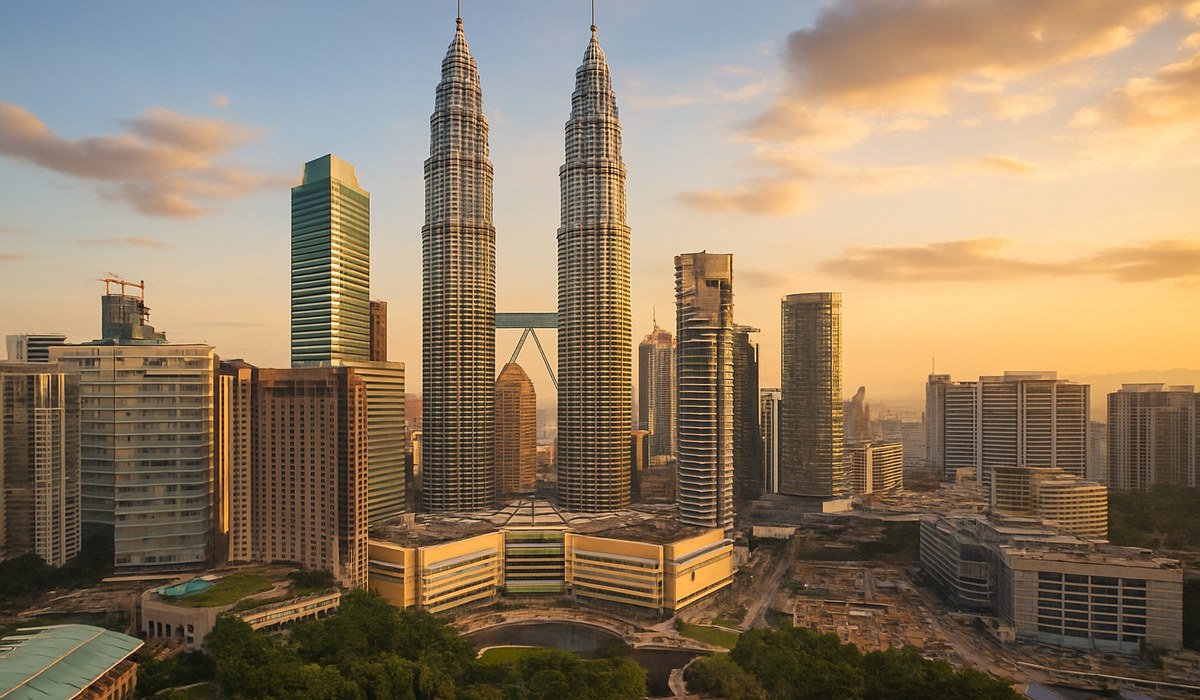
Image generated by AI
Quick Summary
- Malaysia enters the Southeast Asian hotel investment race alongside four regional powerhouses, unlocking $50B+ in combined development capital
- New luxury, mid-range, and budget properties are scheduled to open across major cities, targeting both leisure and business travelers
- Improved airline connectivity and post-pandemic demand recovery are driving occupancy projections upward across the region
- Hotel brands including international chains and local operators are positioning aggressively to capture regional market share
Malaysia's Bold Entry: Joining the Southeast Asia Hotel Investment Race
Five Southeast Asian nations are unleashing an unprecedented wave of hospitality investment. Malaysia has officially stepped into this competitive arena, joining the Philippines, Singapore, Indonesia, and Vietnam in a coordinated push to reclaim tourism dominance and attract foreign visitors.
The scale is staggering. Combined capital commitments exceed $50 billion as governments and private developers race to expand accommodation supply. Malaysia's participation reshapes the entire regional calculus—introducing new competition, new properties, and new growth vectors for travelers and investors alike.
This isn't routine sectoral growth. Industry observers describe the current moment as transformative. The region lost nearly two years of tourism momentum during the global health crisis. Now, with borders reopened, vaccination rates climbing, and international business travel resuming, Southeast Asia is mobilizing to capture market share from rival destinations across Asia-Pacific and beyond.
Malaysia brings distinct advantages to this competition. Established infrastructure in Kuala Lumpur, Penang, and Sabah provides existing foundations for expansion. A stable regulatory environment attracts multinational hospitality firms. Government incentives—tax breaks, accelerated permitting, direct investment—sweeten the calculus for international hotel brands considering where to commit capital over the next three to five years.
The $50B Opportunity: Investment Scale Across Five Nations
Breaking down the regional investment thesis requires examining each market's growth trajectory separately.
Philippines has emerged as the growth leader. Metro Manila alone accounts for approximately $15 billion in announced hotel projects. Beach destinations like Boracay and Palawan are experiencing secondary property booms, with mid-range and luxury resorts targeting affluent Southeast Asian travelers and long-haul visitors from North America and Europe.
Singapore continues its role as the premium hub. Despite limited land availability, the city-state is investing heavily in experiential hotels, waterfront properties, and integrated resorts. Capital commitments here total roughly $8 billion, with focus on ultra-luxury segments and business travel infrastructure.
Indonesia, spanning thousands of islands, represents untapped potential. Bali remains saturated, but secondary destinations—Lombok, the Gili Islands, and emerging mainland locations—are attracting significant developer interest. Investment targets approach $12 billion as international brands discover underserved markets.
Vietnam is capturing investor enthusiasm with aggressive expansion timelines. Ho Chi Minh City and Hanoi are witnessing high-rise hotel development at unprecedented pace. Coastal properties in Da Nang and Nha Trang target beach tourism. Total commitments exceed $10 billion.
Malaysia now enters with approximately $5 billion in confirmed projects. Kuala Lumpur's skyline will add multiple five-star properties. Secondary cities including Johor Bahru, Ipoh, and Kota Kinabalu are receiving renewed attention from developers targeting both regional business travelers and leisure visitors.
According to STR hotel industry benchmarking data{:target="_blank" rel="noopener noreferrer"}, occupancy rates across major Southeast Asian markets rebounded to 72-78% by Q4 2025—approaching pre-pandemic levels. RevPAR (revenue per available room) trends show Malaysia averaging $85 across existing four and five-star properties, positioning it competitively against regional peers while leaving room for premium segment growth.
Which Hotel Brands Are Leading the Expansion?
The competitive landscape reveals familiar international names paired with aggressive regional operators.
Marriott International announced twelve new properties across Southeast Asia in 2026 alone—including four in Malaysia. The company's portfolio spanning luxury (St. Regis, The Ritz-Carlton) to mid-market (Marriott, Renaissance) ensures presence across all guest segments.
IHG Hotels & Resorts is similarly aggressive, with particular focus on Indonesia and the Philippines. Their value-oriented Holiday Inn brand appeals to business travelers, while Intercontinental properties target luxury consumers.
Accor Group (Sofitel, Novotel, Ibis) has pivoted Southeast Asia into a core growth market. Malaysia will receive five new properties under various Accor banners, representing a $600 million investment.
Regional players are matching international brands' ambition. Dusit International from Thailand continues expanding its footprint. Minor Hotels operates across luxury and mid-range segments. Centara Hotels has identified Malaysia as a priority market for brand elevation.
Local Malaysian developers including Sunway Hotels and Mah Sing Properties are bidding for prime locations in Kuala Lumpur's commercial districts and emerging leisure destinations. These operators understand local regulatory nuances and can move faster than international entrants.
According to Forbes Travel Guide five-star ratings{:target="_blank" rel="noopener noreferrer"}, international brands increasingly view Southeast Asia as essential to global growth strategies. Quality standards are rising—new properties across the region emphasize wellness amenities, sustainability certifications, and technology integration that appeal to affluent international travelers.
Impact on Travelers: What This Means for Bookings, Rates, and Availability
From a guest perspective, this investment wave generates immediate and long-term consequences.
Near-term availability improves. Current occupancy constraints that pushed midweek rates upward will ease as new supply enters markets. By late 2026 and into 2027, travelers will discover expanded choice in mid-range categories where supply currently lags demand.
Rate competition intensifies. Early-mover properties establishing market presence will aggressively discount to build occupancy. Forward-booking packages and extended-stay promotions will proliferate. Savvy travelers booking 60-90 days in advance will access meaningful discounts compared to last-minute rates.
Geographic diversification expands traveler options. New properties opening outside traditional tourist corridors—Ipoh, Johor Bahru, secondary Philippine cities—create viable alternatives to overcrowded Phuket, Bali, and Bangkok.
However, accessibility challenges temper optimism. Rising fuel costs pose headwinds for international visitor arrivals. Coverage in our related analysis of Summer 2026 crude oil surge threatening airfares details how petroleum price spikes could dampen occupancy forecasts for newly opened properties if international demand softens.
Conversely, airline capacity expansions provide tailwinds. Air Premia's Thai Airways partnership expanding Americas-Southeast Asia connectivity and IndiGo launching 30 new routes from Navi Mumbai signal improving accessibility to Southeast Asian destinations. More flights translate to higher visitor volumes and stronger occupancy projections for regional hotel inventories.
Regional Competition: How Malaysia Differentiates Its Strategy
Malaysia's entry into the investment race follows a distinct strategy diverging from neighbors' approaches.
Unlike the Philippines' focus on metro-centric
Disclaimer
This article is for informational and educational purposes only. It does not constitute legal, financial, or professional advice. While we strive to provide accurate and up-to-date information, travel policies, regulations, and conditions change rapidly. Always verify information with official sources before making travel decisions. Nomad Lawyer makes no representations about the accuracy, reliability, completeness, or suitability of the information provided. Readers should consult qualified professionals for advice specific to their circumstances. The views expressed in this article are those of the author and do not necessarily reflect the views of Nomad Lawyer.
Raushan Kumar
Founder & Lead Developer
Full-stack developer with 11+ years of experience and a passionate traveller. Raushan built Nomad Lawyer from the ground up with a vision to create the best travel and law experience on the web.
Learn more about our team →