
Hong Kong Password Law Raises Airport Privacy Fears for 2026 Travelers
Hong Kong's expanded national security rules now criminalize password refusal at HKG airport, raising data privacy concerns for millions of international travelers transiting Asia's busiest hub in 2026.

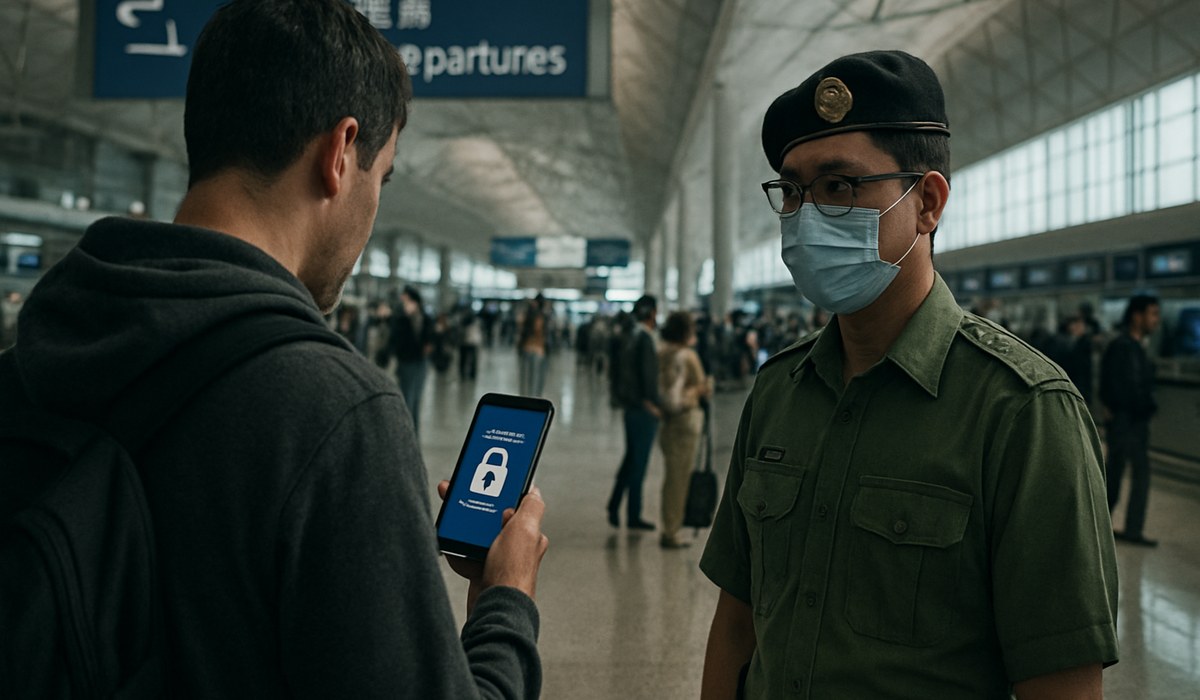
Image generated by AI
Hong Kong Password Law Now Applies to Airport Entry Points
Hong Kong has criminalized the refusal to disclose device passwords during national security investigations, creating immediate compliance obligations for the 40+ million annual passengers transiting Hong Kong International Airport (HKG). The revised implementation rules for Hong Kong's 2020 National Security Law now require travelers under investigation to provide passwords to phones, laptops, and encrypted accounts. Non-compliance itself becomes a punishable offense, even if no separate security charge follows. This shift directly impacts business professionals, journalists, academics, and tourists who route through Asia's second-largest aviation hub. Digital rights advocates warn the change expands surveillance reach into personal data unrelated to any alleged offense.
Password Demands at HKG Border Screening
The new hong kong password mandate extends across all Hong Kong territory, including Hong Kong International Airport's immigration and customs zones. Airport security personnel can now demand access to encrypted devices if they suspect connection to offenses including secession, subversion, foreign collusion, or external interference. Secondary screening inspections can escalate rapidly into formal national security investigations. The overlapping legal powers granted under the 2020 National Security Law and the 2024 Article 23 ordinance create ambiguity about when routine customs checks become security matters. Travel security advisers note this blurring leaves passengers vulnerable to unexpected password demands at entry points. FlightAware users frequently report HKG delays stemming from extended secondary screening procedures.
Professional Data Exposure and Confidentiality Conflicts
International travelers face unprecedented exposure when compelled to unlock devices at HKG airport checkpoints. Lawyers, doctors, journalists, and corporate executives carrying confidential client data, patient records, or trade secrets face legal liability violations in their home jurisdictions. A single password disclosure can expose contact networks, encrypted communications, and cloud-stored documents involving third parties who never entered Hong Kong. Multinational corporations now treat HKG transits as heightened-risk travel scenarios requiring device-wiping protocols before departure. Professional confidentiality obligations under U.S., UK, and EU law directly conflict with Hong Kong's password requirements. This tension forces executives to choose between legal compliance in multiple jurisdictions or risking criminal prosecution at Asia's busiest airport.
Privacy Safeguards Lag Behind Enforcement Powers
Hong Kong's security framework contains minimal judicial oversight compared to password disclosure requirements. National security offenses carry prison sentences exceeding 10 years, while bail restrictions are notably tight. Data retention rules lack comparative specificity, enabling indefinite storage of personal information extracted during airport screenings. Legal analyses from civil society organizations tracking Hong Kong legislation highlight that safeguards remain narrow relative to enforcement scope. This imbalance encourages "self-censorship by design," forcing residents and visitors to avoid carrying sensitive materials through HKG entirely. IATA has raised concerns about regulatory barriers affecting passenger confidence in Asia-Pacific routes. The absence of independent data protection oversight distinguishes Hong Kong from Western border screening regimes.
International Comparison: HKG's Approach Stands Apart
Border agencies in the United States, Canada, and New Zealand already request device access, yet these systems typically treat non-compliance as administrative violations rather than criminal national security offenses. The U.S. Customs and Border Protection may seize devices or deny entry, but password refusal remains procedurally distinct from felony prosecution. Hong Kong's updated rules criminalize password refusal directly, elevating stakes far beyond routine customs inspection. Prison sentences for non-compliance can reach seven years, creating asymmetric risk for international travelers. Critics argue this approach deters legitimate business travel and investor confidence in Hong Kong's financial ecosystem. Policy analysts cite HKG as a test case for government overreach in security frameworks targeting global travel hubs.
What This Means for Travelers in 2026
Frequent travelers through Hong Kong International Airport require revised pre-departure protocols immediately. Delete non-essential applications, messages, and documents from devices you plan to carry through HKG secondary screening. Consider transporting sensitive professional data through encrypted cloud services accessed only after departure. Disable biometric authentication (fingerprint/facial recognition) before arrival, forcing authorities to request traditional passwords rather than automated unlocking methods. Research your home country's attorney-client privilege and professional confidentiality laws—violations can trigger sanctions beyond Hong Kong prosecution. Document all password demands in writing, request official incident reports, and contact your embassy immediately upon demand. Consult corporate legal counsel before traveling if you carry classified information, trade secrets, or client confidential materials. Consider alternative routing through Singapore Changi (SIN) or Tokyo Narita (NRT) if your professional obligations prohibit Hong Kong password disclosure. Review U.S. DOT consumer protection guidelines for international travel rights.
Traveler Action Checklist
- Audit device contents: Remove unnecessary emails, messages, documents, and applications before arrival at HKG.
- Disable biometric authentication: Require authorities to request passwords rather than using fingerprint or facial recognition.
- Backup critical data: Store sensitive documents in encrypted cloud services (iCloud, Google Drive with client-side encryption) accessible only after departure.
- Document everything: Photograph or record any password demand request, including officer identification numbers and date/time.
- Contact your embassy: Report password demands to your country's consulate in Hong Kong within 24 hours.
- Consult legal counsel: Review professional confidentiality obligations in your jurisdiction before transiting HKG.
- Consider alternative routes: Evaluate Singapore, Tokyo, or Bangkok as transfer hubs if Hong Kong password risks exceed business necessity.
- Inform your employer: Brief corporate security teams about HKG screening procedures before business travel.
Key Data: Hong Kong Password Law Impact at HKG
| Metric | Details |
|---|---|
| Annual HKG Passengers Affected | 40+ million (2025 figures) |
| Applicable Security Laws | 2020 National Security Law + 2024 Article 23 Ordinance |
| Maximum Prison Sentence for Password Refusal | 7 years imprisonment |
| Offenses Triggering Password Demands | Secession, subversion, foreign collusion, external interference |
| Data Retention Limits | No statutory timeframe specified |
| Judicial Oversight Required | Minimal; investigation-stage warrant not mandatory |
| Similar U.S. Border Procedures | Customs device inspection permitted; criminal charge unlikely |
Frequently Asked Questions
What is the hong kong password law and when does it apply? Hong Kong's revised national security rules, effective March 2026, criminalize refusal to provide device passwords during national security investigations. The law applies across Hong Kong territory including HKG airport checkpoints. Travelers under investigation must disclose passwords to phones, laptops, and encrypted accounts or face criminal prosecution separate from any underlying charge.
Can I refuse a hong kong password demand at the airport? Legally, refusal to provide passwords becomes a standalone criminal offense, potentially resulting in 7-year imprisonment. Practically, non-compliance may trigger device seizure, travel bans, or immediate detention. No statutory immunity protects travelers based on professional confidentiality or national origin. Refusal is never advisable without immediate embassy contact.
How does HKG password screening differ from U.S. border rules? U.S. Customs can request passwords and seize devices, but non-compliance remains an administrative matter. Hong Kong treats password refusal as a national security crime with felony-level penalties. U.S. law includes judicial oversight; Hong Kong investigation procedures allow minimal independent review. This distinction makes HKG screening substantially higher-risk for international business travelers.
Should I delete files before traveling through Hong Kong airport? Yes. Remove non-essential professional communications, client data, and personal information unrelated to your visit. Authorities can access all device contents once you provide passwords, exposing third-party confidential data. Cloud backup of sensitive materials ensures data preservation while reducing on-device exposure during secondary screening.
Related Travel Guides
Hong Kong International Airport Security Updates 2026
Asia-Pacific Travel Data Privacy Laws
Professional Travelers' Device Security Best Practices
Disclaimer
Disclaimer
This article is for informational and educational purposes only. It does not constitute legal, financial, or professional advice. While we strive to provide accurate and up-to-date information, travel policies, regulations, and conditions change rapidly. Always verify information with official sources before making travel decisions. Nomad Lawyer makes no representations about the accuracy, reliability, completeness, or suitability of the information provided. Readers should consult qualified professionals for advice specific to their circumstances. The views expressed in this article are those of the author and do not necessarily reflect the views of Nomad Lawyer.
Kunal K Choudhary
Co-Founder & Contributor
A passionate traveller and tech enthusiast. Kunal contributes to the vision and growth of Nomad Lawyer, bringing fresh perspectives and driving the community forward.
Learn more about our team →