
Hong Kong Airport Launches Enhanced Heat Prevention Strategy for Ramp Staff

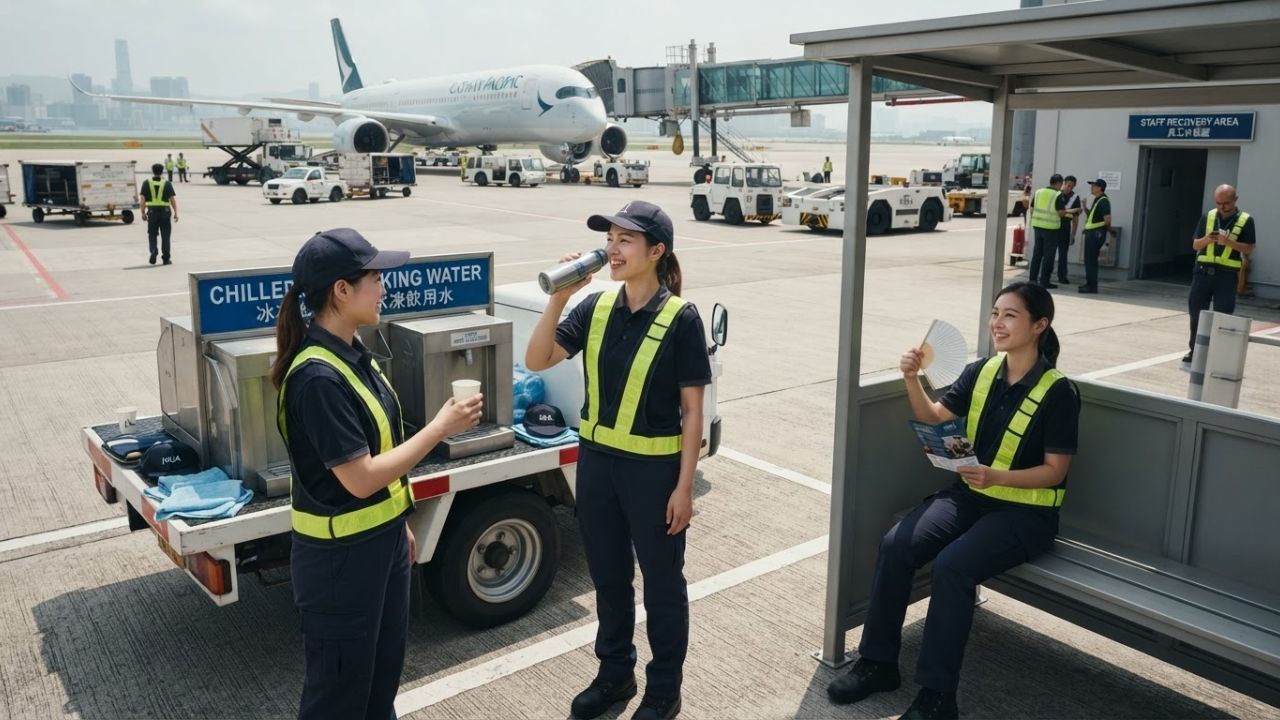
Image generated by AI
Hong Kong International Airport (HKIA) has launched an expanded heat prevention program led by the Airport Authority Hong Kong (AAHK) to protect ramp, baggage, cargo, and maintenance staff working on the airfield during extreme summer weather. The comprehensive program features three mobile water trucks operating across more than 10 apron locations, five air-conditioned staff rest facilities, and 49 sheltered rest areas to mitigate the risks of heat stress and heat stroke for frontline employees.
As part of the annual "Prevention of Heat Stroke at Work" campaign, the safety measures align with the Hong Kong Labour Department's warning system to monitor temperature and humidity levels. By providing continuous hydration, cooling infrastructure, and sun protection supplies, the airport operator aims to maintain safe working conditions while protecting the efficiency of one of Asia's busiest aviation hubs.
The Local Trend: Climate Resilience and Workplace Protection in Aviation
The primary trend affecting modern airport operations is the implementation of climate resilience strategies to protect frontline workers from rising summer temperatures. While modern terminals feature advanced climate control for passengers, the airfield tarmac represents a demanding environment where employees must handle baggage, manage cargo, and service aircraft under direct sunlight and high machinery temperatures.
To address these challenges, AAHK has introduced localized cooling and hydration services directly into operational zones:
- Apron Hydration Trucks: Three mobile water trucks operate throughout the day and night across the airfield, allowing ramp workers to access chilled drinking water without leaving their active duties.
- Air-conditioned Rest Hubs: Five dedicated, air-conditioned staff facilities provide a climate-controlled space where outdoor crews can take scheduled breaks to recover from heat exposure.
- Heat-Resistant Shelters: The airport has established 49 sheltered rest areas across the apron, equipped with seats made from heat-resistant materials that reduce solar absorption and improve comfort.
These facilities are strategically located near aircraft parking stands to minimize the time workers spend walking in the heat during shift changes. Additionally, the seating arrangements at these locations have been upgraded with heat-resistant materials designed to reduce heat absorption. This improvement helps minimize discomfort and allows employees to rest more effectively during periods of high temperature. By implementing these measures, the airport operator ensures that frontline crews can perform their duties in a safe and supportive environment.
This risk-based approach allows operational partners and ground handlers to adjust shift rotations and rest periods proactively, reducing the occurrence of heat-related incidents on the tarmac.
Environmental Stewardship: Zero-Emission Ground Vehicles and Energy Efficiency
The airport's focus on heat safety is part of a broader commitment to sustainable operations and carbon footprint reduction. AAHK has set targets to achieve Net Zero Carbon operations at HKIA by 2050, focusing on energy efficiency and the electrification of airport ground support equipment.
The integration of climate-resilient facilities supports these environmental goals in several ways:
- Electrifying Support Fleet: The transition of ramp vehicles, baggage tractors, and airport shuttle buses to electric power reduces the local air temperature and exhaust emissions on the airfield, improving the immediate working environment.
- Sustainable Building Design: The new staff rest facilities incorporate high-efficiency insulation and energy-efficient cooling systems to minimize energy consumption in restricted airport zones.
- Waste and Resource Management: The distribution of hydration support through mobile trucks reduces reliance on single-use plastic bottles, supporting the airport's plastic-free and waste-to-energy initiatives.
The airport's waste management strategy also includes recycling programs to process plastic cups and packaging used at water stations. By collaborating with local recycling organizations, the airport authority ensures that the increased consumption of bottled water and cooling supplies does not contribute to local landfills. These efforts support the airport's broader commitment to circular economy practices, reducing waste and preserving natural resources across all terminal operations.
These workspace safety and environmental programs are monitored by the Hong Kong Labour Department and the Hong Kong Observatory, which provide regular meteorological and workplace hazard assessments to support airport operations.
Traditional Gastronomy: Culinary Specialties of Hong Kong
Travellers passing through Hong Kong can experience the city's rich culinary traditions at dining venues located within the terminal or after taking the Airport Express into the city:
- Dim Sum: Bite-sized steamed or fried dishes, including Har Gow (shrimp dumplings), Siu Mai (pork dumplings), and Char Siu Bao (barbecued pork buns), served in bamboo steamer baskets.
- Hong Kong Egg Tarts: A pastry featuring a crumbly shortcrust or flaky puff pastry shell filled with a sweet egg custard, baked until golden brown.
- Wonton Noodles: Thin, springy egg noodles served in a savory hot broth with pork and shrimp wontons, garnished with yellow chives and leafy greens.
- Roast Goose: Tender goose roasted in traditional ovens until the skin is crispy and caramelized, served with a sweet plum dipping sauce and steamed rice.
- Pineapple Buns with Butter (Bolo Bao): A sweet, soft bread roll topped with a crumbly, golden crust that resembles a pineapple, served warm with a thick slice of cold butter.
Visitor Insider Tips: Navigating Hong Kong in Hot Weather
To ensure a comfortable and safe trip to Hong Kong during the summer months, follow these guidelines:
- Buy an Octopus Card at the Airport: The rechargeable prepaid smart card covers travel on the MTR subway, buses, ferries, and the Airport Express train, removing the need to buy individual tickets.
- Use the Airport Express for Rapid Transit: The direct rail link connects HKIA with Hong Kong Station in Central in 24 minutes, providing a air-conditioned alternative to road taxis.
- Travel Off-Peak Between October and December: The best time to visit Hong Kong is during the late autumn months, when temperatures are mild, humidity is low, and rainfall is minimal.
- Carry a Reusable Water Bottle: Hydration is essential when walking through the city. Public water drinking stations are available at major tourist spots, transit stations, and cultural sites.
- Dress Modestly at Temples: When visiting cultural heritage sites such as the Tian Tan Buddha or Wong Tai Sin Temple, dress respectably and remove your hat before entering prayer halls.
Outlook: The Future of Climate-Resilient Airport Design
The expanded heat safety strategy at Hong Kong International Airport reflects the growing importance of occupational health and climate resilience in aviation planning. As extreme weather patterns become more frequent globally, major hubs must invest in infrastructure and monitoring systems that protect frontline workers without compromising operational efficiency.
The integration of heat prevention programs with regional weather forecasting networks ensures that airport teams can anticipate extreme heat waves before they occur. The Hong Kong Observatory provides detailed meteorological data that helps airport operators adjust work schedules and deploy cooling resources in advance. This proactive approach serves as a model for other major airports in subtropical regions, demonstrating how data-driven planning can protect frontline workers while maintaining high service standards. The collaboration between the airport authority, meteorological agencies, and local hospitality operators will continue to guide the development of climate-resilient aviation hubs in the future.
Future developments at HKIA will focus on the deployment of automated baggage loading systems, the integration of solar canopy structures over parking and apron spaces, and the expansion of zero-emission ground fleets. By combining technological innovation with sustainable workplace design, the airport authority aims to ensure that HKIA remains a secure, efficient, and resilient global gateway for international travellers and cargo networks.
Related Travel Guides
Virgin Atlantic Adds Dementia-Friendly Short Films to Vera Entertainment
London Heathrow Ranks Among World's Most Expensive for Airport Taxi Travel
New York City Ranks Third in Global Tourism City Attractiveness Index 2026
Disclaimer
This article is for informational and educational purposes only. It does not constitute legal, financial, or professional advice. While we strive to provide accurate and up-to-date information, travel policies, regulations, and conditions change rapidly. Always verify information with official sources before making travel decisions. Nomad Lawyer makes no representations about the accuracy, reliability, completeness, or suitability of the information provided. Readers should consult qualified professionals for advice specific to their circumstances. The views expressed in this article are those of the author and do not necessarily reflect the views of Nomad Lawyer.
Raushan Kumar
Founder & Lead Developer
Full-stack developer with 11+ years of experience and a passionate traveller. Raushan built Nomad Lawyer from the ground up with a vision to create the best travel and law experience on the web.
Learn more about our team →