
Hong Kong International Airport Defeats Asia-Pacific Travel Chaos, Shielding 5.34 Million Passengers From Regional Flight Cancellations and Airport Disruptions With Massive Global Network Expansion: Latest Airline News
As severe travel chaos paralyzes competing regional hubs, Hong Kong International Airport surges past 5.34 million monthly passengers, providing a disruption-free bypass across Asia and North America.

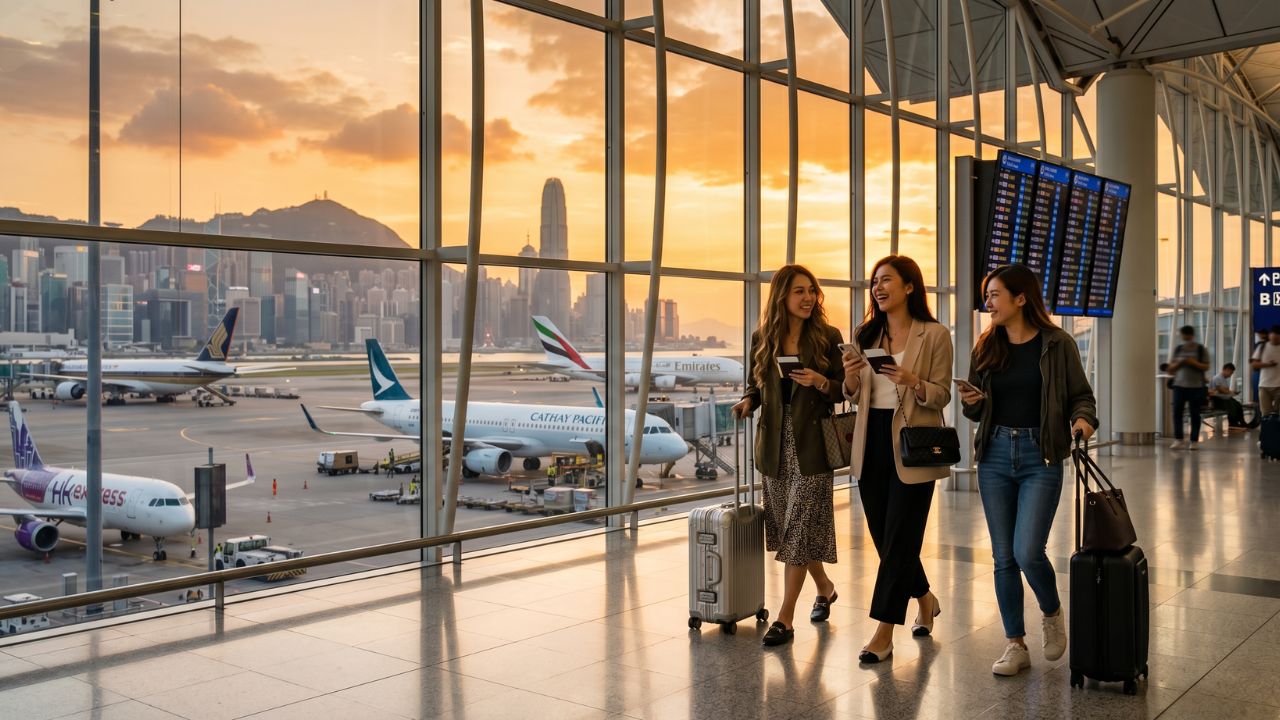
Image generated by AI
In a massive demonstration of operational supremacy designed to protect global travelers from the devastating travel chaos and cascading flight cancellations that routinely paralyze less resilient hubs, Hong Kong International Airport (HKIA) has successfully engineered an unprecedented aviation recovery. Released on June 18, 2026, the latest performance data reveals that the airport served as an impenetrable sanctuary for 5.34 million passengers during May, representing a staggering 10.2 percent year-on-year increase. Recognizing that corporate commuters and international tourists are entirely exhausted by the severe airport disruptions that trap them in congested transit corridors across Asia-Pacific, HKIA has actively expanded its global flight network. By leveraging massive demand from Mainland China, Japan, Vietnam, and the United States—highlighted by Delta Air Lines restoring critical direct flights from Los Angeles—Hong Kong has solidified its position as the ultimate disruption-free bypass linking East Asia to North America. As travelers desperately seek reliable gateways capable of mitigating terminal gridlock, this historic passenger surge stands as the premier headline in today's breaking airline news and absolutely vital global aviation updates.
By introducing direct passenger coordination and dynamic scheduling backups, the regional aviation hubs target growing passenger demand across vital commerce sectors. The choice to coordinate flight departures in phases helps to manage gate capacity, supporting the country's broader regional transportation network.
Context: Shielding the Asia-Pacific Network From Collapse
For the millions of global tourists and corporate executives navigating international aviation this year, the sheer physical scale of operational bottlenecks at fragile mega-hubs has transformed routine transit into a high-stakes endurance test.
Historically, when localized airspace restrictions or extreme weather events hit the Asia-Pacific region, travelers utilizing secondary hubs face immediate operational paralysis, resulting in multi-day strandings and severe travel chaos. Hong Kong International Airport is fundamentally immune to this dynamic. Rather than collapsing under volume, HKIA recorded an incredibly robust Labour Day Golden Week, peaking at approximately 204,000 travelers on a single day (May 1). This performance illustrates that Hong Kong is not merely processing passengers; it is aggressively absorbing displaced traffic from failing competitor networks. By restoring critical long-haul capacity—such as the Delta Los Angeles route—and rapidly expanding regional connectivity to destinations like Phu Quoc Island (Vietnam) and Lanzhou (Mainland China), the airport is building a highly fortified, high-frequency network. This massive capacity flooding entirely mitigates the risk of sudden airspace failure, ensuring that international transfers remain rapid and utterly immune to regional flight cancellations.
To view live flight schedules, verify the active delay status of your specific itinerary, or to track active regional airspace restrictions, travelers must consult official aviation directories. For direct booking access into this highly resilient, disruption-proof global gateway, travelers should aggressively utilize the official portals for Hong Kong International Airport. To explore live flight tracking and monitor the exact severity of the global bottlenecks causing the flight cancellations you must now actively bypass via Hong Kong, passengers can consult the official FlightAware tracking service.
Section-Wise Breakdown of the HKIA Capacity Shield
The North American Fortress: Delta Restores LAX
One of the most strategically critical defenses against transpacific travel chaos was the restoration of direct services between Hong Kong and Los Angeles by Delta Air Lines. The resumption of daily operations provides travelers with an impenetrable, high-capacity gateway between Asia and the United States. Rather than risking a missed connection in a highly congested third-party hub, North American passengers can now transit directly through HKIA, utilizing its highly efficient infrastructure to seamlessly connect onward to Mainland China, Japan, and Southeast Asia.
The Asian Expansion: Japan, Vietnam, and Mainland China
To completely insulate the regional network from operational failure, HKIA is expanding its multi-destination connectivity. New direct flights to Phu Quoc Island and Lanzhou broaden travel options, while existing corridors to Japan remain exceptionally resilient. The geographical proximity and extensive cross-border transport options between Hong Kong and Mainland China make it the ultimate business travel bypass. If localized airport disruptions strike a mainland city, travelers can simply utilize high-speed rail to reach HKIA and secure an immediate international departure.
The Cargo Backbone: 435,000 Tonnes of Resilience
Aviation stability extends beyond passenger movement. During May, HKIA handled 435,000 tonnes of cargo (a 3.0 percent increase), with transhipment cargo surging an incredible 23.2 percent. While regional geopolitical tensions previously disrupted Middle Eastern freight networks, HKIA absorbed the global supply chain shock, ensuring that international trade logistics remained entirely fluid and unbroken.
Technical Roster: HKIA Operational Resilience Data
To ensure absolute factual accuracy regarding the exact scale of Hong Kong International Airport's massive operational expansion designed to defeat global travel chaos, the following matrices detail the verified performance and connectivity data:
Passenger Performance Snapshot at Hong Kong International Airport
| Indicator | May 2026 | Year-on-Year Change |
|---|---|---|
| Passenger traffic | 5.34 million | +10.2% |
| Aircraft movements | 33,655 | +3.6% |
| Cargo throughput | 435,000 tonnes | +3.0% |
| Peak daily passengers (1 May) | 204,000 | Labour Day holiday |
| January-May passengers | 27.7 million | +12.5% |
| January-May aircraft movements | 168,745 | +4.8% |
| January-May cargo | 2.06 million tonnes | +3.6% |
Country Comparison: Markets Driving Hong Kong’s Passenger Expansion
| Country/Region | Traffic Trend | Key Tourism Driver | Importance for Hong Kong |
|---|---|---|---|
| Mainland China | Strongest growth | Business, leisure, holidays | Largest regional source market |
| Japan | Significant increase | Leisure, cultural tourism | Premium outbound and inbound demand |
| Southeast Asia | Strong expansion | Holiday travel, VFR, business | Fast-growing regional connectivity |
| United States | Network expansion | Long-haul travel | Improved North American access |
Regional Air Connectivity Comparison
| Destination Market | Primary Travel Purpose | Current Trend |
|---|---|---|
| Mainland China | Business, leisure, VFR | Rapid growth |
| Japan | Leisure, premium tourism | Strong expansion |
| Vietnam | Beach tourism, new routes | Improving connectivity |
| Southeast Asia | Business and holidays | Double-digit momentum in several markets |
| North America | Long-haul connectivity | Capacity rebuilding |
Cargo Performance Overview
| Cargo Indicator | Performance |
|---|---|
| Total cargo handled | 435,000 tonnes |
| Year-on-year growth | +3.0% |
| Transhipment cargo | +23.2% |
| Import cargo | +1.2% |
| Best-performing regions | Mainland China, Southeast Asia |
| Middle East | Returned to positive growth |
Rolling 12-Month Performance
| Rolling 12-Month Performance | Result | Annual Growth |
|---|---|---|
| Passenger traffic | 64 million | +13.0% |
| Aircraft movements | 402,415 | +6.1% |
| Cargo throughput | 5.14 million tonnes | +3.0% |
Passenger Impact: Eradicating Connection Anxiety
For the 5.34 million passengers who utilized HKIA in May, the immediate impact of this massive capacity flooding is the absolute eradication of terminal gridlock and connection anxiety.
When travelers book multi-city itineraries spanning North America, Japan, and Vietnam, they are highly vulnerable to the domino effect of flight cancellations. A single delayed flight in a congested Southeast Asian airport can ruin an entire corporate schedule. However, by routing exclusively through Hong Kong, passengers are shielded by a hub operating over 33,000 monthly aircraft movements. This massive frequency guarantees that if a disruption occurs, the airport possesses the immediate surge capacity to absorb and rebook the displaced traveler, turning a catastrophic 24-hour stranding into a seamless, highly efficient transfer.
Industry Analysis: The Supremacy of High-Frequency Hubs
Aviation industry analysts view the 10.2 percent passenger growth at HKIA as definitive proof that elite, high-frequency hubs are actively capturing market share from airlines that fail to mitigate travel chaos.
Analysts note that Hong Kong's recovery is structurally sustainable, driven not just by local demand, but by transfer passengers actively choosing HKIA over competing hubs to ensure schedule reliability. The addition of routes to Phu Quoc and Lanzhou, combined with the 22 percent surge in long-haul visitor arrivals, proves that premium travelers demand seamless connectivity. Industry experts warn that airports failing to provide efficient gate-to-gate transfers and high-frequency flight schedules will inevitably succumb to operational collapse, while massive fortified gateways like HKIA will continue to dominate the Asia-Pacific recovery.
Actionable Advice for Surviving Asia-Pacific Gridlock
If you are navigating the highly volatile international aviation network during the late 2026 travel season, execute this strategic planning checklist to fully bypass regional travel chaos:
- Leverage the HKIA Bypass: When transiting between North America and Southeast Asia, explicitly route your itinerary through Hong Kong International Airport. HKIA's high-frequency schedules offer unmatched protection against the missed connections that constantly plague less reliable regional hubs.
- Capitalize on the Delta Restoration: To completely avoid the travel chaos associated with congested US West Coast connections, book the newly restored Delta direct flight from Los Angeles (LAX) to Hong Kong, guaranteeing a disruption-free transpacific corridor.
- Utilize Cross-Border Agility: If you are traveling to Mainland China and your direct flight is cancelled due to weather, immediately pivot. Fly into HKIA and utilize the highly reliable high-speed rail network to physically bypass the airspace disruption and reach your final destination.
- Book Multi-Destination Itineraries Safely: Take advantage of HKIA’s new direct routes (like Phu Quoc). By anchoring your twin-center holiday in Hong Kong, you ensure that the central node of your journey operates with the massive capacity required to prevent rolling delays.
FAQ: Hong Kong Airport & Regional Travel Chaos
How is Hong Kong Airport defeating Asia-Pacific travel chaos?
By expanding its global network and processing 5.34 million passengers with unmatched operational efficiency, HKIA provides a heavily fortified, disruption-free bypass connecting North America, Southeast Asia, and Mainland China.
Which long-haul route has been critically restored?
To shield transpacific travelers from connection anxiety, Delta Air Lines has successfully restored direct, high-capacity daily services between Los Angeles and Hong Kong.
What are the peak travel periods causing terminal congestion?
During Mainland China’s Labour Day Golden Week, HKIA safely absorbed massive demand, successfully processing a peak of 204,000 travelers on May 1 alone without succumbing to operational collapse.
The Reality of Fortified Aviation Gateways
The historic operational recovery executed by Hong Kong International Airport proves definitively that massive, high-frequency infrastructure is the ultimate defense against systemic physical travel chaos. By flawlessly processing 5.34 million monthly passengers and restoring vital links like the Delta Los Angeles route, HKIA has provided international commuters with a heavily armored, exceptionally reliable bypass. As archaic regional airports desperately struggle to manually process surging holiday volumes—triggering rolling flight cancellations and severe airport disruptions that ruin vital corporate travel—passengers must accept a critical new reality: avoiding brutal travel anxiety requires actively abandoning fragile transit points and exclusively booking through massive, fortified global gateways that possess the raw capacity to survive modern airspace collapse.
Key Takeaways
- The HKIA Capacity Shield: Hong Kong International Airport successfully shielded 5.34 million passengers from regional travel chaos during May 2026.
- Transpacific Restoration: Delta Air Lines has restored the critical direct route between Los Angeles and Hong Kong, providing a highly reliable long-haul bypass.
- Peak Volume Survival: The airport flawlessly processed 204,000 daily passengers during the Golden Week holiday without succumbing to terminal gridlock.
- Regional Network Expansion: New routes to Phu Quoc Island and Lanzhou ensure that travelers have high-frequency alternatives when regional flight cancellations strike.
- Passenger Survival: International travelers must actively route their complex Asian itineraries through HKIA to guarantee they are protected by an airport capable of handling 64 million annual passengers.
Related Travel Guides
Massive Travel Chaos Paralyzes Chicago O'Hare with 1,425 Disruptions
Disclaimer
This article is for informational and educational purposes only. It does not constitute legal, financial, or professional advice. While we strive to provide accurate and up-to-date information, travel policies, regulations, and conditions change rapidly. Always verify information with official sources before making travel decisions. Nomad Lawyer makes no representations about the accuracy, reliability, completeness, or suitability of the information provided. Readers should consult qualified professionals for advice specific to their circumstances. The views expressed in this article are those of the author and do not necessarily reflect the views of Nomad Lawyer.
Kunal K Choudhary
Co-Founder & Contributor
A passionate traveller and tech enthusiast. Kunal contributes to the vision and growth of Nomad Lawyer, bringing fresh perspectives and driving the community forward.
Learn more about our team →