
Tan Son Nhat International Airport Immigration Wait Times and Arrival Guide for 2026
Detailed analysis of immigration processing times at Ho Chi Minh City's Tan Son Nhat Airport (SGN), including the impact of the new 2026 Pre-arrival Information (PAI) system.

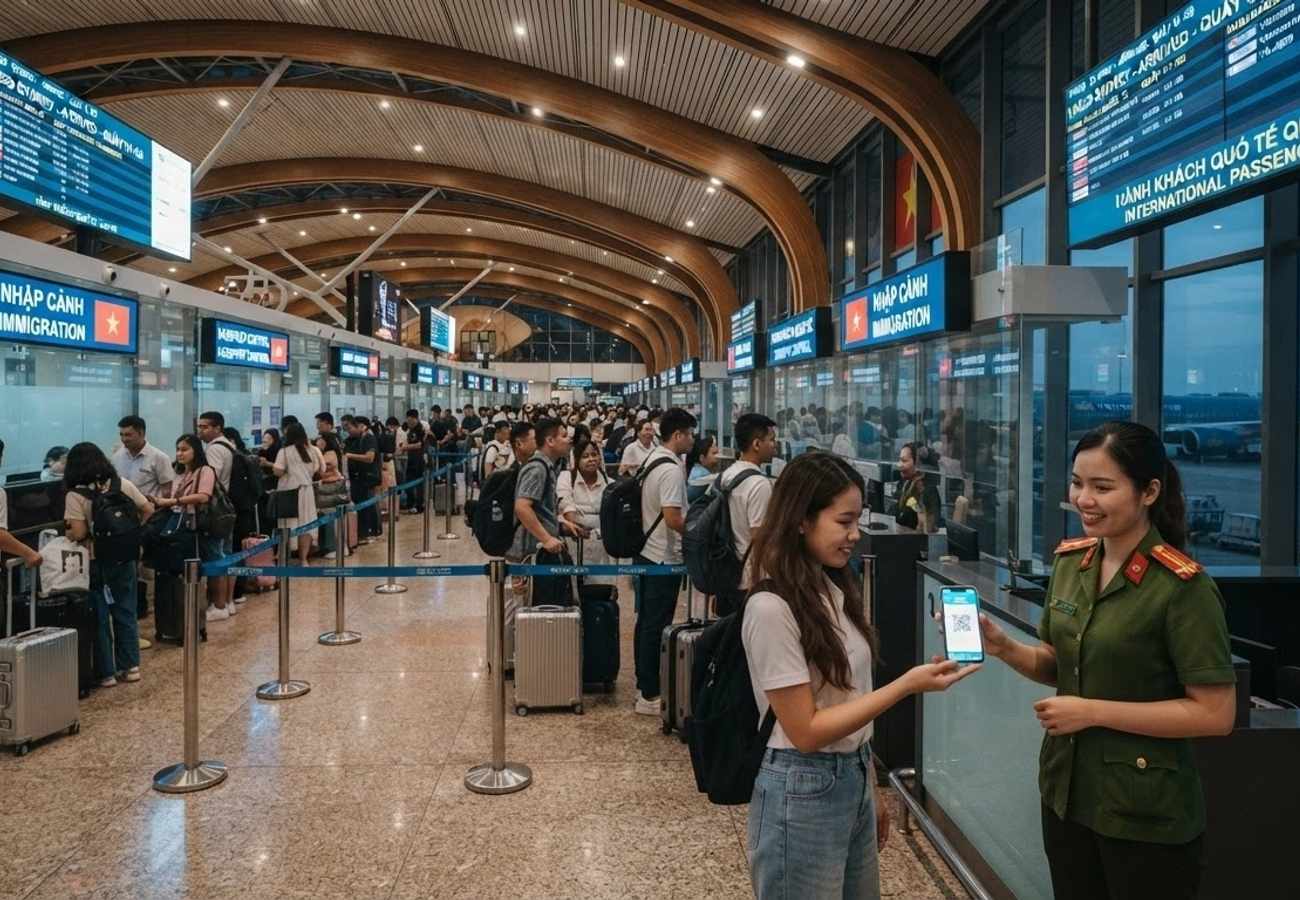
Image generated by AI
Arrivals at Tan Son Nhat International Airport (SGN) are currently subject to significant volatility, with immigration wait times ranging from 20 minutes to over 120 minutes depending on flight banks and document readiness.
Tan Son Nhat Arrival Logistics and 2026 Entry Protocols
Tan Son Nhat International Airport (SGN), specifically Terminal 2 (T2), serves as the primary gateway for long-haul traffic from global hubs including Singapore, Bangkok, Incheon, and Doha. The arrival sequence follows a strict linear progression: disembarkation, immigration/passport control, baggage claim, customs screening, and finally, the public arrivals hall.
As of April 15, 2026, the Vietnam Immigration Department has implemented a pilot Pre-arrival Information (PAI) system at SGN. This system requires travelers to complete an online declaration before departure to generate a QR code. According to the Ministry of Public Security, this initiative aims to reduce manual data entry at the counter and mitigate congestion during peak arrival windows.
Our analysis indicates a growing divide in processing efficiency between PAI-compliant passengers and those without QR codes. Airlines, including Vietjet, have integrated PAI reminders into their pre-flight communications. While not a replacement for a visa or visa-exemption, the QR code is now a primary document requested by immigration officers upon arrival.
Immigration Wait Time Analysis
Wait times at SGN are heavily influenced by the arrival of wide-body aircraft and regional flight banks. Based on current traveler data and operational patterns, the following timeframes apply:
- Off-Peak (Weekday Mid-Mornings): 20 to 40 minutes.
- Regional Peaks (Early Afternoon): Under 45 minutes for flights from Bangkok or Singapore.
- Evening/Late-Night Peaks (8:00 PM onwards): 60 to 90 minutes, coinciding with arrivals from Europe and Northeast Asia.
- Extreme Peaks (Tet/Public Holidays): Up to 120 minutes. During late-April and early-May holidays, the airport handles over 1,000 flights and nearly 170,000 passengers daily.
- Early Morning Peaks (6:00 AM to 7:00 AM): High congestion due to overnight arrivals from Sydney, Melbourne, and Middle Eastern hubs.
Flight tracking data suggests that because SGN lacks a real-time public wait-time tracker, passengers should treat crowdsourced estimates as approximations and budget a minimum of 60 to 90 minutes for passport control during weekends or evening banks.
Impact of PAI and E-Visas on Processing Speed
The PAI system significantly reduces the "at-counter" interaction time. Passengers with a valid QR code typically spend only two to three minutes at the booth. Conversely, passengers without the declaration face manual data entry, which increases the likelihood of bottlenecks.
For the affected passenger, the following document risks can lead to severe delays:
- E-Visa Discrepancies: Minor errors in passport numbers or dates of birth frequently trigger secondary inspections, adding 15 to 30 minutes to the process.
- Visa-on-Arrival (VOA): Passengers using third-party VOA services must queue at a separate visa counter and pay stamping fees before joining the main immigration line, significantly extending the total time to exit.
- Documentation: Printed copies of e-visa approval letters are strongly recommended to avoid technical delays at the booth.
Total Time from Landing to Curb
Clearing immigration is only the first phase of the arrival process. Baggage claim and customs introduce additional variables:
- Baggage Retrieval: Luggage from wide-body aircraft typically appears 20 to 30 minutes after landing. However, during evening peaks, passengers report waiting 30 to 60 minutes at the carousel due to shared ground handling resources.
- Total Transit Time: For a standard arrival during peak hours, the total duration from touchdown to exiting the airport can easily exceed two hours.
Industry Analyst View
The implementation of the PAI system marks a shift toward digitized border management in Vietnam. However, the lack of dedicated "Fast Track" lanes for PAI users means that while individual processing is faster, the overall queue length remains dependent on total aircraft volume. The congestion at SGN highlights a systemic struggle to balance increasing international tourism with existing infrastructure capacity. Travelers should prioritize e-visas over VOA services to minimize exposure to the airport's most volatile queues.
Plan for the worst-case scenario to ensure seamless onward transfers.
Related Travel Guides
Disclaimer
This article is for informational and educational purposes only. It does not constitute legal, financial, or professional advice. While we strive to provide accurate and up-to-date information, travel policies, regulations, and conditions change rapidly. Always verify information with official sources before making travel decisions. Nomad Lawyer makes no representations about the accuracy, reliability, completeness, or suitability of the information provided. Readers should consult qualified professionals for advice specific to their circumstances. The views expressed in this article are those of the author and do not necessarily reflect the views of Nomad Lawyer.
Preeti Gunjan
Contributor & Community Manager
A passionate traveller and community builder. Preeti helps grow the Nomad Lawyer community, fostering engagement and bringing the reader experience to life.
Learn more about our team →