
Boeing 777X Fleet Plans Create Strategic Dilemma for Scandinavian Airlines
Breaking airline news and aviation industry updates for 2026.

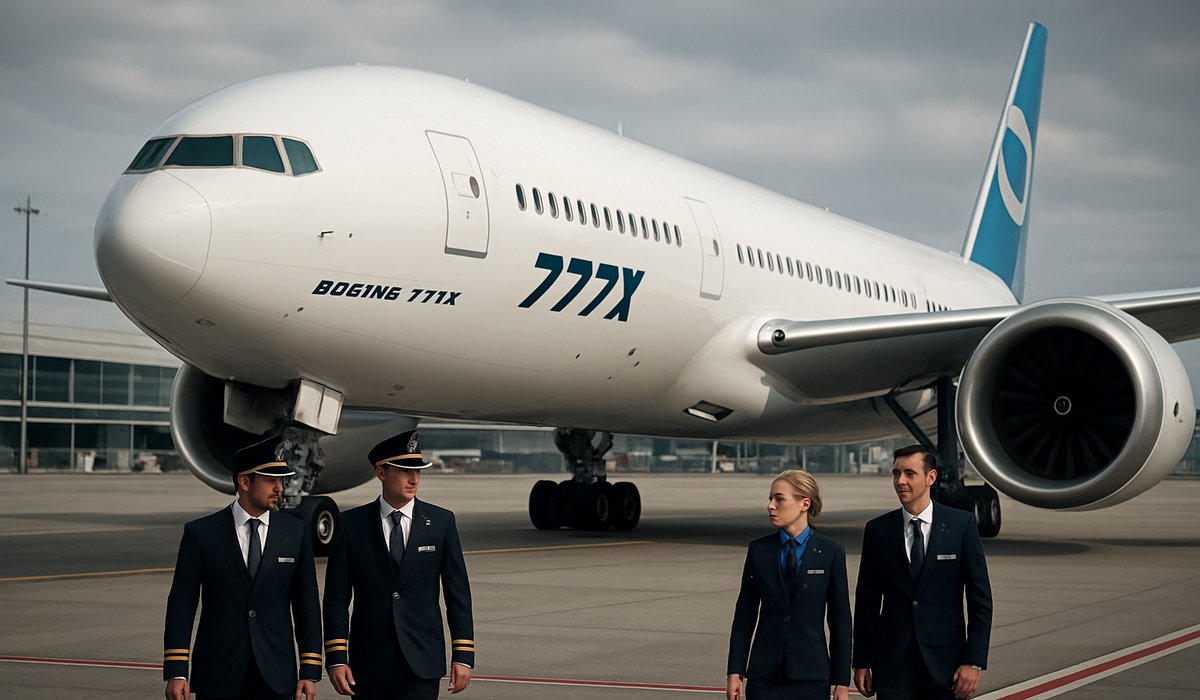
Image generated by AI
Boeing 777X Fleet Plans Create Strategic Dilemma for Scandinavian Airlines
As SAS evaluates widebody aircraft orders, the massive 777X raises questions about operational fit for European carrier focused on mid-size long-haul markets
Scandinavian Airlines Faces Critical Aircraft Selection Decision
Scandinavian Airlines (SAS) is currently evaluating a significant widebody fleet expansion, with the Boeing 777X emerging as a serious contender alongside established competitors in the long-haul market. However, aviation analysts are questioning whether Boeing's largest twin-engine aircraft aligns with the carrier's operational strategy, particularly given its existing Airbus A350 fleet and traditional focus on mid-capacity European routes.
The decision represents a crucial inflection point for the Nordic carrier as it seeks to modernize aging widebody aircraft while maintaining operational flexibility across its network of long-haul and regional services.
The 777X Size Question
The Boeing 777X, with its 400-plus seat capacity in standard configurations, presents a fundamental sizing challenge for SAS operations. The aircraft's cavernous fuselage and extended range capabilities—features designed for ultra-long-haul and high-density international routes—may exceed the actual market demands on many of Scandinavian's current and projected long-distance services.
The airline already operates the Airbus A350, a proven widebody offering superior fuel efficiency and operational economics for European carriers managing mixed-distance route networks. The A350's 300-seat configuration has proven optimal for SAS's transatlantic and intercontinental corridors without the oversized capacity that would burden load factors on less-traveled routes.
Operational and Economic Implications
Industry experts point to several complicating factors. The 777X's larger dimensions create potential ground infrastructure constraints at Scandinavian's primary hub in Stockholm and secondary bases. Gate compatibility, stand spacing, and maintenance facility requirements at Scandinavian's network airports present logistical hurdles that smaller widebodies avoid entirely.
Additionally, jet fuel prices and operating economics favor right-sizing aircraft to actual demand. Deploying a 400-seat aircraft on routes averaging 65-70% capacity utilization would inflate per-seat fuel costs and maintenance expenses compared to more modest widebodies.
Strategic Path Forward
Scandinavian Airlines must reconcile Boeing's sales pitch—emphasizing the 777X's range, cargo flexibility, and long-term viability—against genuine operational requirements. The carrier's recovery trajectory post-restructuring demands disciplined capital allocation and fleet composition aligned precisely with European and North Atlantic market realities rather than global aspirations.
The decision will likely influence fleet planning across Scandinavian carriers facing identical trade-offs between capacity, efficiency, and market fit during an era of elevated jet fuel costs and unpredictable demand cycles.
FAQs: Boeing 777X vs. Alternative Widebodies for European Airlines
What makes the Boeing 777X unsuitable for Scandinavian Airlines? The 777X's 400+ seat capacity exceeds typical demand on European-transatlantic routes where SAS operates. Smaller widebodies like the A350 offer better load factors and operational efficiency on these networks.
How do jet fuel prices impact widebody aircraft selection? Higher jet fuel costs make oversized aircraft economically inefficient. Larger planes consume more fuel per flight; if load factors don't justify the extra capacity, seat-mile costs rise significantly.
What are the advantages of the Airbus A350 for Nordic carriers? The A350 offers superior fuel efficiency, lower maintenance costs, and optimal seating (300 seats) for European long-haul routes, making it ideal for carriers like SAS.
Does Boeing 777X serve any competitive advantage for Scandinavian Airlines? The 777X provides extended range and cargo versatility, but these benefits don't offset sizing challenges on SAS's primarily European route network.
Why do aircraft size mismatches hurt airline profitability? Oversized aircraft create fixed cost burdens regardless of passenger loads. Empty seats still require fuel, maintenance, and crew—reducing profit margins on lower-demand routes.
Related Travel Guides
- Boeing 787 Dreamliner Pilots Face Demanding Schedules as Compensation Packages Evolve in 2026
- Emirates, FlyDubai, Air Arabia, Etihad and More Cancel 26 Flights Across UAE Airports — Major Disruptions to Nairobi, Cairo, Istanbul, Amman, Islamabad, Mumbai, Dammam, Kathmandu, Salalah, Addis Ababa, Male and Key Gulf Connections | Flight Cancellations, Travel Chaos, Aviation Updates
- British Airways Rolls Out Starlink Wi-Fi, Revolutionizing Connectivity and Allowing Inflight Calls
Disclaimer
This article is for informational and educational purposes only. It does not constitute legal, financial, or professional advice. While we strive to provide accurate and up-to-date information, travel policies, regulations, and conditions change rapidly. Always verify information with official sources before making travel decisions. Nomad Lawyer makes no representations about the accuracy, reliability, completeness, or suitability of the information provided. Readers should consult qualified professionals for advice specific to their circumstances. The views expressed in this article are those of the author and do not necessarily reflect the views of Nomad Lawyer.
Kunal K Choudhary
Co-Founder & Contributor
A passionate traveller and tech enthusiast. Kunal contributes to the vision and growth of Nomad Lawyer, bringing fresh perspectives and driving the community forward.
Learn more about our team →