
Fiji Airways Suspends Dallas Route: Another Casualty of Long-Haul Travel Economics
Breaking airline news and aviation industry updates for 2026.

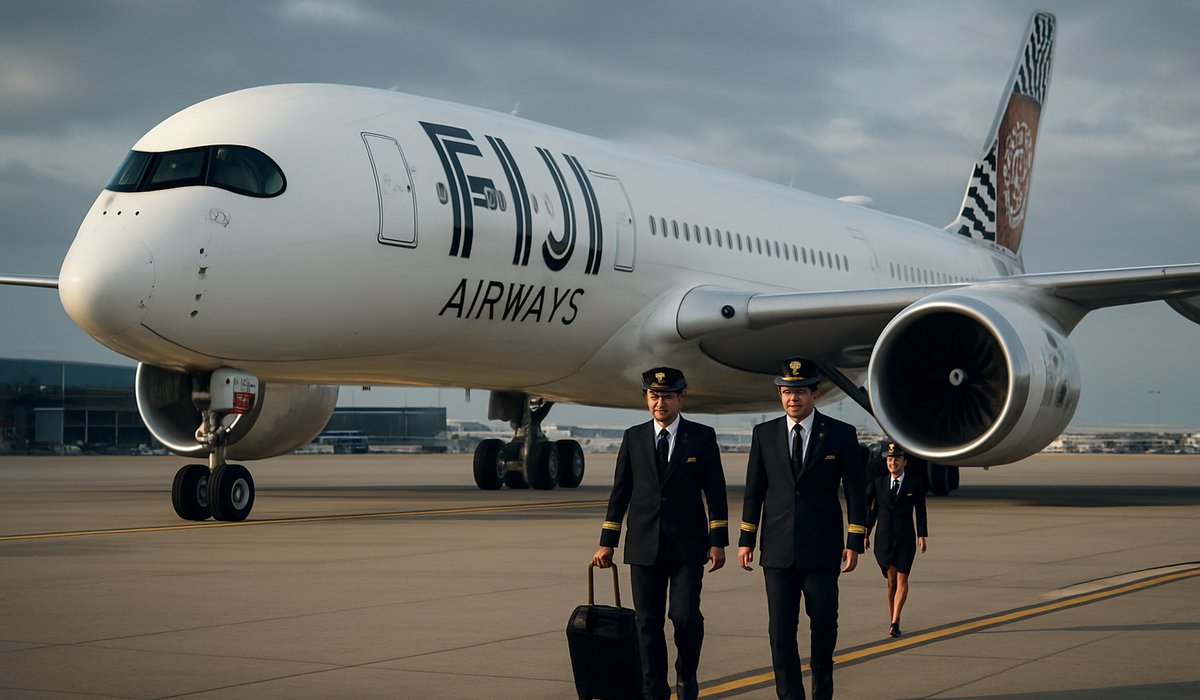
Image generated by AI
Fiji Airways Suspends Dallas Route: Another Casualty of Long-Haul Travel Economics
The Pacific carrier's retreat from DFW marks a strategic recalibration as fuel costs and demand pressures reshape aviation's transpacific landscape
Route Suspension Signals Broader Industry Headwinds
Fiji Airways has suspended its nonstop service connecting Nadi Airport (NAN) to Dallas/Fort Worth International Airport (DFW), marking a significant pullback from the carrier's aggressive U.S. expansion strategy. The decision to withdraw from what was positioned as a cornerstone route into America's heartland reveals mounting pressures facing Pacific-based airlines navigating volatile fuel costs and shifting travel demand patterns.
The Nadi-Dallas corridor represented Fiji Airways' most ambitious attempt to penetrate deep into the continental United States, leveraging American Airlines' expansive DFW hub to capture leisure and business travelers across the central, eastern, and southern regions. The route's termination underscores the intensifying challenges smaller international carriers face when competing against established U.S. network operators on long-haul transpacific services.
Economic Pressures Behind the Pullback
Industry analysts attribute the suspension to a confluence of factors: persistently elevated jet fuel prices, softer-than-expected demand following post-pandemic travel normalization, and the high operating costs associated with ultra-long-haul routes. For a carrier of Fiji Airways' size, operating nonstop service spanning roughly 8,000 miles demands substantial passenger volumes and premium yields to remain financially viable.
The decision reflects a recalibration across the aviation sector, where smaller carriers are reassessing unprofitable long-haul networks. Rising fuel surcharges, combined with airline fees and ancillary revenue pressures, have compressed margins on competitive routes where major U.S. carriers maintain inherent advantages through scale and brand recognition.
Implications for Transpacific Aviation
Fiji Airways' route withdrawal carries broader implications for the transpacific travel market. The move suggests that even carriers with strong brand recognition in destination markets face structural challenges sustaining point-to-point service on marginal routes. Competitors operating similar Pacific networks will likely reassess their own route portfolios against similar cost-benefit analyses.
The suspension also highlights how geopolitical tensions, global economic uncertainty, and fuel market volatility continue reshaping aviation strategy. Carriers increasingly favor hub-dependent models over ambitious nonstop networks unless demand patterns support premium pricing power.
For passengers, the route's closure means reduced direct travel options between Fiji and Texas, likely forcing connections through west-coast gateways—a development that may redirect bookings toward competing carriers offering convenient alternative routings.
FAQ: Understanding Airline Route Suspensions and Travel Cost Impacts
What causes airlines to suspend profitable-sounding international routes? Routes may appear viable on surface metrics but fail when accounting for crew positioning costs, fuel surcharges, ground handling fees, and slot availability. Long-haul services require consistent high load factors and premium cabin yields to achieve breakeven economics.
How do jet fuel prices directly impact airline fees and ticket costs? Elevated fuel costs compress operating margins, forcing carriers to increase baggage charges, seat selection fees, and ticket base fares to maintain profitability. A $10 per barrel fuel increase can add millions annually to an airline's operating expenses.
Will passengers still access Dallas-Fiji connections? Yes, but typically via one-stop routing through Pacific hubs like Los Angeles, San Francisco, or Honolulu, adding travel time and reducing convenience compared to direct service.
How does this suspension affect American Airlines' DFW hub strategy? While reducing connecting opportunities through DFW, American may strengthen partnerships with other Pacific carriers or reallocate capacity to more profitable long-haul markets.
Are other Pacific carriers likely to abandon U.S. routes similarly? Possibly, particularly if fuel prices remain elevated and travel demand remains below pre-pandemic growth projections. Carriers will concentrate resources on higher-yield markets and established routes.
Related Travel Guides
Flight Delay Compensation Guide 2026
Understanding Airline Route Changes
Airport Security Process Updated (2026)
External Resources
Disclaimer
This article is for informational and educational purposes only. It does not constitute legal, financial, or professional advice. While we strive to provide accurate and up-to-date information, travel policies, regulations, and conditions change rapidly. Always verify information with official sources before making travel decisions. Nomad Lawyer makes no representations about the accuracy, reliability, completeness, or suitability of the information provided. Readers should consult qualified professionals for advice specific to their circumstances. The views expressed in this article are those of the author and do not necessarily reflect the views of Nomad Lawyer.
Raushan Kumar
Founder & Lead Developer
Full-stack developer with 11+ years of experience and a passionate traveller. Raushan built Nomad Lawyer from the ground up with a vision to create the best travel and law experience on the web.
Learn more about our team →