
US Army Transforms Military Procurement: $1.4 Million Reconnaissance Drones Now Available Through Streamlined Marketplace Model
Breaking airline news and aviation industry updates for 2026.

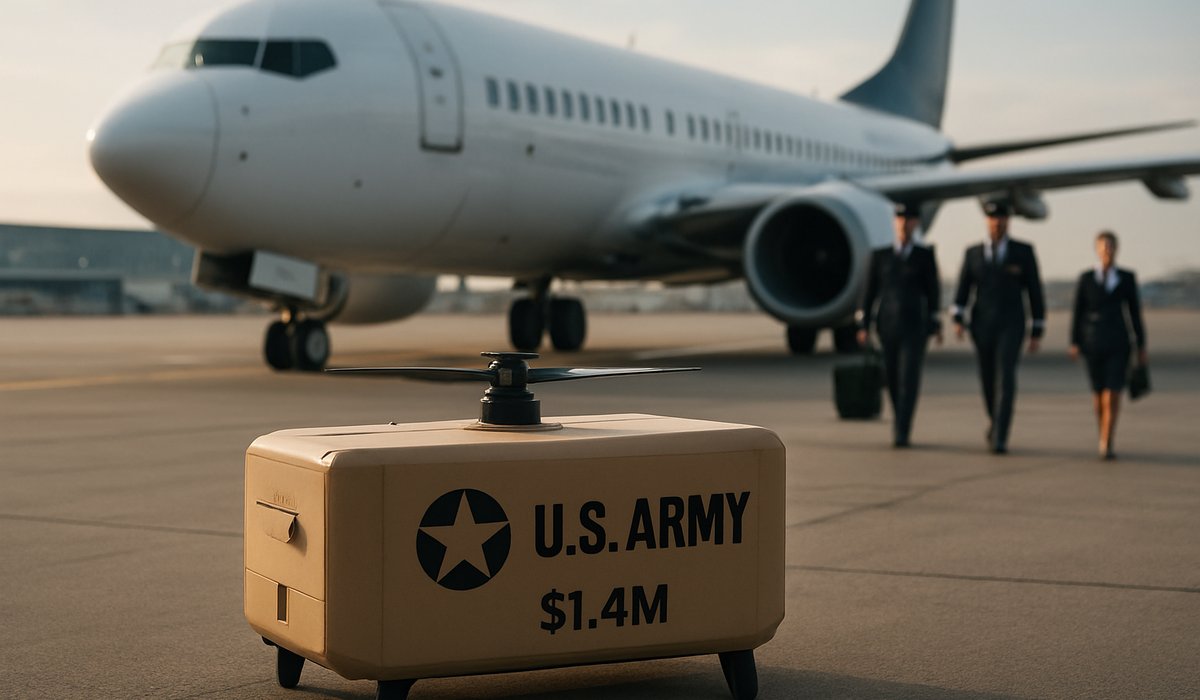
Image generated by AI
US Army Transforms Military Procurement: $1.4 Million Reconnaissance Drones Now Available Through Streamlined Marketplace Model
Military shifts to Amazon-style purchasing strategy for unmanned aircraft systems as drone warfare becomes central to modern combat
Army Launches Revolutionary Drone Marketplace to Accelerate Unmanned Warfare Capabilities
The United States Army has fundamentally restructured its approach to acquiring reconnaissance and combat drones, establishing a streamlined digital marketplace that mirrors commercial e-commerce platforms. This unprecedented procurement model signals a dramatic departure from traditional military supply chains and reflects the Pentagon's urgent pivot toward drone-centric warfare strategies in an increasingly contested global landscape.
The new UAS (Unmanned Aircraft Systems) marketplace, which became operational in March, currently catalogs 30 distinct drone airframes with expansion plans to accommodate at least 70 different models within months. The initiative represents part of a broader military modernization agenda centered on achieving what officials term "drone dominance" on 21st-century battlefields.
Scaling Up: One Million Drones in Three Years
The scope of this procurement initiative is staggering. Army leadership has established ambitious targets to acquire over one million uncrewed platforms across the next three-year window—a figure that underscores the centrality of autonomous and remote-piloted systems to future military operations.
Individual reconnaissance drones in the marketplace are priced at approximately $1.4 million per unit, reflecting advanced sensor packages and extended operational ranges required for modern military intelligence gathering. The per-unit cost structure suggests military planners are prioritizing capability density over raw quantity in at least the higher-tier platforms within the broader acquisition strategy.
Modernizing Military Supply Chains for Speed and Competition
The marketplace model introduces competitive pressure among drone manufacturers, potentially driving innovation and cost efficiency across the UAS industry. By adopting consumer-style rapid procurement processes, the Army aims to reduce procurement timelines that have historically stretched across years, allowing the military to deploy emerging technology faster than traditional defense contracting allowed.
This approach also democratizes access to Pentagon contracts, potentially opening opportunities for smaller manufacturers and emerging drone technology companies that previously lacked resources to navigate complex government bidding procedures.
Broader Strategic Implications
The initiative arrives amid escalating geopolitical tensions in Eastern Europe, the Indo-Pacific region, and the Middle East—areas where unmanned systems have proven decisive in recent conflicts. The Israeli-Hamas conflict, the Russia-Ukraine war, and Chinese military activities near Taiwan have all demonstrated the strategic value of drone swarms, autonomous reconnaissance platforms, and loitering munitions.
Military analysts note the marketplace represents a fundamental shift in how the world's largest military power acquires cutting-edge technology, abandoning decades-old procurement protocols in favor of agility and market-driven competition.
FAQ: Understanding Military Drone Procurement and Marketplace Strategy
What is the US Army UAS marketplace and how does it work? The Army established a digital marketplace launched in March that allows rapid procurement of unmanned aircraft systems. Rather than traditional multi-year defense contracts, the platform functions similarly to commercial procurement, enabling faster acquisition of drone technologies from multiple manufacturers.
How many drones does the US Army plan to acquire? Military officials have targeted procurement of over one million uncrewed platforms over a three-year period, representing an unprecedented scaling of drone capabilities across all service branches and operational theaters.
What is the cost of individual reconnaissance drones in the marketplace? Reconnaissance-capable drones available through the marketplace are priced at approximately $1.4 million per unit, reflecting advanced sensor capabilities and operational requirements.
Why is the Army shifting to a marketplace procurement model? The transition accelerates deployment of emerging technologies, reduces procurement timelines, encourages competition among manufacturers, and opens opportunities for smaller defense contractors previously excluded from large-scale Pentagon contracts.
What does "drone dominance" mean in military strategy? Drone dominance refers to achieving superior unmanned aircraft capabilities across reconnaissance, surveillance, and combat operations—positioning the US military advantage in future conflicts increasingly dependent on autonomous and remote-piloted systems.
Related Travel Guides
External Resources
Disclaimer
This article is for informational and educational purposes only. It does not constitute legal, financial, or professional advice. While we strive to provide accurate and up-to-date information, travel policies, regulations, and conditions change rapidly. Always verify information with official sources before making travel decisions. Nomad Lawyer makes no representations about the accuracy, reliability, completeness, or suitability of the information provided. Readers should consult qualified professionals for advice specific to their circumstances. The views expressed in this article are those of the author and do not necessarily reflect the views of Nomad Lawyer.
Raushan Kumar
Founder & Lead Developer
Full-stack developer with 11+ years of experience and a passionate traveller. Raushan built Nomad Lawyer from the ground up with a vision to create the best travel and law experience on the web.
Learn more about our team →