
Head of the Charles Regatta 2026: Insider Guide to Boston and Cambridge's World-Class Rowing Spectacle
The 2026 Head of the Charles Regatta brings 12,000 rowers and 325,000 spectators to Boston and Cambridge along a historic 4,702-metre river course.

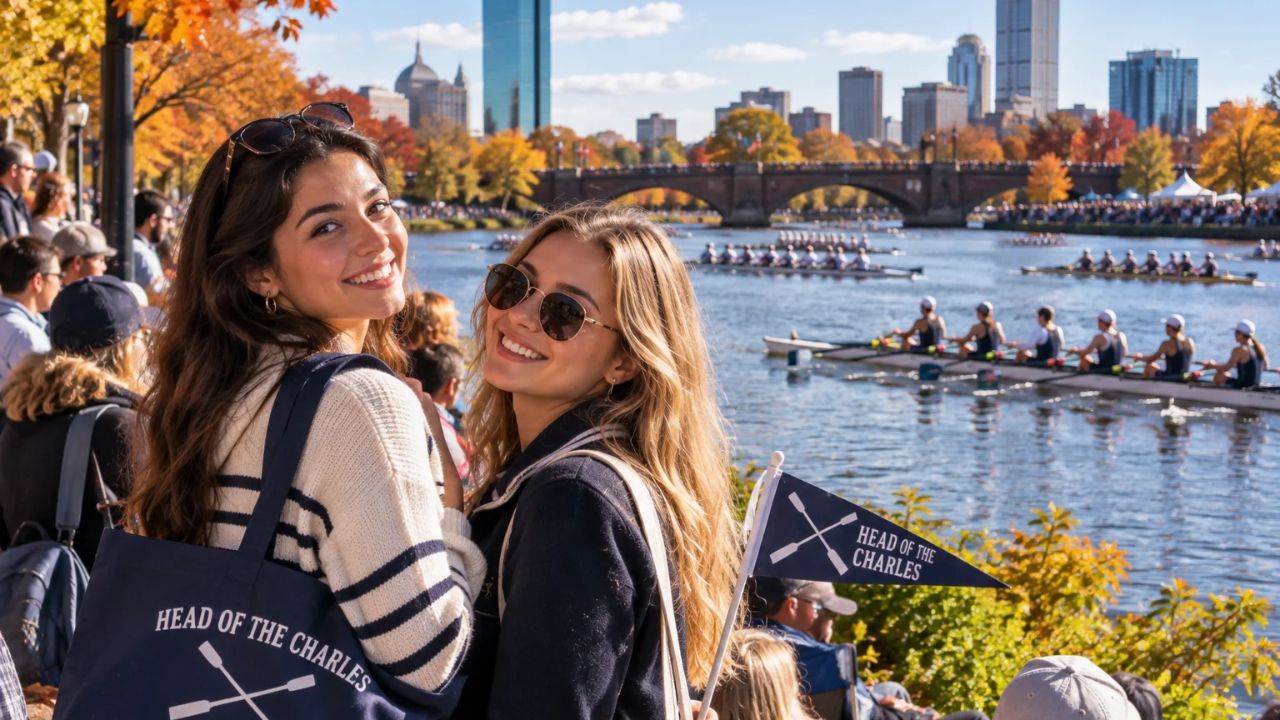
Image generated by AI
Every October, a single 90-degree river bend at Weeks Footbridge causes more steering collisions, rudder penalties, and coxswain drama than almost any championship rowing venue on earth. From 16 to 18 October 2026, the Head of the Charles Regatta returns to the Charles River, gathering nearly 12,000 athletes from over 30 countries and attracting more than 325,000 spectators along the tree-lined banks separating Boston and Cambridge.
Autumn's Premier River Gathering Along the Charles
What began on 16 October 1965 as an experimental event organized by the Cambridge Boat Club and Harvard University sculling coach Ernest Arlett has evolved into the world's largest three-day rowing competition. Rather than racing side-by-side in lanes, crews depart individually at 15-second intervals, chasing each other against the clock across 74 distinct competitive divisions. This staggered format ensures non-stop action on the water from dawn until late afternoon.
The economic and cultural footprint across Greater Boston is immense. In 2024, the regatta drew 2,625 crews from 828 clubs, with state tourism data estimating over US$88 million in economic impact generated by more than 400,000 total visitors. For travelers, the weekend combines collegiate athletic traditions, fall foliage strolls, and open-air food festivals along both shorelines.
What Makes the 4,702-Metre Course Unique
The regatta course stretches 4,702 metres upstream, starting at Boston University's DeWolfe Boathouse and finishing at Herter Park in Brighton. Unlike straight Olympic courses, the Charles forces coxswains to guide narrow racing shells through six historic stone and steel bridges. After navigating the Powerhouse Stretch, boats enter the treacherous 90-degree turn beneath Weeks Footbridge, where overtaking requires razor-sharp blade placement to avoid clash penalties.
The competition is uniquely multigenerational and fully inclusive. Elite Olympic champions compete in the same three-day program alongside high school novices and masters divisions that run from age 30 to over 90. The 2024 edition saw a 92-year-old competitor capture a Grand Veteran title and an 83-year-old average age boat finish the mixed eight. Fully integrated para-rowing and inclusion races maintain strict gender parity, giving every community equal presence on the water.
Visitor Insider Tips
- Best Viewing Angles: Avoid the dense crowds at Eliot Bridge by staking out spots on the Boston University Bridge early in the morning for starting line views, or base yourself along Magazine Beach for open grass and unobstructed mid-course sightlines. Weeks Footbridge offers dramatic bird's-eye views of technical turns, but bridge standing space fills by 10:00 AM.
- Public Transit Strategy: Driving and street parking anywhere near the river basin is practically impossible. Use the Massachusetts Bay Transportation Authority (MBTA) Red Line to Harvard or Central stations for easy walks to Cambridge boathouses, or take the Green Line B Branch to BU Central. Drivers should park at the Alewife Red Line garage at the northwest terminus of Route 2.
- Food and Hospitality: Sample regional fare at the Taste of Boston and Cambridge concessions near the Weld Boathouse and Christian Herter Park. On the Cambridge riverbank, the ticketed Riverbender enclosure offers craft beverages, covered seating, and live race commentary screens.
- Foliage Walking Routes: Walk the Paul Dudley White Bike Path between Harvard Square and the finish line at Herter Park. The 2-mile walk passes beneath fiery red maples and golden weeping willows reflecting off the river basin.
Cultural and Environmental Context
The Head of the Charles relies on 2,400 local volunteers, working alongside the Massachusetts Department of Conservation and Recreation (DCR) to manage crowd flow and safeguard public parklands. The event operates under comprehensive environmental standards aimed at protecting Charles River water quality, eliminating single-use waste, and preserving riverside wetlands.
Beyond athletics, the regatta connects visitors directly to New England's maritime and academic roots. Spectators can explore historic colonial heritage mapped by the Boston National Historical Park and state-wide cultural guides through the Massachusetts Office of Travel & Tourism.
FAQ: Visiting Boston for Head of the Charles 2026
Do spectators need tickets to watch the Head of the Charles Regatta?
General admission to riverbank paths, parks, and footbridges is completely free. Paid tickets are only required for specialized hospitality tents like the Riverbender and Eliot Bridge enclosures.
What is the closest subway station to the race finish line?
The finish line at Herter Park is accessible via a 20-minute walk from Harvard Square Station on the MBTA Red Line, or via MBTA Bus Route 66 and 86 connections through Allston.
What should visitors wear to the regatta in mid-October?
New England October weather fluctuates between crisp 45°F mornings and mild 65°F afternoons. Dress in warm layers, bring a windproof outer jacket, and wear comfortable walking shoes for unpaved riverbanks.
Can visiting rowers tour local university boathouses during the event?
Most boathouses along Memorial Drive are restricted to registered competing teams and official crew staff during race hours, though surrounding grounds remain open to the public.
Watching thousands of oars cut through autumn-tinted Charles River waters reveals Boston and Cambridge at the absolute pinnacle of their historic sporting grace.
Disclaimer
This article is for informational and educational purposes only. It does not constitute legal, financial, or professional advice. While we strive to provide accurate and up-to-date information, travel policies, regulations, and conditions change rapidly. Always verify information with official sources before making travel decisions. Nomad Lawyer makes no representations about the accuracy, reliability, completeness, or suitability of the information provided. Readers should consult qualified professionals for advice specific to their circumstances. The views expressed in this article are those of the author and do not necessarily reflect the views of Nomad Lawyer.
Kunal K Choudhary
Co-Founder & Contributor
A passionate traveller and tech enthusiast. Kunal contributes to the vision and growth of Nomad Lawyer, bringing fresh perspectives and driving the community forward.
Learn more about our team →