
Halifax Airport Chaos: 6 Flight Cancellations, Multiple Delays Hit PAL Airlines and Air Canada Across North America and Europe on June 19, 2026
Halifax International Airport descended into travel chaos on June 19, 2026, as PAL Airlines and Air Canada faced 6 cancellations and dozens of delays affecting routes to Toronto, Philadelphia, Barcelona, and beyond.

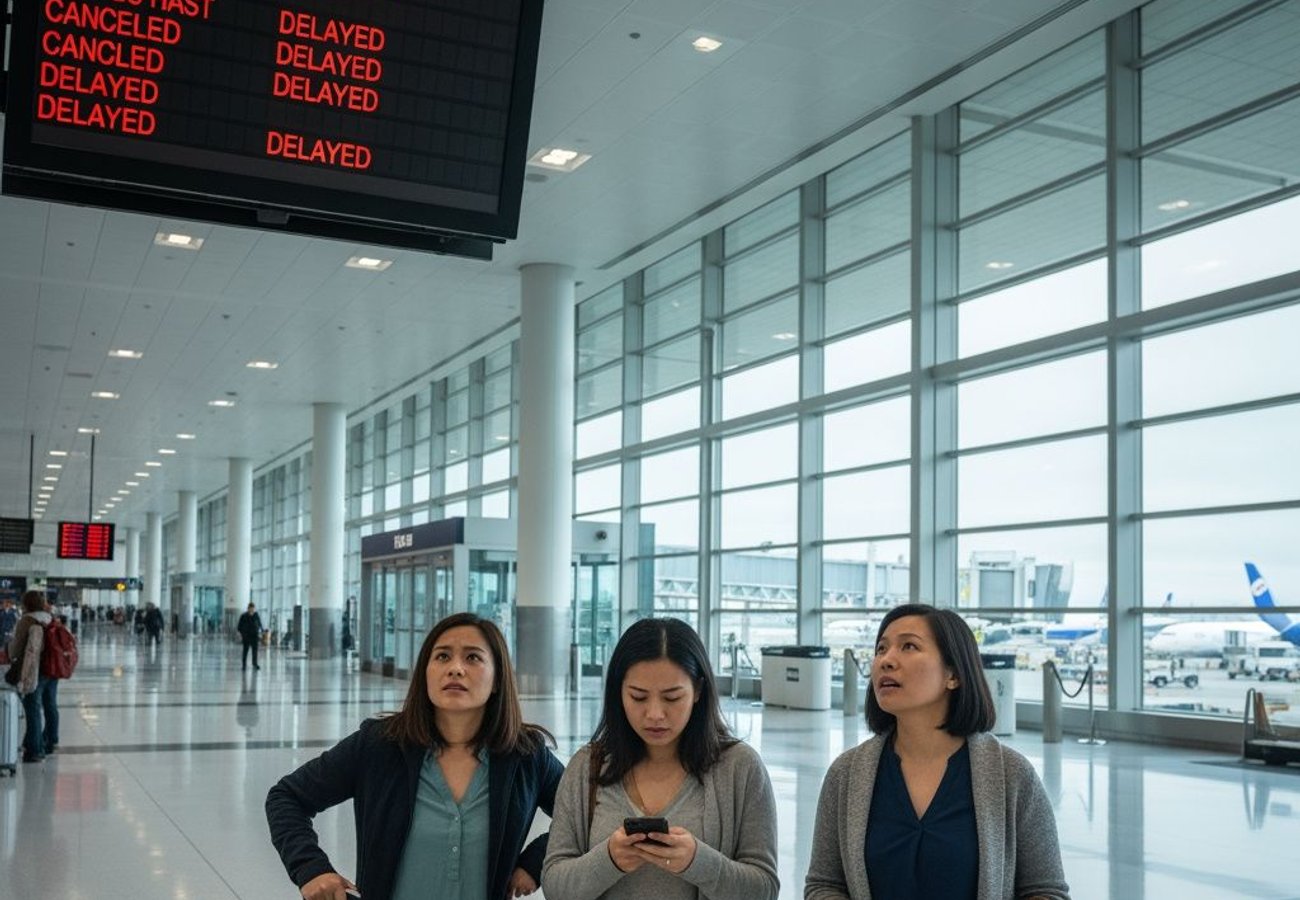
Image generated by AI
The Day Chaos Took Hold at Halifax's Gateway
Halifax International Airport (YHZ) descended into operational turmoil on June 19, 2026, when cascading flight cancellations and delays rippled across three continents. PAL Airlines cancelled 3 flights while managing 10 delayed departures. Air Canada grounded 2 aircraft and logged 11 delays. Adding to the carnage, Air Canada Rouge recorded 1 cancellation and 1 delay.
The result? Thousands of travelers faced uncertainty, missed connections, and fractured itineraries stretching from Atlantic Canada to Barcelona.
Ground Zero: How One Airport Triggered Continental Disruption
What makes this disruption noteworthy isn't just the raw numbers—it's the geographic footprint. Halifax, a critical hub for Atlantic Canada connectivity, became the epicenter of a domino effect that reached across 11+ major cities in three countries.
The cancellations hit hardest in Atlantic Canada. Toronto Pearson International Airport (YYZ), Canada's busiest aviation hub, recorded 2 cancellations as delayed aircraft failed to rotate on schedule. Further east, St. John's International Airport (YYT) and CFB Goose Bay (YYR) each recorded 1 cancellation, underscoring how Halifax's dysfunction poisoned the entire regional network.
But the damage extended south and east. American gateways Philadelphia International and Boston Logan experienced multiple delays affecting connections. Across the Atlantic, travelers flying to Barcelona and Madrid in Spain found themselves stranded—their aircraft stuck in Canada, their European plans in jeopardy.
Reddit: "Got stuck in Halifax for 8 hours today. My Barcelona connection disappeared. Airlines need to communicate better during these meltdowns." — r/travel
The Affected Network
The scale of geographic impact reveals the fragility of modern air networks. Here's where travelers felt the burn:
In Canada: Halifax, Toronto, Montreal, Ottawa, Gander, St. John's, Goose Bay, Hamilton, Waterloo, and Deer Lake all experienced cancellations or delays.
In the United States: Boston and Philadelphia international airports logged multiple delays as connecting passengers missed their flights.
In Europe: Barcelona and Madrid travelers experienced schedule disruptions as aircraft rotations fell out of sync.
The pattern? Routes within Atlantic Canada absorbed the heaviest cancellations, while domestic connections to major hubs and international services faced delays rather than outright cancellations—a critical distinction for understanding operational resilience in modern airline networks.
Flight Disruption Breakdown
| Airline | Cancelled Flights | Delayed Flights |
|---|---|---|
| PAL Airlines | 3 | 10 |
| Air Canada | 2 | 11 |
| Air Canada Rouge | 1 | 1 |
| Total | 6 | 22+ |
The numbers tell a specific story. While only 6 flights were cancelled outright, over 22 additional flights experienced delays—many of them cascading from the initial cancellations. This is why analysts call it the "multiplier effect": one cancelled flight creates three delayed ones, which create five missed connections, which poison evening schedules across the network.
Your Flight Just Got Cancelled—Here's What Actually Works
If you were among the affected travelers on June 19, 2026, knowing your options mattered immediately. Airlines rarely volunteer information, so passengers needed to act fast.
Stay plugged in. The moment you learn of a cancellation, check your email, text messages, and the airline's mobile app simultaneously. Most carriers now push rebooking offers through their apps before their phone lines get overwhelmed. Visit the airline's website or social media for real-time updates—sometimes Twitter is faster than official channels.
Call or chat—don't wait in line. If you're at home when the cancellation hits, use the airline's online chat or phone system before heading to the airport. If you're already at Halifax International, bypass the main service desk chaos and find a quieter gate agent or customer service kiosk. Wait times at busy airports can exceed 3 hours during system-wide disruptions.
Know what you're entitled to. In Canada, airline compensation policies vary by carrier—some offer rebooking on the next available flight (same airline or competitor), hotel accommodations if overnight, and meal vouchers. In the EU, passengers are entitled to compensation under EC Regulation 261/2004 if the cancellation is within the airline's control. Check your airline's specific policy before negotiating with agents.
Explore alternatives immediately. Don't assume the next flight is your only option. Ask about flights on competing carriers. Check train and bus options for domestic routes—rail travel from Toronto to Montreal or Halifax-area bus services to Boston can bypass aviation delays entirely. Flexible travelers who shifted to ground transportation saved 24+ hours compared to those waiting for rebooking.
Document everything. Screenshot your booking confirmation, cancellation notice, and any rebooking offers. Keep receipts for meals and accommodations. If the airline later denies compensation, you'll have proof of the disruption and your good-faith attempts to mitigate losses.
Why This Matters Beyond June 19
The Halifax disruption illustrates a fundamental vulnerability in North Atlantic aviation. A single airport's operational failure—whether weather, mechanical issues, or staffing shortages—can cripple routes across three continents within hours.
For nomadic professionals, digital workers, and frequent business travelers, this carries real consequences. A 6-flight cancellation at a secondary hub can cost you a conference appearance, a client meeting, or a visa-critical border crossing. The "just rebook" advice works in theory; in practice, alternative flights fill within 20 minutes.
This is why FlightAware tracking becomes essential during disruptions—you'll see delays 4-6 hours before official airline announcements. Airlines modify schedules in real time to maintain safety, but they don't always communicate proactively.
The Road Back to Normal
By late evening on June 19, 2026, PAL Airlines and Air Canada had begun rotating aircraft and restoring schedules. However, the ripple effects persisted into June 20 as aircraft returned to their correct positions and crew rotations normalized.
Passengers were advised to check their bookings obsessively, remain flexible with travel dates, and monitor official airline communications rather than relying on airport information displays alone. The chaos demonstrated that even in 2026, aviation's interconnected networks remain vulnerable to cascading disruptions.
Travel disruptions teach harsh lessons—flexibility and real-time information are your only true insurance.
Related Travel Guides
Disclaimer
This article is for informational and educational purposes only. It does not constitute legal, financial, or professional advice. While we strive to provide accurate and up-to-date information, travel policies, regulations, and conditions change rapidly. Always verify information with official sources before making travel decisions. Nomad Lawyer makes no representations about the accuracy, reliability, completeness, or suitability of the information provided. Readers should consult qualified professionals for advice specific to their circumstances. The views expressed in this article are those of the author and do not necessarily reflect the views of Nomad Lawyer.
Preeti Gunjan
Contributor & Community Manager
A passionate traveller and community builder. Preeti helps grow the Nomad Lawyer community, fostering engagement and bringing the reader experience to life.
Learn more about our team →