
Half of Airline Passengers Still Face Disruptions in 2026
Nearly 50% of global airline passengers encountered significant delays or cancellations in 2024-2025, defying industry claims of improved reliability. Remote workers and nomadic professionals face mounting financial and operational risks.

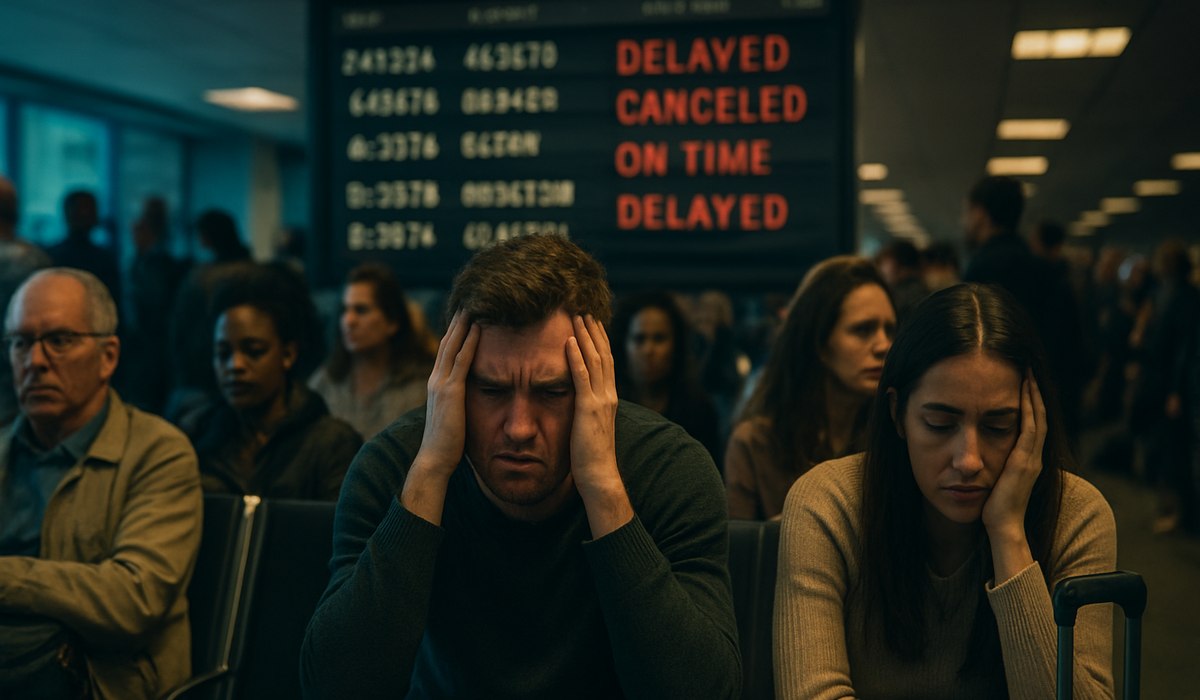
Image generated by AI
The Reality Behind Industry Optimism
Nearly 50% of airline passengers worldwide experienced significant disruptions in 2024-2025, according to passenger rights analysis contradicting carrier claims of improving reliability. While official cancellation rates hover near 1%, broader disruption metrics—including delays exceeding 15 minutes—paint a starkly different picture. Over 234 million U.S. travelers faced measurable journey interruptions in 2024 alone, representing roughly one in four domestic passengers. When international statistics are included, the odds of a smooth, punctual flight approach a coin flip for millions of global travelers. This gap between headline metrics and passenger reality reveals systemic vulnerabilities across major aviation networks.
The Gap Between Official Statistics and Passenger Reality
Aviation authorities and industry groups tout declining cancellation rates as proof of operational improvements. The Federal Aviation Administration (FAA) reports U.S. cancellation rates near 1% in 2024-2025, a genuine improvement from pandemic-era volatility. However, this narrow metric masks widespread disruption affecting half airline passengers through delays, extended waits, and schedule changes. Passenger advocacy organizations distinguish between official cancellations and experienced disruptions. Roughly 23% of U.S. flyers encountered measurable delays in 2024, while 1.5% faced outright cancellations. The aggregate effect—when international networks and longer delays are included—creates vastly different outcomes for travelers than regulatory reports suggest. This disconnect matters significantly for nomadic professionals and remote workers whose livelihoods depend on reliable transportation and consistent schedules.
Why Disruptions Persist Despite Lower Cancellation Rates
Multiple operational factors sustain elevated disruption levels across global aviation. Weather remains the primary driver, accounting for approximately 60% of delays according to FAA data. Heavy traffic volumes at congested hubs and runway capacity constraints contribute substantially to remaining delays. Technology failures have emerged as a secondary but increasingly impactful disruption source. The July 2024 cybersecurity software outage triggered thousands of cancellations worldwide, cascading across major U.S. and international carriers. European airports experienced similar paralyzing incidents in 2025 when cyber incidents forced reversion to manual check-in and boarding procedures, severely constraining throughput. Ground infrastructure limitations and airline IT platform vulnerabilities create systemic fragility. Airlines maintain networks optimized for ideal conditions, leaving minimal buffer capacity when single operational nodes fail. Air traffic controller staffing shortfalls amplify disruption during storm systems and peak travel periods. This structural tightness explains why half airline passengers still encounter disruptions despite official cancellation improvements.
High-Risk Periods: Holidays, Hubs, and Operational Failures
Disruption clustering reveals predictable yet severe vulnerability windows. Peak holiday travel periods consistently trigger localized cancellation waves affecting thousands of passengers simultaneously. Major hubs including Atlanta, Dallas-Fort Worth, and European gateway cities experience disproportionate disruption during congestion peaks. Certain international routes—particularly in high-growth markets like India—demonstrated rapid network shocks in late 2025, grounding thousands of flights within days. Winter weather across North America in late 2025 produced hundreds of cancellations and thousands of delays despite preemptive schedule trimming. Climate scientists warn that increasing extreme weather frequency will compound aviation disruption challenges. Technology failure incidents create unpredictable catastrophic events. The 2024 cybersecurity incident and subsequent European cyber disruptions proved that modern infrastructure dependencies create cascade risks. Route-specific performance data shows European carriers operating with delay rates near or exceeding 40% on certain routes, even as aggregate cancellation percentages improved. Understanding these high-risk periods helps travelers plan resilient journeys and anticipate potential disruptions through flight tracking tools like FlightAware.
What This Means for Nomadic Professionals and Remote Workers
Remote workers and location-independent professionals face compounded risks when half airline passengers experience disruptions. Delayed arrivals jeopardize meeting windows, client schedules, and housing check-ins. Nomads typically operate with tighter margins than traditional travelers, making even minor delays costly. The average disrupted passenger loses approximately $500 in additional expenses including meals, lodging, missed prepaid reservations, and lost work time. Extended disruptions cascade into missed income opportunities and fractured client relationships. Travel insurance selection becomes mission-critical for nomadic lifestyles. Understanding passenger rights under Department of Transportation regulations helps recover compensation. Remote workers should build 24-48 hour buffers into arrival schedules, maintain comprehensive travel insurance, and monitor real-time flight status through FlightAware tracking. Flexible accommodation booking and backup transportation options become essential risk management tools for location-independent professionals navigating networks where half airline passengers encounter significant disruptions.
Traveler Action Checklist
-
Monitor flight status 48 hours pre-departure using FlightAware real-time tracking and airline notifications to identify emerging network congestion patterns.
-
Verify your passenger rights under U.S. Department of Transportation regulations, EU Regulation 261/2004, or applicable regional consumer protection laws before travel.
-
Build arrival buffers of 24-48 hours for remote work and nomadic commitments, accounting for the statistical probability that half airline passengers face disruptions.
-
Purchase comprehensive travel insurance covering delays, missed connections, and accommodation costs to offset the $500 average financial impact of disruptions.
-
Pack essentials in carry-on luggage including medications, chargers, medications, and work-critical items to mitigate consequences of delayed checked baggage.
-
Document disruption evidence (boarding passes, delay notices, receipts) immediately when disruptions occur to support compensation claims filed with airlines or regulators.
-
Select alternative routes or airlines when possible, researching specific route performance data through FlightAware historical analytics.
-
Communicate proactively with downstream connections upon identifying disruptions, alerting accommodations and clients of potential revised arrival times.
Key Disruption Metrics and Industry Data
| Metric | 2024 Value | 2025 Projection | Notes |
|---|---|---|---|
| U.S. Passengers Experiencing Disruptions | 234 million | 248 million | Out of ~1 billion total U.S. passengers |
| Percentage of U.S. Flyers with Delays | 23% | 24-25% | Delays exceeding 15 minutes |
| Official U.S. Cancellation Rate | ~1% | ~1% | Federal Aviation Administration data |
| Passengers Facing Cancellations | 1.5% | 1.5% | Approximately 15 million U.S. travelers |
| Average Financial Loss per Disrupted Passenger | $500 | $525 | Lodging, meals, missed reservations, work loss |
| European Route Delay Rates (Peak) | 40%+ | 40%+ | Selected major airline routes |
| Weather Attribution to Delays | 60% | 60% | Federal Aviation Administration attribution |
| Technology Failure Incidents | 2-3 Major | 2-3 Major | Including July 2024 cybersecurity incident |
Frequently Asked Questions
What percentage of airline passengers experienced disruptions in 2024-2025? Nearly half of global airline passengers—approximately 234 million U.S. travelers alone—encountered measurable disruptions including delays and cancellations. When international data is included, roughly 50% of worldwide passengers faced journey interruptions, though official cancellation statistics report only 1% cancellation rates.
Why do airlines report low cancellation rates while half airline passengers still face disruptions? Cancellation metrics measure only flights completely removed from schedules, excluding the 23% of passengers experiencing significant delays. Delays exce
Disclaimer
This article is for informational and educational purposes only. It does not constitute legal, financial, or professional advice. While we strive to provide accurate and up-to-date information, travel policies, regulations, and conditions change rapidly. Always verify information with official sources before making travel decisions. Nomad Lawyer makes no representations about the accuracy, reliability, completeness, or suitability of the information provided. Readers should consult qualified professionals for advice specific to their circumstances. The views expressed in this article are those of the author and do not necessarily reflect the views of Nomad Lawyer.
Raushan Kumar
Founder & Lead Developer
Full-stack developer with 11+ years of experience and a passionate traveller. Raushan built Nomad Lawyer from the ground up with a vision to create the best travel and law experience on the web.
Learn more about our team →