
Gulf Hubs Reel as Airline Cancellations Strand Thousands Across Middle East
Gulf hubs reel under security-driven airspace closures in 2026. Major carriers cancel hundreds of flights, stranding thousands across Saudi Arabia, Kuwait, Bahrain, and UAE as safety reviews paralyze regional connectivity.

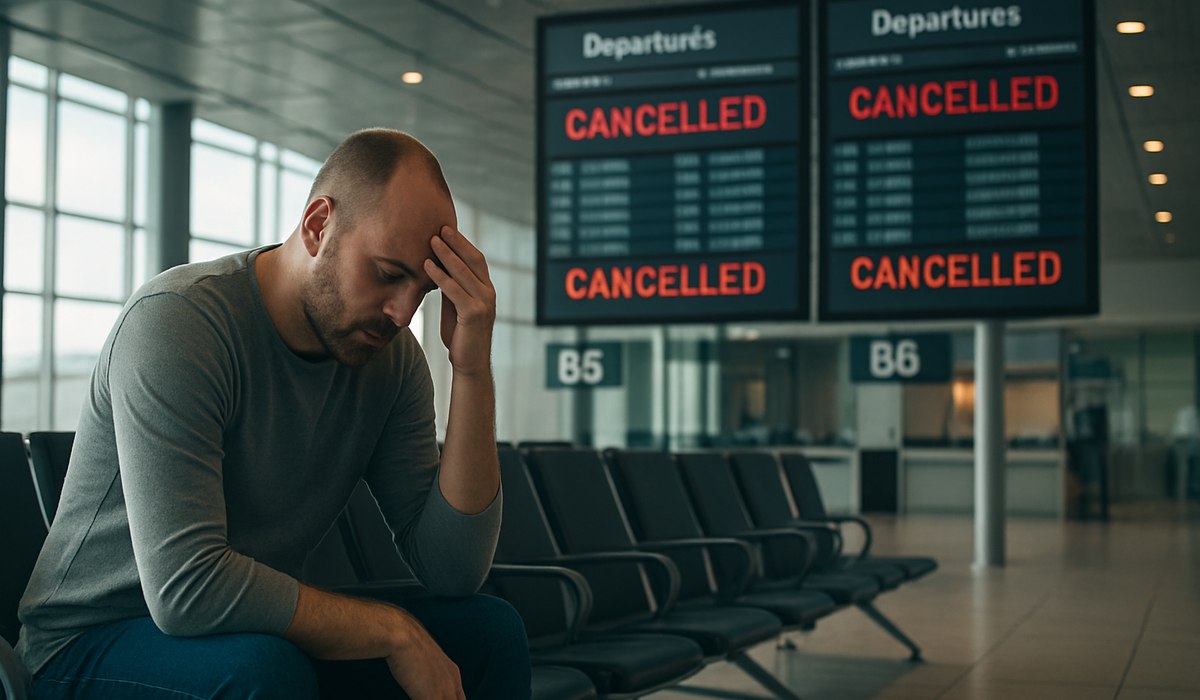
Image generated by AI
Gulf Hubs Reel: Security Tensions Force Massive Flight Cancellations Across Four Nations
Thousands of passengers face extended delays and cancellations as airspace restrictions paralyze major Gulf hubs spanning Riyadh, Kuwait City, Manama, and Dubai. Beginning in late February 2026, escalating security tensions across the Arabian Peninsula have triggered sweeping airspace closures and capacity restrictions that are now forcing Saudia, Gulf Air, Air Arabia, and Kuwait Airways to slash schedules dramatically. Departure boards at regional airports display cascading cancellations rather than departure times, leaving business travelers, remote workers, and holiday passengers scrambling to rebook on overcrowded alternative routes or seek ground transportation to operational gateways.
The crisis reflects a perfect storm: simultaneous airspace closures across four critical aviation hubs that collectively serve as connection points for flights between Asia, Europe, and Africa. Industry analysts warn this regional disruption may persist for weeks, with no clear timeline for return to normal operations.
Airspace Closures Ground Regional Traffic Across Four Nations
Regional aviation data confirms that Kuwait's airspace has effectively closed for routine commercial operations, while Bahrain and portions of United Arab Emirates airspace operate under severe intermittent suspensions or capacity controls. Saudi Arabia's airports, including major hubs in Riyadh and Jeddah, remain technically open but face significant Gulf-facing airspace limitations that severely restrict routing to neighboring states.
These restrictions have created a cascading domino effect. Airlines that depend on dense networks of short regional hops for connecting passengers now face impossible routing choices. Carriers are continuously revising flight paths, diverting services to alternative gateways like Dammam and Jeddah, yet many published schedules bear little resemblance to actual operations on departure day. Last-minute safety reviews trigger sudden cancellations, leaving passengers with minimal notice and few alternatives.
The gap between scheduled and operated flights widens daily. For passengers, this translates to repeated rebooking, rolling cancellations, and profound uncertainty about when normal connectivity will resume. According to FlightAware, hundreds of regional flights have been cancelled or indefinitely delayed since late February 2026.
Saudia, Gulf Air, Air Arabia and Kuwait Airways Slash Schedules
Saudia, the Saudi flag carrier, continues operating domestic services within Saudi Arabia and select long-haul routes, yet multiple regional connections have been suspended as neighboring airspace tightened. Flights targeting Kuwait City, Manama, and Dubai face heightened cancellation risk. Passengers report being rebooked through alternative Saudi airports or advised to pursue surface transport to operational gateways—a solution that adds hours to journeys and risks missed onward connections.
Gulf Air, Bahrain's national carrier, has experienced acute operational pressure. Its primary market—regional Gulf connections—has collapsed as Bahrain's airspace entered prolonged restrictions. Social media reports from Manama describe a wave of cancellations that began when airspace was placed under tight controls. Some Gulf Air traffic has rerouted through Dammam, but with dramatically reduced frequencies. Passengers describe rebooking multiple times only to watch flights disappear from departure boards hours before scheduled departure.
Air Arabia and Kuwait Airways face similar constraints. Kuwait Airways operates in an effectively closed airspace, while Air Arabia's network spanning the UAE has encountered intermittent suspensions. Both carriers have implemented contingency routing through less-affected corridors, adding flight time and operational complexity.
Last-Minute Safety Reviews Force Carriers to Reroute or Cancel
Safety assessments are driving daily schedule revisions. Airlines cannot commit to stable timetables on sensitive routes, creating volatility in what was previously a highly predictable Gulf aviation network. Carriers receive updated airspace restrictions with minimal notice, triggering real-time cancellation decisions that cascade across passenger loads and onward connections.
This unpredictability has cascading effects. A cancelled connection in Riyadh strands passengers destined for Europe or Asia. A diverted Gulf Air flight from Manama to Dammam creates unexpected visa complications for passengers who cross Saudi land borders without proper documentation. The logistics chain breaks at multiple points simultaneously.
Industry briefings confirm that this pattern will continue as long as neighboring airspaces remain restricted. Airlines cannot rebuild confidence in their schedules until airspace restrictions lift, typically a multi-week recovery period even after diplomatic resolution.
What This Means for Business Travelers and Remote Workers
Business travelers face unprecedented connectivity challenges in April 2026. Conference attendees booked for Dubai or Riyadh events cannot reliably confirm travel. Remote workers requiring consistent access to regional hubs face prolonged uncertainty. Teams coordinating across Gulf-based offices now manage unpredictable delays spanning 24 to 72 hours or longer.
For companies with staff in affected cities, contingency planning becomes essential. Alternative routing through Turkish hubs (Istanbul) or Indian gateways (Delhi, Mumbai) now requires consideration, despite adding 8–16 hours to typical journey times. Some organizations are implementing temporary work-from-home policies for Gulf-based personnel, reducing travel-dependent coordination.
The compensation landscape remains murky. Airline policies differ regarding rebooking, hotel accommodation, and cash compensation under Article 261 of EU Regulation 261/2004 (for European-routed flights). The U.S. Department of Transportation does not regulate Middle Eastern carriers operating international services, limiting passenger rights for US-routed travelers. Affected passengers should contact their booking agent immediately and request written confirmation of carrier obligations.
Live Flight Tracking and Real-Time Updates
Monitoring real-time status is essential given hourly schedule changes. FlightAware provides live cancellation tracking and radar data for Gulf airports. The FAA and various aviation authorities post periodic notices on affected corridors, though Middle Eastern aviation information remains fragmented across multiple national authorities.
Passengers should check flight status within 24 hours of scheduled departure, not 72 hours in advance. Pre-trip confirmations are meaningless given the pace of cancellations. Set push notifications on airline apps and monitoring sites. Enable SMS alerts if available through your booking platform.
| Affected Airport | Primary Carrier | Airspace Status | Cancellation Rate | Alternative Gateway | Recovery Timeline |
|---|---|---|---|---|---|
| Riyadh (RUH) | Saudia | Restricted for Gulf routes | 40–50% regional | Jeddah, Dammam | Unknown |
| Kuwait City (KWI) | Kuwait Airways | Effectively closed | 95%+ operations | Doha, Dammam | Unknown |
| Manama (BAH) | Gulf Air | Severe restrictions | 85%+ passenger services | Dammam, Dubai | Unknown |
| Dubai (DXB) | Air Arabia, Emirates | Intermittent suspensions | 30–40% regional | Abu Dhabi | Unknown |
| Jeddah (JED) | Saudia, Flynas | Open (diverted traffic) | Elevated volume | N/A (primary relief hub) | Ongoing |
| Dammam (DMM) | Multiple carriers | Open (diverted traffic) | Overcapacity situation | N/A (secondary relief hub) | Ongoing |
Traveler Action Checklist
-
Contact your airline immediately – Do not wait for automatic notifications. Call the airline's reservations line directly and request written confirmation of reboking options, meal vouchers, and accommodation if overnight delay is required.
-
Document all communications – Save email confirmations, SMS messages, and call reference numbers. Screenshot departure boards showing canc
Disclaimer
This article is for informational and educational purposes only. It does not constitute legal, financial, or professional advice. While we strive to provide accurate and up-to-date information, travel policies, regulations, and conditions change rapidly. Always verify information with official sources before making travel decisions. Nomad Lawyer makes no representations about the accuracy, reliability, completeness, or suitability of the information provided. Readers should consult qualified professionals for advice specific to their circumstances. The views expressed in this article are those of the author and do not necessarily reflect the views of Nomad Lawyer.
Preeti Gunjan
Contributor & Community Manager
A passionate traveller and community builder. Preeti helps grow the Nomad Lawyer community, fostering engagement and bringing the reader experience to life.
Learn more about our team →