
Emirates, Qatar Airways, and Saudia Dominate Global Transit Navigating Red Sea and Hormuz Airspace Choke Points Amid Flight Cancellations, Airport Disruptions, and Travel Chaos Across Dubai, Doha, and Riyadh: New Airline News and Aviation Updates
Middle East's Big Three carriers—Emirates, Qatar Airways, and Saudia—leverage long-haul fleets and bypass corridors to dominate international transit despite severe geopolitical airspace restrictions.

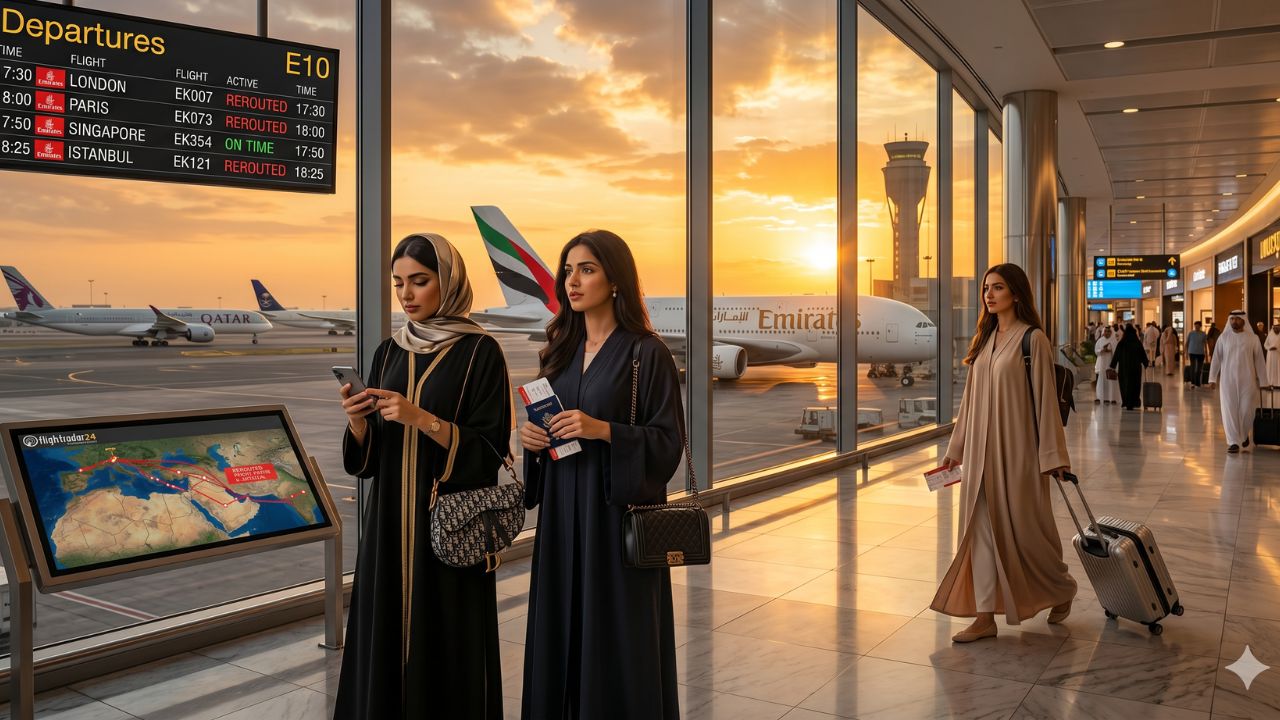
Image generated by AI
In a masterclass of operational flexibility and network resilience, the Middle East's premier international airlines are reinforcing their dominance over global transit markets despite severe geopolitical airspace disruptions. Escalating military tensions and overflight restrictions in the Gulf and Red Sea zones have transformed historic flight corridors into highly restricted pathways, triggering widespread international flight cancellations, sweeping transit-hub airport disruptions, and subsequent travel chaos for transcontinental passengers flying between Europe, Asia, and Africa. Amid this volatile operating environment, Emirates, Qatar Airways, and Saudia have emerged as indispensable global transit operators. By leveraging tactical rerouting, deploying long-range widebody fleets, and absorbing a retreat of legacy carriers like British Airways and Air India, the Gulf's "Big Three" are maintaining essential trade and passenger flows in a landmark development for today's airline news and global aviation updates.
By introducing direct passenger coordination and dynamic scheduling backups, the regional aviation hubs target growing passenger demand across vital commerce sectors. The choice to coordinate flight departures in phases helps to manage gate capacity, supporting the country's broader regional transportation network.
Context: Navigating the Fragged Airspace of the Gulf and Red Sea
The operational crisis has fundamentally altered the economics and physics of global flight routing. The effective closure of the Strait of Hormuz and the Bab el-Mandeb Strait to shipping, combined with extensive military overflight restrictions across the Persian Gulf, has forced airlines to abandon direct, fuel-efficient routing. Western and Asian airlines have responded conservatively, scaling back regional exposure or rerouting flights around the entire African continent to avoid conflict avoidance zones.
However, the Gulf's Big Three carriers have instead intensified scheduling and routing adjustments to preserve their central roles in global aviation. By utilizing restricted waypoint corridors, implementing dedicated entry and exit airspace gates, and routing extensive east-west traffic through Egyptian and Saudi desert corridors, these carriers have successfully bypassed high-risk areas. This tactical navigation comes at a steep price, however, as journey times increase and crude oil prices climb above 110 USD per barrel, triggering widespread Emergency Fuel Surcharges across the industry.
Section-Wise Breakdown of Resilient Middle Eastern Gateways
Dubai International Airport (DXB) Hub Operations
At Dubai International Airport, Emirates has successfully transitioned its long-haul operations into a controlled recovery phase, restoring approximately 60 to 65 percent of its standard operational capability. During the height of the airspace closures, the airline absorbed nearly 490 flight cancellations as key regional routes became temporarily inaccessible. Today, Emirates relies heavily on restricted waypoint corridors to sustain vital A380 and Boeing 777 trunk services linking Europe with Asia and Africa. To review real-time arrivals, premium airport lounges, and passenger transit regulations, travelers can consult the official Dubai International Airport portal.
Hamad International Airport (DOH) in Doha
At Hamad International Airport in Doha, Qatar Airways has implemented a highly controlled reopening strategy to bypass volatile neighboring airspace. The carrier has designed dedicated entry and exit corridor systems that steer commercial flights clear of military activity zones in the northern Gulf and adjacent Flight Information Regions (FIRs). This operational complexity has increased workload for Doha's air traffic controllers, but it has successfully protected international transit traffic. To check seat inventory, manage frequent flyer accounts, or review international connections, passengers can visit the Qatar Airways portal.
Saudi Arabia Desert Airspace Corridor
Saudi Arabia has effectively transformed into the primary southern geographic bypass corridor for global aviation. Under the stewardship of national flag carrier Saudia, Saudi airspace remains highly operational, offering a safe transit corridor that completely avoids volatile conflict zones near Yemen and the Red Sea. East-west traffic flows that previously transited through Iraq or Iran are now routed through Saudi Arabia's expansive desert corridors, anchoring Riyadh and Jeddah as indispensable nodes of international transit.
Gulf Carrier Fleet and Logistics Capabilities
To help transoceanic travel coordinators and logistics managers review operational capacities under these constrained conditions, the following list and table detail carrier fleets, cargo solutions, and routing strategies:
- Emirates Fleet Deployed: Heavily utilizes long-range Airbus A380 and Boeing 777 widebody aircraft, which possess the fuel capacities necessary to absorb extended flight paths without intermediate refueling stops.
- Qatar Airways Fleet Deployed: Leverages fuel-efficient Airbus A350 and Boeing 777 fleets, minimizing the impact of extended flight times.
- Saudia Geographic Role: Functions as the primary southern bypass corridor, routing international traffic through safe domestic airspace.
- Sea-Air Logistics Surge: The closure of maritime shipping lanes has triggered a massive surge in Sea-Air cargo transit through Gulf hubs.
- Airfreight Capacity Squeeze: Gulf cargo divisions are successfully managing a regional capacity squeeze estimated at 35 to 40 percent.
Gulf Carrier Transcontinental Operational Summary
The following table details the primary hubs, operational recovery levels, bypass routing strategies, and core aircraft types deployed by the Big Three:
| Operating Airline | Primary Hub Airport | Restored Capacity Level (%) | Primary Airspace Bypass Corridors | Mainline Aircraft Deployed |
|---|---|---|---|---|
| Emirates | Dubai (DXB) | 60% – 65% | Egyptian Airspace & Mediterranean | Airbus A380, Boeing 777 |
| Qatar Airways | Doha (DOH) | Highly Controlled Reopening | Dedicated Exit/Entry Corridors | Airbus A350, Boeing 777 |
| Saudia | Jeddah (JED) / Riyadh (RUH) | Fully Operational (Southern Bypass) | Saudi Desert Airspace Networks | Boeing 777, Airbus A330 |
Passenger Impact: Extended Flight Times, Fuel Surcharges, and Premium Widebody Comfort
For international passengers traveling between Europe, Asia, and Africa, the geopolitical airspace crisis has had immediate real-world effects. Average journey times on transcontinental routes have risen substantially, sometimes adding up to two hours to traditional flight schedules. These extended durations, combined with high crude oil prices climbing above $110 per barrel, have forced airlines to implement high Emergency Fuel Surcharges, resulting in ticket price spikes across major intercontinental corridors.
However, the Big Three carriers leverage their structural fleet advantages to mitigate passenger discomfort. By deploying premium widebody aircraft featuring fully lie-flat business suites, spacious ergonomic economy seating, and advanced inflight entertainment, Emirates, Qatar Airways, and Saudia ensure that travelers can endure longer flight paths comfortably. To check seat availability, search flight schedules, or review current fuel surcharge details, travelers can consult the official Emirates customer portal.
Macroeconomic Industry Analysis: The Sea-Air Cargo Boom and Gulf Carrier Dominance
The escalating airspace crisis has had profound macroeconomic consequences, particularly for the global supply chain. The closure of maritime shipping lanes through the Bab el-Mandeb Strait has triggered long delays and soaring war-risk insurance premiums for ocean freight. In response, international logistics coordinators have turned to the Sea-Air model, shipping goods by sea to secure Gulf ports before rapidly transferring cargo onto widebody aircraft at regional airports.
Emirates SkyCargo and Qatar Airways Cargo have been the primary beneficiaries of this logistics boom. By rapidly reallocating widebody cargo capacity, these divisions have facilitated the uninterrupted movement of high-value goods between Asia and Europe, effectively bypassing a regional airfreight capacity squeeze of 35 to 40 percent. This cargo success, combined with the strategic retreat of legacy Western and Asian carriers, has strengthened the global influence of the Middle East's Big Three.
What This Means for Travelers: Actionable Advice
To protect yourself from severe holiday airport congestion and navigate geopolitical airspace disruptions successfully, follow this essential checklist:
- Expect Longer Journey Durations: Build in additional buffer time for international connections, as flights are routed through longer bypass corridors.
- Prepare for Fuel Surcharge Spikes: Monitor ticket prices closely, as high oil prices are driving up emergency surcharges on long-haul routes.
- Leverage Premium Widebody Fleets: Choose flights operated by A380, A350, or Boeing 777 aircraft to ensure maximum comfort on extended flights.
- Check Real-Time Airspace Advisories: Subscribe to real-time airline app alerts to receive immediate routing updates and gate changes.
- Pack Additional Inflight Comforts: Bring neck pillows, personal entertainment, and chargers in your carry-on to remain comfortable during extended flight paths.
FAQ: Geopolitical Airspace Choke Points and Gulf Carriers 2026
Why are flights taking longer between Europe and Asia in 2026?
Geopolitical airspace closures over Iraq, Iran, and the Persian Gulf require airlines to utilize longer Saudi and Egyptian bypass corridors, increasing average flight times.
How are Emirates, Qatar Airways, and Saudia managing these restrictions?
The Big Three utilize tactical waypoint corridors, bypass routes, and long-range widebody fleets (A380, A350, 777) that can fly longer routes without refueling.
What is the Sea-Air cargo model, and how does it help?
Sea-Air logistics transfers ocean cargo arriving at secure Gulf ports onto widebody freighters at regional airports, bypassing ocean transit delays through the Red Sea.
Key Takeaways
- Strategic Gulf Dominance: Emirates, Qatar Airways, and Saudia maintain global transit dominance despite severe airspace restrictions.
- Route Bypass Strategy: East-west flights are extensively routed through Saudi desert and Egyptian airspace corridors to avoid conflict zones.
- Emirates Capacity Restored: Emirates has successfully restored 60-65% of standard capacity at DXB using restricted waypoint corridors.
- Qatar Airways entry/Exit Corridors: Qatar Airways utilizes custom airspace gates at DOH to safely route transit traffic away from volatile zones.
- Saudia Southern Bypass: Saudia serves as the primary southern bypass carrier, routing international traffic through fully operational airspace.
- Sea-Air Cargo Surge: The shipping halt in the Strait of Hormuz has triggered massive Sea-Air logistics growth, benefiting Emirates SkyCargo and Qatar Airways Cargo.
Related Travel Guides
- Delta Connection Flight 5773 Operated by Republic Airways From LaGuardia to Memphis Diverts to Idaho Falls Regional Airport
- Airlines Brace as US-Iran Conflict Ripples Through Global Aerospace Sector
- Qantas Partners With Philippine Airlines to Shield Frequent Flyers from Global Travel Chaos, Unlocking Massive Reward Flights to Boracay and Palawan Amidst Widespread Flight Cancellations: Latest Airline News
Disclaimer
This article is for informational and educational purposes only. It does not constitute legal, financial, or professional advice. While we strive to provide accurate and up-to-date information, travel policies, regulations, and conditions change rapidly. Always verify information with official sources before making travel decisions. Nomad Lawyer makes no representations about the accuracy, reliability, completeness, or suitability of the information provided. Readers should consult qualified professionals for advice specific to their circumstances. The views expressed in this article are those of the author and do not necessarily reflect the views of Nomad Lawyer.
Kunal K Choudhary
Co-Founder & Contributor
A passionate traveller and tech enthusiast. Kunal contributes to the vision and growth of Nomad Lawyer, bringing fresh perspectives and driving the community forward.
Learn more about our team →