
Gujarat Launches Asia’s First Desert Night Safari in Juna Deesa with ₹542 Crore Investment in 2026
Gujarat is redefining wildlife tourism with a ₹542.14 crore desert-themed night safari in Juna Deesa, featuring 83 species across 103 hectares of arid terrain.

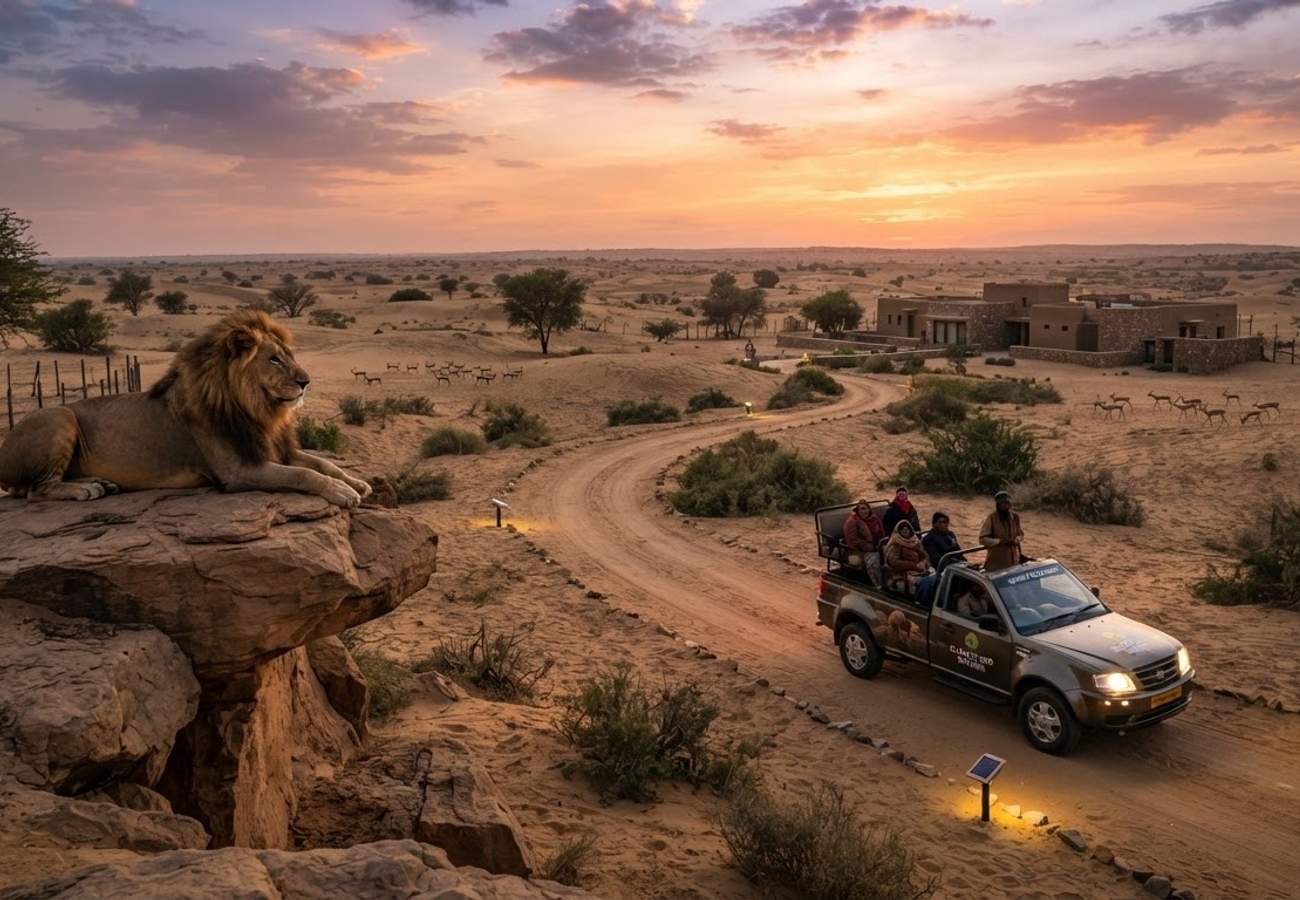
Image generated by AI
A ₹542.14 crore investment is transforming the Banaskantha district of Gujarat into a global wildlife hub. Asia’s first desert-themed drive-through night safari is now a reality, merging high-end tourism with strict ecological preservation.
The Central Zoo Authority has officially greenlit a monumental shift in how India approaches wildlife observation. Located in Juna Deesa, within the Banaskantha district, this new zoological park is not merely a zoo but a landscape-integrated experience. By utilizing the region's natural arid topography and proximity to the Banas River, the Gujarat Forest Department is creating a destination that bridges the gap between luxury entertainment and scientific conservation.
The Shift to Immersive Nocturnal Tourism
For decades, wildlife tourism in India relied on sedentary observation—visitors walking past enclosures or taking guided jeep rides during daylight hours. The Juna Deesa project breaks this mold. The facility is designed as a drive-through experience, allowing visitors to engage with animals in a more naturalistic setting.
The scale of the project is significant, spanning approximately 103 hectares of government land. Approved on August 12, 2026, the park is engineered to house approximately 2,700 animals across 83 diverse species. This includes a strategic mix of native Indian wildlife and exotic fauna from Africa and Australia.
Species Distribution and Facility Highlights
| Feature | Details |
|---|---|
| Total Investment | ₹542.14 Crore |
| Land Area | 103 Hectares |
| Animal Population | ~2,700 Animals |
| Species Variety | 83 Diverse Species |
| Native Highlights | Asiatic Lion, Indian Wild Ass, Black Buck, Chinkara |
| Exotic Highlights | Black Rhinoceros and other African/Australian mammals |
| Infrastructure | 5 Specialized Night Safari Enclosures, Day Zoo, Interpretation Centre |
The visitor experience is split between a traditional day zoo and five specialized night safari enclosures. In these nocturnal zones, habitat-appropriate lighting is used to ensure that animals are visible without disrupting their natural circadian rhythms. To support the visitor journey, the park has integrated golf cart services, curated food courts, and souvenir shops.
Cultural and Environmental Value
For the visitor, the real impact is the ability to witness the "hidden" side of the desert. The project moves beyond simple exhibition and functions as a sophisticated center for wildlife rehabilitation and scientific education. By placing the Asiatic lion and the Indian wild ass alongside the black rhinoceros, the park creates a comparative study of arid-zone survival.
This development is not an isolated attraction; it is designed to catalyze the economy of North Gujarat. It integrates into an existing cultural circuit that includes Vadnagar, Ambaji, and Nadabet, encouraging travelers to stay longer in the region and support local hospitality businesses.
The environmental philosophy here is one of "mitigation through technology." The Gujarat Forest Department has implemented several green initiatives to ensure the desert biome remains intact:
- Energy Independence: A heavy reliance on solar energy to power the entire facility.
- Water Stewardship: Integrated rainwater harvesting systems to sustain the park in an arid zone.
- Waste Management: Advanced sewage treatment and solid waste protocols to prevent contamination of the Banas River area.
- Biodiversity Buffers: Large-scale native plantations and green buffer zones to protect the surrounding ecological integrity.
Visitor Insider Tips
To make the most of a trip to Juna Deesa, travelers should consider the following:
- Timing the Visit: The "Golden Hour" for the night safari typically begins just after sunset. Book your golf cart or drive-through slot in advance, as nocturnal windows are strictly timed to prevent animal stress.
- Cultural Etiquette: When visiting the nearby circuits of Ambaji or Vadnagar, dress modestly. These are areas of deep spiritual significance.
- Local Flavors: While the park offers food courts, seek out local Kathiyawadi cuisine in the Banaskantha district—specifically traditional bajra (pearl millet) dishes which are staples of the desert region.
- Photography: Use infrared or low-light lenses for the night safari. Flash photography is strictly prohibited in the nocturnal enclosures to protect the animals' vision.
Tourism Outlook
The Juna Deesa project signals a broader evolution in India’s wildlife policy. The move from traditional cages to landscape-integrated, drive-through environments sets a new global standard for zoological parks. By blending high-capital investment with sustainable infrastructure, Gujarat is positioning itself as a leader in "High-Value Sustainable Travel."
Long-term, the park is expected to attract global conservationists and researchers, further elevating the profile of North Gujarat. As the facility matures, the integration of the desert biome into a structured park environment will likely serve as a blueprint for other arid regions across Asia.
A bold leap into the dark that brings the secrets of the desert into the light.
Related Travel Guides
Disclaimer
This article is for informational and educational purposes only. It does not constitute legal, financial, or professional advice. While we strive to provide accurate and up-to-date information, travel policies, regulations, and conditions change rapidly. Always verify information with official sources before making travel decisions. Nomad Lawyer makes no representations about the accuracy, reliability, completeness, or suitability of the information provided. Readers should consult qualified professionals for advice specific to their circumstances. The views expressed in this article are those of the author and do not necessarily reflect the views of Nomad Lawyer.
Raushan Kumar
Founder & Lead Developer
Full-stack developer with 11+ years of experience and a passionate traveller. Raushan built Nomad Lawyer from the ground up with a vision to create the best travel and law experience on the web.
Learn more about our team →