
Guangzhou Baiyun Airport Disrupted as 9 Flights Cancelled and 517 Delayed
Guangzhou Baiyun International Airport experienced widespread operational delays on July 3, 2026, with 9 flight cancellations and 517 delays impacting global links.

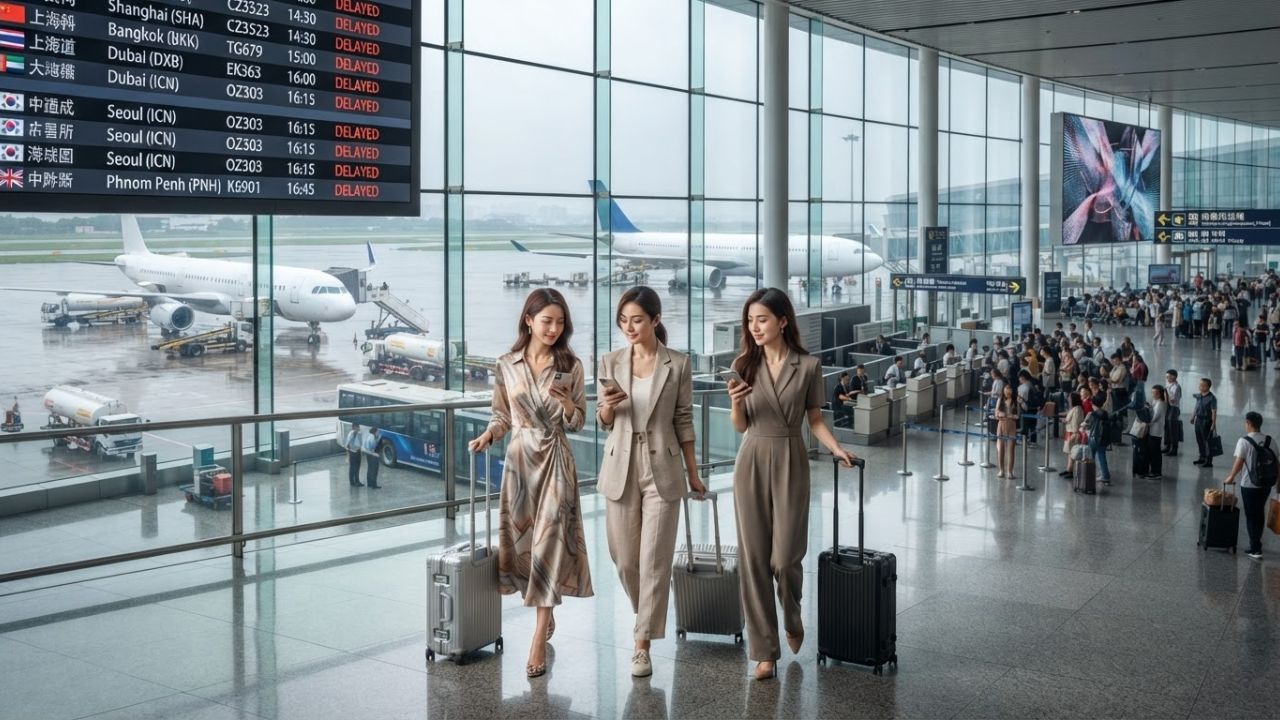
Image generated by AI
Guangzhou Baiyun International Airport experienced widespread schedule delays on July 3, 2026, with 9 flight cancellations and 517 delayed flights reported across domestic and international routes. The operational slowdown impacted passenger connections to major hubs in Southeast Asia, the Middle East, and Europe.
Traffic Congestion at Southern China's Gateway
Flight operations at Guangzhou Baiyun International Airport (CAN) experienced significant backlogs throughout the day. While outright cancellations remained limited to single-digit counts, the high volume of delays impacted aircraft rotations.
Guangzhou serves as a primary hub for southern China, linking domestic provinces with international transit routes. As a result, airport delays quickly affected downstream services at destination fields.
Airlines operating extensive networks reported schedule setbacks due to queue constraints and gate congestion.
Tracking the Disrupted Flight Volumes
The schedule disruptions were dominated by flight delays rather than cancellations. Approximately 57 flights were delayed for every single cancellation recorded at the terminal.
Local dispatchers worked to manage arrivals and departures under safety-first spacing guidelines. This operational approach led to cascading schedule delays as aircraft turnaround windows shortened.
All nine flight cancellations were concentrated among three major Chinese carriers, with China Southern reporting five cancellations.
Complete Disruption Data by Carrier
The table below lists the cancellations and delays recorded by each carrier at Guangzhou on July 3, 2026.
Airline Flight Disruption Statistics at Guangzhou Baiyun International Airport
| Airline | Cancelled Flights | Cancellation Rate | Delayed Flights | Delay Rate |
|---|---|---|---|---|
| China Southern Airlines | 5 | 0% | 239 | 31% |
| China Eastern | 2 | 1% | 70 | 51% |
| Hainan Airlines | 2 | 2% | 36 | 38% |
| AirAsia | 0 | 0% | 1 | 10% |
| Beijing Capital Airlines | 0 | 0% | 2 | 11% |
| Air China | 0 | 0% | 39 | 38% |
| Zhejiang Loong | 0 | 0% | 8 | 44% |
| Shandong Airlines | 0 | 0% | 6 | 42% |
| West Air | 0 | 0% | 1 | 16% |
| Spring Airlines | 0 | 0% | 11 | 35% |
| Sichuan Airlines | 0 | 0% | 15 | 55% |
| Shanghai Airlines | 0 | 0% | 4 | 50% |
| Shenzhen Airlines | 0 | 0% | 39 | 38% |
| China United Airlines | 0 | 0% | 2 | 50% |
| Urumqi Air | 0 | 0% | 1 | 50% |
| XiamenAir | 0 | 0% | 5 | 20% |
| Juneyao Airlines | 0 | 0% | 6 | 37% |
| Ethiopian Airlines | 0 | 0% | 1 | 25% |
| Tianjin Airlines | 0 | 0% | 1 | 33% |
| 9 Air | 0 | 0% | 17 | 26% |
| Cambodia Angkor Air | 0 | 0% | 1 | 33% |
| Kunming Airlines | 0 | 0% | 1 | 25% |
| Lucky Air | 0 | 0% | 1 | 50% |
| MAI | 0 | 0% | 2 | 100% |
| Scoot | 0 | 0% | 1 | 50% |
| Thai Airways | 0 | 0% | 2 | 100% |
| Emirates | 0 | 0% | 2 | 50% |
| Chengdu Airlines | 0 | 0% | 1 | 50% |
| Asiana | 0 | 0% | 1 | 25% |
Impact on Hub Operations and Carriers
The services operated by China Southern Airlines accounted for 239 delayed flights, representing nearly half of all airport delays. These delays impacted routes connecting Guangzhou with domestic capitals and international gateways.
Additionally, the delayed flights for Hainan Airlines contributed to more than a third of its scheduled movements departing behind schedule. China Eastern reported a high delay rate of 51% across its flight operations.
International carriers, including Emirates and Scoot, also experienced scheduling adjustments throughout the day.
Weather Constraints and Airport Capacity Limits
Local meteorological reports indicated changing weather conditions near the coast during the morning hours. Reduced visibility and heavy rainfall typically require air traffic controllers to increase aircraft spacing.
Ramp safety protocols can also slow ground handling and baggage loading services during severe weather. These safety-first measures prevent airport accidents but reduce overall runway throughput.
Once departure queues accumulate, the delays cascade through the rest of the day's scheduled flights.
Passenger Travel and Connection Challenges
Passengers transiting through the airport faced tight transfer windows for international connecting flights. Long terminal wait times increased demand for customer service desks and lounges.
Baggage sorting systems experienced high pressure as delayed arrivals disrupted scheduled luggage transfers. Station managers advised travelers to monitor digital flight screens for terminal gate updates.
Travelers with onward international rail or flight connections experienced disrupted itineraries.
Guidelines for Disaffected Air Travelers
Affected passengers should check flight status via official airline mobile applications before arriving at the terminal. Rebooking and refund policies vary depending on whether a flight is cancelled or delayed.
For cancelled services, carriers generally offer rebooking on the next available flight or travel vouchers. Keeping boarding passes and booking receipts is necessary if passengers need to submit expense claims later.
For international routes, passenger compensation rules depend on the regulations of the origin and destination countries.
Why This Matters
Our analysis of the flight data indicates that a high ratio of delays relative to cancellations shows that airlines prioritized schedule completion. Cancelling flights during peak travel seasons creates massive passenger backlogs that can take days to clear. By delaying flights, carriers preserve the integrity of their network at the expense of on-time performance.
However, high delay rates for major hub airlines like China Southern (31%) mean that incoming aircraft arrive late at their next destinations. This domino effect causes secondary delays at other regional airports throughout the Asia-Pacific network.
Industry Outlook
Market trends suggest that major hubs will continue to face capacity challenges during summer peak periods. Operations and safety protocols will comply with guidelines set by national civil aviation regulators.
Expect airlines to adjust block times on regional routes if runway congestion remains a consistent issue. The current schedules are planned to continue with regular monitoring from airport authorities.
Key Takeaways
- High Delay Volume: Guangzhou Baiyun recorded 517 delayed flights and 9 cancellations on July 3, 2026.
- Primary Carrier Impact: China Southern bore the largest disruption burden with 239 delays and 5 cancellations.
- Network Disruption: Schedule changes impacted flight connections to Europe, Southeast Asia, and the Middle East.
- High Delay Rates: China Eastern Airlines and Sichuan Airlines recorded delay rates exceeding 50%.
- Passenger Ground Support: Airlines prioritized flight delays over cancellations to prevent passenger displacement.
FAQ
How many flights were cancelled at Guangzhou Baiyun Airport today?
A total of 9 flight cancellations were reported at Guangzhou Baiyun Airport on July 3, 2026.
Which airline experienced the highest number of delayed flights?
China Southern recorded the most delays, with 239 flights operating behind schedule.
Why did the airport experience so many delays instead of cancellations?
Airlines chose to delay flights to complete their scheduled runs rather than cancel services, which would create larger passenger backlogs.
What should passengers do if their flight is delayed?
Passengers should check their flight status online before going to the airport and monitor official gate announcements inside the terminal.
Related Travel Guides
- Breaking Airline News: American Airlines Launches Massive Caribbean Expansion from Miami to Bypass Severe Travel Chaos
- Aviation Updates: Travel Chaos Hits Saudi Arabia as 189 Delays Ground Saudia and flyadeal Flights
- Aer Lingus Launches Pittsburgh Route, Marking Major Milestone for Pennsylvania Airport's Transatlantic Connectivity
Disclaimer
This article is for informational and educational purposes only. It does not constitute legal, financial, or professional advice. While we strive to provide accurate and up-to-date information, travel policies, regulations, and conditions change rapidly. Always verify information with official sources before making travel decisions. Nomad Lawyer makes no representations about the accuracy, reliability, completeness, or suitability of the information provided. Readers should consult qualified professionals for advice specific to their circumstances. The views expressed in this article are those of the author and do not necessarily reflect the views of Nomad Lawyer.
Kunal K Choudhary
Co-Founder & Contributor
A passionate traveller and tech enthusiast. Kunal contributes to the vision and growth of Nomad Lawyer, bringing fresh perspectives and driving the community forward.
Learn more about our team →