
Aviation Updates: Guangzhou Baiyun Deploys AI Frictionless Borders to Process 10 Million Travelers and Neutralize Asia-Gulf Travel Chaos
As explosive Belt and Road demand threatens to paralyze regional transit hubs, Guangzhou Baiyun International Airport deploys highly advanced AI border systems to process over 10 million cross-border passengers, eradicating severe airport disruptions.

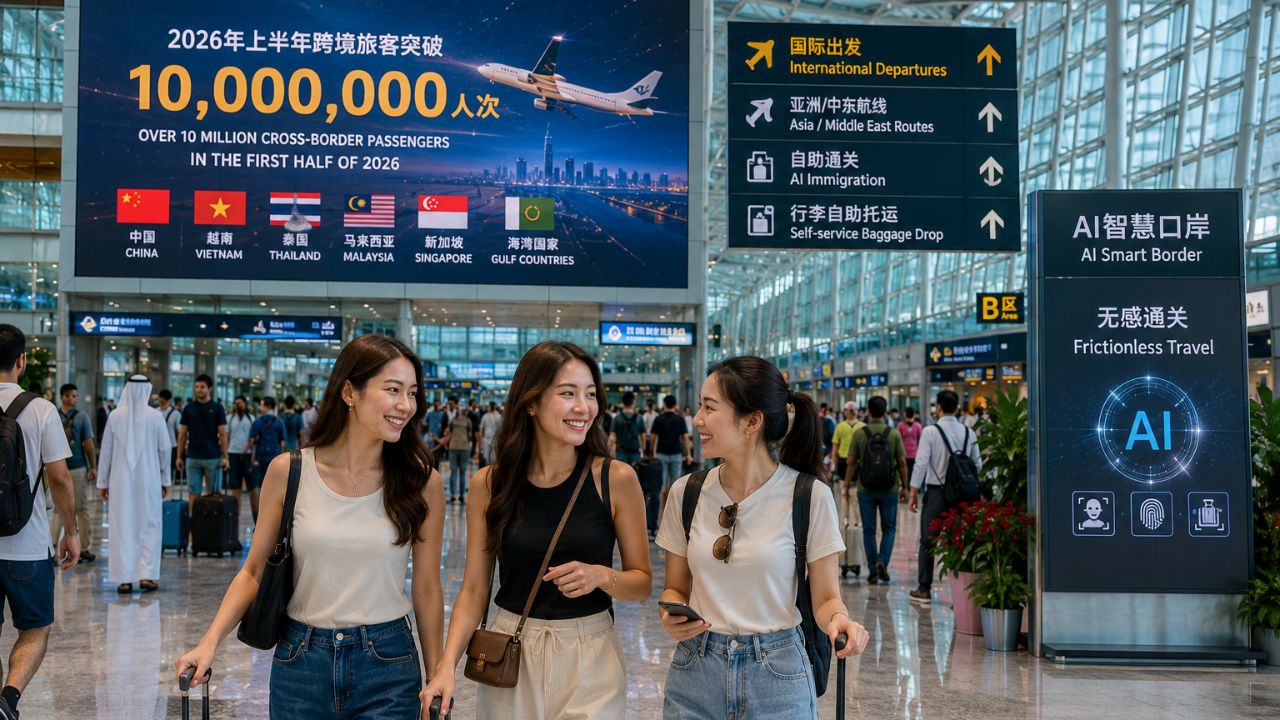
Image generated by AI
Aviation Updates: Guangzhou Baiyun Deploys AI Frictionless Borders to Process 10 Million Travelers and Neutralize Asia-Gulf Travel Chaos
As catastrophic regional congestion severely threatens transit corridors connecting Asia and the Middle East, Guangzhou Baiyun International Airport has executed a massive technological intervention, deploying AI-driven frictionless borders to seamlessly process over 10 million cross-border passengers and aggressively neutralize the threat of severe travel chaos.
Image generated by AI
As high-impact airline news platforms rapidly issue continuous aviation updates regarding the suffocating infrastructure bottlenecks plaguing the Asia-Pacific region, China’s primary southern gateway has achieved total operational supremacy. Driven by the explosive, relentless expansion of Belt and Road routes, Guangzhou Baiyun International Airport has successfully processed over 10 million cross-border passengers in the first half of 2026 alone—a massive milestone reached approximately thirty days ahead of the previous year. To prevent this surging volume from triggering cascading flight cancellations and severe airport disruptions, aviation authorities have aggressively deployed fully integrated AI customs processing, early digital clearance, and single-step exit procedures. By physically transforming Guangzhou into a frictionless aviation super corridor, China is directly absorbing massive transit demand from Vietnam, Thailand, Malaysia, Singapore, and the Gulf, successfully insulating millions of global passengers from the debilitating travel chaos that currently defines peak-season international transit.
Expanded Overview: Securing the Belt and Road Aviation Corridor
Aviation economists consistently emphasize that managing hyper-accelerated passenger volume requires extreme technological infrastructure.
With Guangzhou Baiyun International Airport recording an incredible average annual passenger traffic growth of over 21%, the physical terminal space was rapidly approaching its absolute limits. Unchecked volume at this scale inevitably leads to massive security queues, lethal connection delays, and catastrophic baggage failures. However, by deeply integrating AI baggage screening and automated immigration networks, Guangzhou has successfully decoupled passenger volume from transit friction. This massive technological leap explicitly supports Guangdong’s export-led development and physically anchors the aviation component of China’s Belt and Road Initiative, proving that hyper-scaled airport mega-hubs can operate flawlessly without succumbing to the operational gridlock destroying secondary regional transit centers.
Section-Wise Breakdown: The Guangzhou Fortress Hub
The structural foundation of this massive growth relies heavily on relentless network expansion and extreme daily operational efficiency.
Operating as the absolute core of the Greater Bay Area—and fiercely competing with regional rivals like Shenzhen and Hong Kong—Guangzhou Baiyun has aggressively expanded its global reach. In the first half of 2026, the airport seamlessly added 14 additional international routes, bringing its total active network to over 100 international destinations. The hub is now consistently processing an average of 58,000 daily international passengers, effectively managing extreme pressure spikes that hit a staggering maximum daily total of 68,000 passengers. Spearheaded by massive fleet utilization from China Southern Airlines, and heavily supported by Air China and China Eastern, this capacity expansion has firmly established Guangzhou as the ultimate fortress hub for Asia-Pacific and Gulf connectivity.
Section-Wise Breakdown: The ASEAN and Gulf Connectivity Grid
The true value of the Guangzhou super corridor is its ability to effortlessly absorb and distribute traffic from intensely volatile regional markets.
As transit competition violently escalates between Bangkok, Kuala Lumpur, and Singapore, Guangzhou has positioned itself as the superior northern alternative. The airport is aggressively funneling immense leisure and corporate demand directly from Vietnam, Thailand, and Malaysia into its heavily optimized ecosystem. Furthermore, as Gulf mega-hubs in Dubai and Doha experience their own extreme capacity constraints, Guangzhou is providing a highly stable, frictionless transit alternative for travelers moving between East Asia and the Middle East. By reducing connection times and optimizing aircraft slots, the Chinese hub is completely rewriting the operational dynamics of the Asia-Gulf aviation trade corridor.
Flight Details: The Guangzhou Operational Matrix
To fully comprehend the sheer scale of the passenger volume, network expansion, and economic output generated during this period, the critical data has been consolidated into the mandatory operational matrix below.
Guangzhou Baiyun Operational Matrix (H1 2026)
| Operational Metric | Verified Deployment Data |
|---|---|
| Aviation Hub | Guangzhou Baiyun International Airport |
| Cross-Border Volume | Over 10 million passengers (H1 2026) |
| Daily Average | 58,000 international passengers |
| Peak Daily Volume | 68,000 international passengers |
| Network Expansion | 14 additional international routes |
| Total Global Reach | 100+ international destinations |
| Economic Output | >RMB 700 million duty-free, >700,000 tons cargo |
| Traffic Growth | >21% average annual increase |
Passenger Impact: Eradicating Transit Friction
For the millions of international passengers moving through the Greater Bay Area, the deployment of AI-driven architecture completely transforms the travel experience.
Historically, navigating a Chinese mega-hub during peak travel seasons—especially around Christmas, New Year, or major trade delegations—guaranteed severe delays and massive terminal overcrowding. Today, passengers utilizing early morning flights or mid-week itineraries are experiencing incredibly short wait times. While the sheer volume of travelers means terminal concourses remain incredibly busy, the implementation of single-step exit procedures and AI-driven automated immigration forces the lines to move continuously. This absolute removal of static queuing directly prevents the missed connections and paralyzing delays that routinely ruin high-stakes corporate and leisure travel.
Industry Analysis: The Cargo and Retail Boom
From a broader macroeconomic perspective, the frictionless passenger environment is actively triggering a massive explosion in ancillary revenue and freight logistics.
The rapid integration of AI processing doesn't just move humans; it drastically accelerates the entire commercial ecosystem. During the first half of 2026, the intense surge in high-value business travelers and international tourists directly resulted in duty-free sales exceeding a massive RMB 700 million. Simultaneously, as Guangdong's export industries capitalize on the 14 new international routes and enhanced belly-hold capacity, the airport recorded staggering cargo sales of more than 700,000 tons. This proves that an optimized, technologically advanced airport directly drives regional economic domination by perfectly integrating high-speed cargo transit with high-volume passenger movement.
Conclusion: The Ultimate Aviation Super Corridor
Ultimately, Guangzhou Baiyun International Airport has definitively proven that advanced artificial intelligence is the ultimate weapon against global aviation gridlock. By flawlessly processing over 10 million cross-border passengers in the first half of 2026 and maintaining a peak daily throughput of 68,000 international travelers, the airport has successfully shielded the vital Asia-Gulf corridor from catastrophic travel chaos. As the Belt and Road Initiative continues to furiously expand, and carriers like China Southern Airlines rapidly deploy massive capacity across 100+ international destinations, Guangzhou will remain the undisputed blueprint for the modern aviation super corridor. By entirely eradicating the transit friction that causes flight cancellations and severe airport disruptions, China is actively reshaping the absolute future of global travel.
Key Takeaways
- Massive Volume Milestone: Guangzhou Baiyun International Airport successfully processed over 10 million cross-border passengers in the first half of 2026, reaching this metric 30 days faster than the previous year.
- Peak Operational Throughput: The mega-hub manages an average of 58,000 international passengers daily, hitting a massive peak volume of 68,000 travelers.
- AI Frictionless Borders: The deployment of AI automated immigration, intelligent baggage screening, and single-step exit procedures directly prevents severe airport disruptions and congestion.
- Massive Route Expansion: In H1 2026, the airport added 14 new international routes, expanding its global network to over 100 destinations and strengthening the Belt and Road aviation corridor.
- Economic Explosion: The optimized transit flow directly triggered over RMB 700 million in duty-free sales and moved over 700,000 tons of high-value cargo.
FAQ: Guangzhou Baiyun Airport Expansion
How many international passengers used Guangzhou Baiyun Airport in early 2026? The airport officially processed over 10 million cross-border passengers in the first half of 2026, averaging 58,000 daily international travelers with peak days reaching 68,000.
What specific technology is preventing travel chaos at the airport? Aviation authorities have deployed highly advanced AI customs and immigration processing, intelligent baggage screening, and single-step exit procedures to ensure frictionless, rapid movement through the terminals.
How many new routes were added to the airport's network? During the first half of 2026, Guangzhou Baiyun aggressively expanded its capacity by adding 14 new international routes, pushing its total reach to over 100 global destinations.
Which airlines are driving this massive growth? The expansion is heavily spearheaded by China Southern Airlines (the primary hub carrier), with massive operational support and capacity injections from Air China and China Eastern.
Related Travel Guides
- Flight Chaos in Dubai: Hundreds Affected by Delays and Cancellations
- Cathay Pacific Restores Daily Hong Kong–Dubai Flights from September 2026
- Emirates Resumes US Operations: Major Gulf Carrier Returns to Four American Cities This Week
Disclaimer: This article is strictly for informational and aviation analysis purposes. The specific operational telemetry (10 million cross-border passengers, 68,000 peak daily travelers), network expansion data (14 new routes, 100+ destinations), and economic metrics (>RMB 700 million duty-free, >700,000 tons cargo) are based on verified airport traffic data from the first half of 2026 available at the time of publication. International aviation environments, AI border processing protocols, and airport capacity limits are highly dynamic and subject to immediate, unannounced modification by Chinese aviation authorities or global regulatory bodies. Passengers transiting through Guangzhou Baiyun International Airport should explicitly verify their flight schedules and connection times directly with their operating carrier prior to travel.
Disclaimer
This article is for informational and educational purposes only. It does not constitute legal, financial, or professional advice. While we strive to provide accurate and up-to-date information, travel policies, regulations, and conditions change rapidly. Always verify information with official sources before making travel decisions. Nomad Lawyer makes no representations about the accuracy, reliability, completeness, or suitability of the information provided. Readers should consult qualified professionals for advice specific to their circumstances. The views expressed in this article are those of the author and do not necessarily reflect the views of Nomad Lawyer.
Preeti Gunjan
Contributor & Community Manager
A passionate traveller and community builder. Preeti helps grow the Nomad Lawyer community, fostering engagement and bringing the reader experience to life.
Learn more about our team →