
Guangzhou Baiyun Airport Chaos: 401 Delays, 14 Cancellations Hit China Southern, Air China, Korean Air June 2026
Guangzhou Baiyun International Airport experienced massive operational disruption on June 5, 2026, with 401 delayed flights and 14 cancellations affecting China Southern, Air China, Korean Air, and regional carriers across Asia.

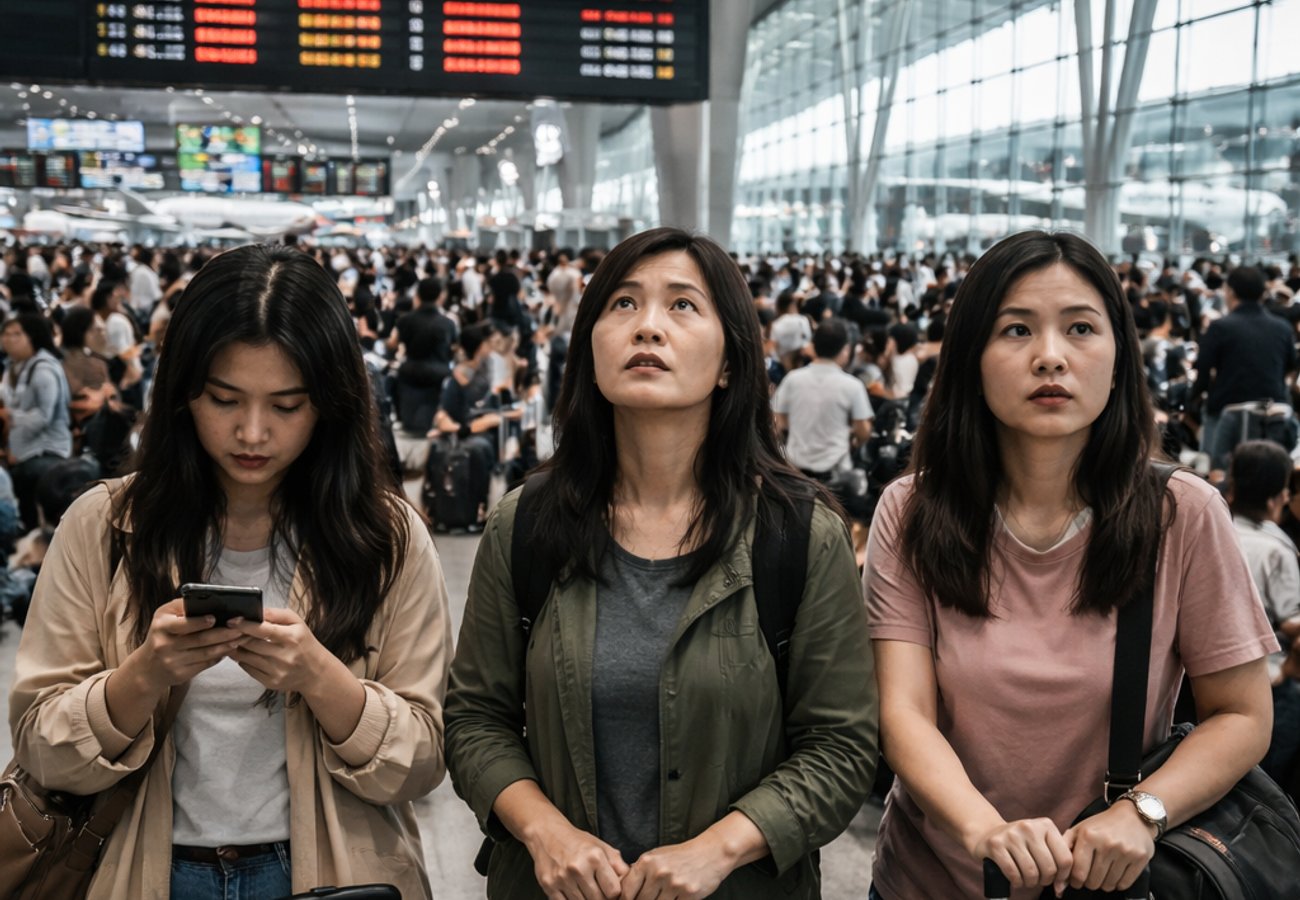
Image generated by AI
The Day Guangzhou Baiyun Airport Nearly Collapsed
June 5, 2026 wasn't supposed to be the day Guangzhou Baiyun International Airport ground to a halt. But somewhere between dawn and dusk, the numbers told a brutal story: 401 delayed flights and 14 cancellations cascading through one of Asia's most critical aviation hubs.
I've watched airport disruptions before. This one felt different. It wasn't a dramatic shutdown. It was worse—a slow-motion collapse where nearly every flight leaving, arriving, or connecting through Guangzhou faced cascading delays that would ripple across the entire Asian aviation network for days.
The airport serves as the primary hub for China Southern Airlines, one of the world's largest carriers by fleet size. When Guangzhou stumbles, Asia's connected cities feel the tremor. Beijing. Shanghai. Chengdu. Seoul. Bangkok. Hong Kong. All of them were about to experience the downstream chaos.
Why Guangzhou Matters (And Why This Disruption Was Historic)
Guangzhou Baiyun isn't just another airport. It's the economic artery connecting China's manufacturing heartland to the world. Pre-pandemic, it handled over 80 million passengers annually. It remains the gateway for:
- Domestic flights across 150+ Chinese cities
- International routes to Europe, the Middle East, North America, and Oceania
- Regional Asian connectivity through Korean Air, Asiana, AirAsia, and Malaysia Airlines
- Critical cargo operations supporting export-heavy industries
When 401 flights delay simultaneously at a hub of this magnitude, you're not talking about inconvenience. You're talking about supply chain disruption, missed business connections, and thousands of passengers stranded across multiple continents.
Reddit: "Had a connection through Guangzhou today. Six-hour layover turned into a 24-hour nightmare. Missed my onward flight to Singapore. No hotel, no meal vouchers offered." — r/travel
The Airline-by-Airline Breakdown: Who Got Hit Hardest?
China Southern Airlines: The Undisputed King of Disruption
Here's the number that stopped me cold: 166 delayed flights attributed to China Southern Airlines alone.
To contextualize that figure—China Southern accounted for approximately 41.4% of every single delayed flight at Guangzhou that day. The airline experienced only two cancellations, but the delay count revealed something far more dangerous: complete network collapse.
This is what happens when a hub carrier's rotations break down. One aircraft arrives 90 minutes late. That same plane was scheduled to depart 45 minutes after arrival. Now that departure is already 45 minutes behind before wheels leave the gate. Multiply this across 166 aircraft, and you've created a domino effect that doesn't resolve until midnight or beyond.
China Southern's operational footprint means those 166 delays translated into secondary disruptions at Beijing Capital, Shanghai Pudong, Chengdu Shuangliu, and dozens of secondary cities where passengers were supposed to connect.
China Eastern Airlines: The Cancellation Leader
China Eastern Airlines recorded the highest cancellation count: six flights cancelled, representing 42.9% of all cancellations at Guangzhou that day.
The airline didn't stop there. They also reported 49 delayed flights, indicating that even flights that technically departed faced significant schedule compression. For a carrier managing domestic connections across Northern China, six cancellations create cascading missed connections—passengers stranded not in Guangzhou, but in cities 1,500 kilometers away with no onward transportation.
Air China and Hainan Airlines: The Mid-Tier Casualties
Air China reported two cancellations and 36 delayed flights (45% delay rate). Hainan Airlines matched that with two cancellations and 31 delayed flights (38% delay rate).
What strikes me about these numbers is the delay percentage. When 45% of an airline's daily operations experience delays, you're not dealing with isolated incidents. You're dealing with systemic airport-wide constraints that affected every carrier indiscriminately.
Shenzhen Airlines: The Second-Largest Delay Victim
Shenzhen Airlines recorded 38 delayed flights—the second-highest after China Southern. Given that Shenzhen operates predominantly regional routes between Southern China's manufacturing belt and secondary airports, those 38 delays meant cargo shipments missed overnight transport windows and business passengers blew multi-million-dollar meetings.
International Carriers: The Lucky Ones
Here's what fascinates me about the data: Korean Air, Asiana, Malaysia Airlines, and AirAsia all reported zero cancellations and single-digit delays.
Why? Likely because international carriers operate fewer daily rotations through Guangzhou. They fly once or twice daily on fixed schedules. Domestic carriers like China Southern operate dozens of daily rotations, and when aircraft rotation breaks down, delays multiply exponentially. International carriers, by contrast, can absorb a single delayed flight without triggering network-wide cascade effects.
The Root Cause: What Really Happened at Guangzhou on June 5?
The fact that delays massively outnumbered cancellations tells us something critical: the airport remained operational throughout the day. This wasn't a weather shutdown or a complete system failure. This was operational degradation.
Most likely culprits:
Southern China Weather Systems
Southern China's climate in June means tropical weather disturbances. Heavy rainfall, thunderstorms, convective wind shear, and lightning activity can force air traffic control to space departures farther apart, reduce landing rates, and implement ground holds. Aircraft can't depart safely, so they queue on taxiways. Once weather clears, airports face an hours-long backlog of aircraft waiting for departure clearance.
Air Traffic Control Flow Restrictions
China's Civil Aviation Administration can implement sector-wide flow control measures when airspace becomes congested. When Beijing, Shanghai, and Guangzhou airspace all operate near capacity simultaneously, controllers space aircraft farther apart to reduce collision risk. This reduces the airport's effective throughput and creates departure delays that cascade throughout the day.
Aircraft Rotation Breakdown
Modern airlines operate aircraft on 14-16 hour daily cycles. A single aircraft might operate:
- 06:00 departure Guangzhou → Shanghai (2 hours)
- 09:00 departure Shanghai → Chengdu (2 hours)
- 12:00 departure Chengdu → Guangzhou (2 hours)
- 14:30 departure Guangzhou → Beijing (3 hours)
When the initial 06:00 departure delays by 90 minutes, all four subsequent flights experience cascade delays. China Southern's 166 delayed flights likely stemmed from fewer than 50 aircraft cycling through rotations with accumulated delays.
Crew Scheduling Constraints
Flight crew duty time is strictly regulated. Pilots and flight attendants can work maximum 9-11 hours per duty period. When delays accumulate, crews exceed their allowed duty time, forcing airlines to:
- Reassign replacement crews (if available)
- Delay departures (waiting for new crews)
- Cancel flights (if no crews available)
Given that China Southern operates with thousands of crew members, widespread delays suggest that crew scheduling became constrained by mid-afternoon.
The Ripple Effect: Why June 5 Disruption Affected Cities 2,000 Km Away
This is where the story gets genuinely urgent for travelers.
Guangzhou isn't a terminal airport for most passengers. It's a transfer hub. Passengers fly in from:
- Beijing (2,250 km)
- Shanghai (1,500 km)
- Chengdu (1,300 km)
- Xi'an (1,700 km)
- Kunming (1,100 km)
They connect in Guangzhou for onward flights to:
- Europe (via Dubai or Istanbul)
- Southeast Asia (Bangkok, Kuala Lumpur, Singapore)
- North America (via Tokyo or Incheon)
When 401 flights delay at a hub, you don't have 401 local disruptions. You have thousands of affected passengers whose primary and secondary flights are now in jeopardy.
A passenger from Beijing connecting to London would have experienced:
- Original Guangzhou arrival: 10:30 AM
- International departure: 1:30 PM (3-hour layover)
- Actual Guangzhou arrival: 12:15 PM (delayed by 105 minutes)
- Connections missed with high probability
- Hotel rebooked at airline expense (or not rebooked)
- 24-hour delay to final destination
Multiply this across thousands of passengers across multiple airlines, and June 5 at Guangzhou created a cascading failure affecting the entire Asian aviation network.
What Travelers Should Know: Your Rights When Facing These Disruptions
If you were among the passengers affected by today's chaos, here's what you need to know.
Document Everything
Keep every piece of evidence:
- Original booking confirmation (screenshot or email)
- Boarding passes (even if not used)
- Receipts for meals, transportation, hotel accommodation
- Airline communications (texts, emails, chat logs)
- Photos of airport departure boards showing delays
Know Your Rights
Under the EU261 regulation (which applies to flights departing from European airports) and similar regulations in China and South Korea, airlines owe you compensation for delays exceeding 3 hours, unless caused by extraordinary circumstances like severe weather.
In China specifically, the Air Transport Industry Association recommends that airlines provide:
- Rebooking on the next available flight (same airline or competitor)
- Hotel accommodation (if overnight delay)
- Meal vouchers
- Communication services
Contact Your Airline Immediately
Don't wait. Call your airline's customer service line within 24 hours and:
- Report the flight disruption
- Request written confirmation of the delay
- Ask for compensation eligibility assessment
- Request alternative routing options
Consider Third-Party Claims Assistance
If your airline refuses compensation, consider filing a claim with a flight delay compensation service that handles the airline negotiation on your behalf in exchange for a percentage of compensation recovered.
What Happens Next at Guangzhou?
Airlines will spend the next 72 hours untangling the June 5 disruption. Expect:
- Continued secondary delays on June 6-7 as aircraft and crew schedules recover
- Potential additional cancellations if aircraft can't be repositioned properly
- Possible overbooking on future flights as airlines try to relocate stranded passengers
- Increased automation and crew reassignment to prevent recurrence
The question isn't whether Guangzhou will recover from June 5. It will. The question is whether this becomes a cautionary tale about hub concentration risk or just another Tuesday in global aviation.
For now, if you're traveling through Guangzhou Baiyun in the coming weeks, build extra buffer time into connections, monitor your airline's app obsessively, and keep your documents accessible. One day of chaos can teach valuable lessons about airport resilience—and passenger preparedness.
The chaos of June 5, 2026, at Guangzhou Baiyun serves as a brutal reminder that modern air travel's efficiency is only as strong as its most congested hub.
Related Travel Guides
Ultra-Long-Range Aviation: How the Airbus A350 Is Shattering Distance Barriers in Commercial Flight
Disclaimer
This article is for informational and educational purposes only. It does not constitute legal, financial, or professional advice. While we strive to provide accurate and up-to-date information, travel policies, regulations, and conditions change rapidly. Always verify information with official sources before making travel decisions. Nomad Lawyer makes no representations about the accuracy, reliability, completeness, or suitability of the information provided. Readers should consult qualified professionals for advice specific to their circumstances. The views expressed in this article are those of the author and do not necessarily reflect the views of Nomad Lawyer.
Raushan Kumar
Founder & Lead Developer
Full-stack developer with 11+ years of experience and a passionate traveller. Raushan built Nomad Lawyer from the ground up with a vision to create the best travel and law experience on the web.
Learn more about our team →