
Greece Ranks Fourth in European Summer Tourism Demand Hierarchy
The latest report by the European Travel Commission reveals Greece ranking fourth behind Spain, Italy, and France as Mediterranean tourism demand surges.

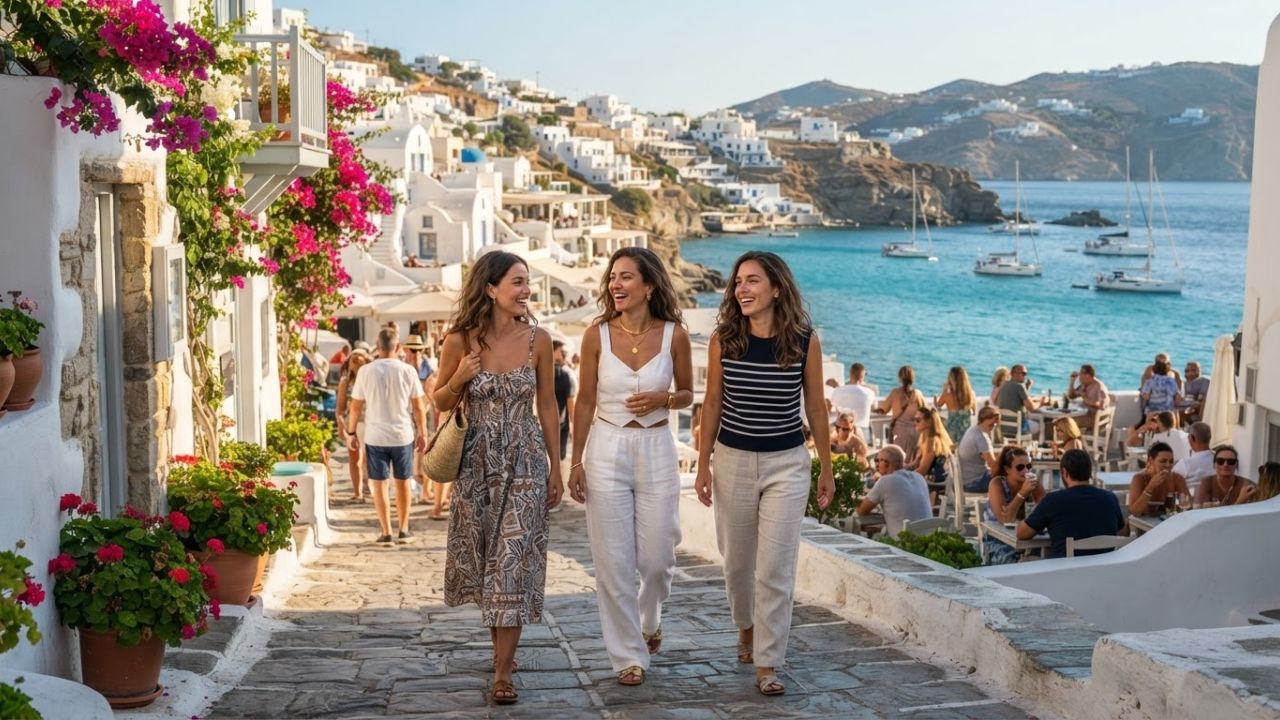
Image generated by AI
European summer tourism demand has reached a new peak, with Greece securing the fourth position among preferred Mediterranean destinations. Rising interest in Southern Europe is shaping booking trends for summer and autumn 2026.
Mediterranean Giants Lead European Travel Preferences
The latest survey released by the European Travel Commission (ETC) indicates high travel intent across the continent. Spain leads the ranking with 14 percent of intended travelers choosing Spanish destinations.
Italy ranks second with 12 percent, followed by France at 8 percent. Greece captured fourth place, representing 7 percent of respondents in the ten largest European source markets.
The study surveyed 6,076 respondents across Germany, the UK, France, the Netherlands, Italy, Belgium, Switzerland, Spain, Poland, and Austria.
Demographics and Regional Affinity Drive Booking Surge
A high percentage of Europeans are planning trips between June and November 2026. Data shows that 81 percent of respondents intend to travel during this six-month window.
The 45-54 age demographic reported the highest intent at 86 percent. Southern Europe remains the most preferred region, capturing 61 percent of total intended travel flows.
Greece remains highly popular in the UK, France, Italy, and Germany but ranks lower in the Netherlands and Spain.
European Travel Sentiment and Preferences
The tables below present the travel destination preferences and consumer choice drivers.
Preferred European Travel Destinations (Summer/Autumn 2026)
| Destination Ranking | Country Name | Travel Sentiment Share | Primary Market Assets |
|---|---|---|---|
| 1st Place | Spain | 14% of Respondents | Diversified coastal resorts and cultural cities |
| 2nd Place | Italy | 12% of Respondents | Rich heritage sites and culinary tourism |
| 3rd Place | France | 8% of Respondents | High-yield urban breaks and historic corridors |
| 4th Place | Greece | 7% of Respondents | Premium island gateways and Mediterranean coastline |
Key Behavioral Drivers for Intra-European Travel Choices
| Decision Influence Factor | Respondent Share | Primary Consumer Concern |
|---|---|---|
| Safety and Security | 20% of Choices | Stable local conditions and reliable medical access |
| Pleasant Weather | Secondary Impact | Comfortable climate conditions for beach activities |
| Favorable Travel Deals | Secondary Impact | Budget sensitivity and value-driven booking options |
| Environmental Impact | 76% of Choices | Carbon offsets and destination ecological preservation |
Shifting Consumer Priorities and Budget Resilience
Modern travelers are prioritizing experience-driven tourism over crowded mass destinations. Approximately 52 percent of respondents expressed a preference for lesser-known regional spots.
Despite inflationary pressures, discretionary travel budgets remain stable. The most common spending range per traveler is between €1,500 and €2,500.
Air transport remains the dominant mode of travel, preferred by 53 percent of European tourists.
Climate Concerns and Geopolitical Sensitivity Grow
Environmental factors are playing a larger role in booking decisions. Two-thirds of respondents indicated they might change travel schedules to avoid extreme summer temperatures.
Geopolitical tensions are also affecting destination confidence. Security perceptions are now a key factor in choosing vacation spots.
Global statistics tracked by UN Tourism show that European safety perceptions remain high compared to other continents.
Why This Matters
Our analysis of the flight data indicates that Southern Europe's tourism market is reaching capacity limits during summer peaks. By capturing 61 percent of total travel intent, the Mediterranean corridor is placing immense pressure on local water, transport, and waste infrastructure. Greece's 7 percent share shows strong demand but also highlights the need to manage visitor density.
Additionally, the rising focus on safety and weather stability suggests a potential shift toward shoulder-season travel. If two-thirds of travelers alter plans due to climate concerns, traditional July and August peaks may flatten. This shift would distribute economic benefits more evenly across the autumn months.
Industry Outlook
Market trends suggest that regional air carriers will continue to expand routes to secondary airports. Green tourism initiatives will comply with European Union sustainability guidelines.
Expect destinations to launch promotional campaigns targeting the high-yield 45-54 demographic during shoulder seasons. The current travel parameters are scheduled to continue through the upcoming winter booking window.
Key Takeaways
- Greece Ranks Fourth: Greece is the fourth most preferred European destination with 7 percent of travel intent.
- Top Leaders: Spain leads with 14 percent, followed by Italy at 12 percent and France at 8 percent.
- High Intent: 81 percent of Europeans plan to travel between June and November 2026.
- Safety First: Safety is the primary decision factor for 20 percent of European travelers.
- Environmental Shift: 76 percent of travelers acknowledge the environmental impact of their choices.
FAQ
Which countries are the most popular for summer travel in Europe?
Spain, Italy, France, and Greece are the top four preferred destinations in Europe.
How many Europeans plan to travel this summer?
According to the European Travel Commission, 81 percent of Europeans plan to travel between June and November 2026.
How does climate impact travel choices?
Seventy-six percent of respondents consider environmental impacts, and two-thirds may alter travel plans due to extreme weather.
What is the average budget for a European vacation?
The most common average travel budget is between €1,500 and €2,500 per traveler.
Related Travel Guides
Disclaimer
This article is for informational and educational purposes only. It does not constitute legal, financial, or professional advice. While we strive to provide accurate and up-to-date information, travel policies, regulations, and conditions change rapidly. Always verify information with official sources before making travel decisions. Nomad Lawyer makes no representations about the accuracy, reliability, completeness, or suitability of the information provided. Readers should consult qualified professionals for advice specific to their circumstances. The views expressed in this article are those of the author and do not necessarily reflect the views of Nomad Lawyer.
Kunal K Choudhary
Co-Founder & Contributor
A passionate traveller and tech enthusiast. Kunal contributes to the vision and growth of Nomad Lawyer, bringing fresh perspectives and driving the community forward.
Learn more about our team →