
Greece Fortifies Heritage Tourism with Revolutionary Fire Protection Rules to Shield Ancient Landmarks and Visitors from Escalating Climate Risks
Greece implements a unified fire safety framework for archaeological sites to protect ancient monuments and tourists from climate-driven wildfire threats.

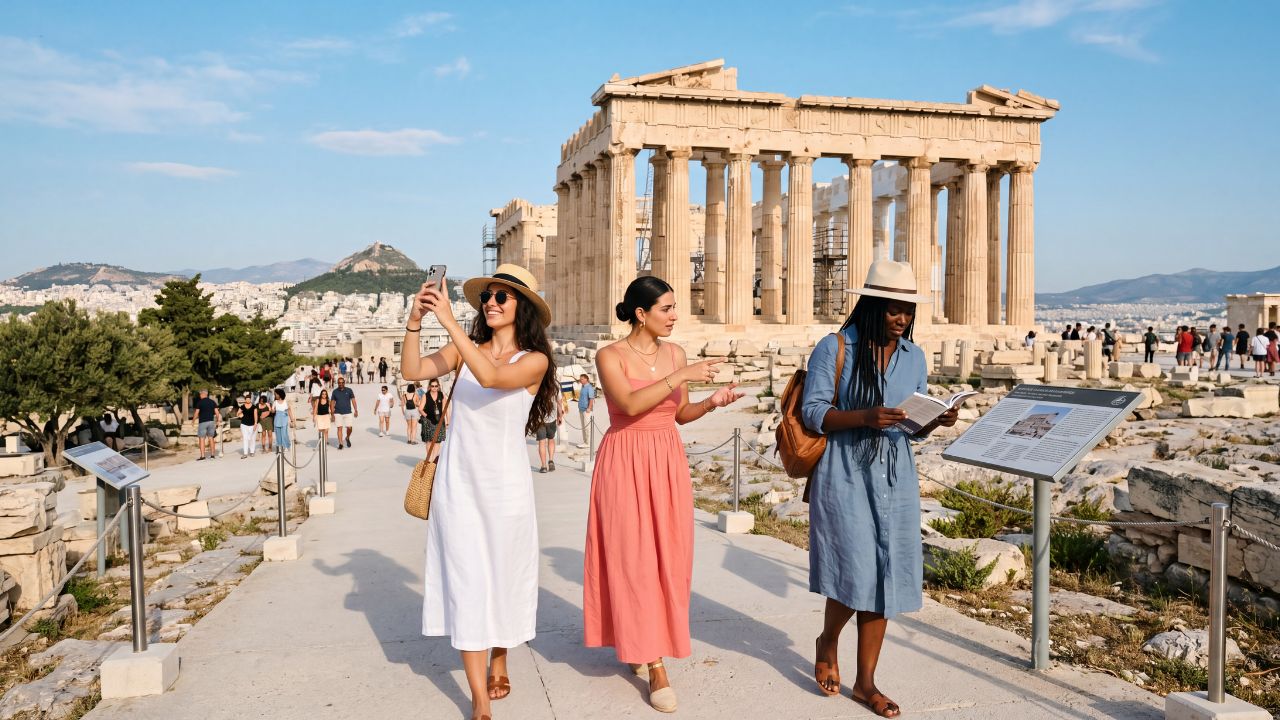
Image generated by AI
Quick Summary
- Greece has launched a unified "Regulation on Fire Protection of Archaeological Sites" to replace fragmented local measures.
- The framework prioritizes human life and visitor safety through organized evacuation planning.
- Standardized risk assessments are now mandatory, tailoring protection to each site's specific vulnerabilities.
- Climate change is formally integrated into heritage planning to combat more frequent and severe wildfires.
- Systematic vegetation management and staff training are key pillars of the new resilience strategy.
Greece Fortifies Heritage Tourism with Revolutionary Fire Protection Rules to Shield Ancient Landmarks and Visitors from Escalating Climate Risks
ATHENS — In a decisive move to safeguard the cradle of Western civilization, Greece has unveiled a comprehensive new legislative framework designed to shield its most prized archaeological treasures from the growing threat of wildfires. The "Regulation on Fire Protection of Archaeological Sites" marks a paradigm shift in how the nation manages its cultural assets, moving away from reactive, site-specific interventions toward a unified, scientific, and proactive system of resilience.
For a country where the tourism economy is inextricably linked to its ancient ruins—from the towering columns of the Parthenon to the sprawling theaters of Epidaurus—fire safety is no longer just a technical requirement; it is a matter of national security. With archaeological zones often situated in wide-open, arid terrains subject to extreme heat, wind, and heavy tourist traffic, the risk of catastrophic loss is high. This new legislation acknowledges that ancient sites are not conventional buildings but vast, open-air landscapes that require specialized protection strategies to ensure both the preservation of history and the safety of millions of global visitors.
Expanded Overview: From Fragmented Measures to a Unified Shield
Historically, fire protection at Greek archaeological sites was a patchwork of local arrangements, separate projects, and site-specific works. This fragmentation left critical gaps in the national defense against wildfires. The new regulation effectively erases these inconsistencies, introducing a single, structured framework that mandates common standards across all sites.
The core philosophy of this shift is that fire risk cannot be managed after the first spark appears. Instead, the new system emphasizes early planning, rigorous vegetation control, and a seamless coordination between heritage authorities and civil protection teams. By filling this institutional gap, Greece is providing its monuments with a specialized tool designed for the unique realities of archaeological zones, ensuring that the protection of a remote sanctuary in the mountains is as disciplined as that of a high-traffic urban site.
Section-Wise Breakdown: The Pillars of the New Safety Framework
The Foundation: Standardized Risk Assessment
At the heart of the new regulation is a mandatory, standardized risk assessment process. Rather than applying a rigid, one-size-fits-all model, the government now requires each site to be evaluated based on its unique characteristics. Factors such as existing infrastructure, daily visitor volumes, surrounding vegetation density, and exposure to future climate scenarios are all analyzed. This evidence-based approach ensures that a small urban monument and a sprawling open-air landscape receive protection measures tailored to their specific vulnerabilities.
The Climate Pivot: Integrating Environmental Reality
Perhaps the most forward-thinking aspect of the legislation is the formal integration of climate change into heritage planning. Fire risk is no longer treated as a temporary seasonal nuisance but as a permanent feature of a changing climate reality. By aligning the regulation with the national strategy for adapting cultural heritage monuments to climate impacts, Greece is preparing for a future of more severe and frequent heatwaves. This policy shift ensures that investment in staffing and infrastructure is based on future risk scenarios, not just historical data.
The Human Element: Prioritizing Visitor Safety
The regulation explicitly states that the protection of human life is the absolute first priority. During the peak summer travel season, archaeological sites can become densely crowded. In the event of a wildfire, narrow access points and uneven terrain can quickly turn a site into a trap. To counter this, the framework introduces organized visitor removal planning. This means every site must have a practical, rehearsed movement plan to evacuate international tourists—who may be unfamiliar with local geography—quickly and safely.
The First Line of Defense: Vegetation Management
Recognizing that dry grass and pine forests are the primary fuel for wildfires, the regulation identifies systematic vegetation management as a core defense mechanism. This is not about stripping the landscape of its beauty, but about the controlled and sensitive removal of combustible materials. By managing the "fuel load" around monuments, visitor paths, and service buildings, authorities can create critical buffers that slow the spread of fire and provide a safer window for emergency response.
Operational Readiness and Continuous Monitoring
The legislation moves beyond planning and into the realm of active professionalization. The focus is now on "active fire protection," which includes the deployment of advanced detection methods, optimized water supply systems, and the establishment of clear emergency access points.
However, the government recognizes that equipment is useless without expertise. The regulation mandates rigorous staff training, ensuring that site personnel are not just observers but active participants in the emergency chain. From alerting authorities to supporting mass evacuations, the professionalization of site-level response is designed to bridge the gap between the start of a fire and the arrival of civil protection teams.
To ensure these standards do not lapse, the regulation introduces a continuous monitoring and feedback loop. Regular inspections and inter-ministerial checks ensure that as vegetation grows and visitor flows shift, the protection plans are updated. This transforms the regulation from a static legal document into a living management tool.
Industry Analysis: Strengthening the Resilience of Cultural Tourism
The implications for the Greek tourism industry are profound. Archaeological travel is the cornerstone of the country's global appeal. Any catastrophic loss of a landmark or a high-profile safety failure would result in devastating cultural, economic, and reputational damage.
By fortifying these sites, Greece is essentially "insurance-proofing" its tourism product. Tour operators, cruise lines, and international travel agencies can now market Greek heritage sites with a higher degree of confidence in their safety and resilience. This move positions Greece as a global leader in climate-linked heritage risk management, signaling to the world that the country is treating its ancient ruins as living infrastructure that must be protected by twenty-first-century standards.
Conclusion: A New Era for Ancient Landmarks
The implementation of the New Fire Protection Regulation for Archaeological Sites is one of the most significant steps Greece has taken toward preserving its cultural legacy. By synthesizing civil protection, scientific assessment, and tourism safety into one framework, the nation is moving from a reactive posture to a system of total resilience.
As heatwaves and droughts continue to reshape the Mediterranean landscape, the ability to protect ancient landmarks will define the future of Greek tourism. This legislation ensures that the theaters, temples, and sanctuaries of antiquity remain not only as monuments to the past but as safe, accessible experiences for future generations. Greece is not just protecting stones; it is protecting the trust of the global traveler and the memory of civilization.
Key Takeaways
- Unified Framework: Replaces fragmented local measures with a single, structured national standard for fire protection.
- Human-Centric: Prioritizes the immediate evacuation and safety of visitors over the preservation of monuments.
- Climate-Driven: Formally integrates climate change projections into the long-term planning of heritage sites.
- Proactive Defense: Emphasizes vegetation management and standardized risk assessments to prevent fires before they start.
- Professionalized Response: Mandates staff training and active monitoring to ensure operational readiness.
Frequently Asked Questions
Why was a new fire protection regulation necessary for Greek archaeological sites? Because these sites are often in open, arid terrains with high tourist traffic, making them uniquely vulnerable to wildfires. Previous measures were too fragmented and site-specific.
How does the new regulation protect tourists? It mandates organized visitor removal plans and clear evacuation protocols, ensuring that people can be moved safely from a site during an emergency.
What is the role of "risk assessment" in this new system? Each site is evaluated based on its specific geography, visitor numbers, and surrounding vegetation to create a targeted protection plan rather than a one-size-fits-all approach.
How is climate change addressed in the new rules? The regulation uses scientific data on climate impacts to plan for more frequent and severe fire risks, moving away from treating fire as a purely seasonal issue.
Will vegetation management ruin the natural beauty of the sites? No. The regulation calls for "controlled and sensitive" management of combustible materials to create safety buffers without stripping the landscape of its character.
Disclaimer
This article is for informational and educational purposes only. It does not constitute legal, financial, or professional advice. While we strive to provide accurate and up-to-date information, travel policies, regulations, and conditions change rapidly. Always verify information with official sources before making travel decisions. Nomad Lawyer makes no representations about the accuracy, reliability, completeness, or suitability of the information provided. Readers should consult qualified professionals for advice specific to their circumstances. The views expressed in this article are those of the author and do not necessarily reflect the views of Nomad Lawyer.
Kunal K Choudhary
Co-Founder & Contributor
A passionate traveller and tech enthusiast. Kunal contributes to the vision and growth of Nomad Lawyer, bringing fresh perspectives and driving the community forward.
Learn more about our team →