
Grand Teton Tests Robot Birds to Steer Wildlife From Jackson Hole Airport
Grand Teton National Park deploys lifelike robotic sage grouse near Jackson Hole Airport in 2026 to protect endangered birds from aircraft strikes while restoring critical habitat through innovative wildlife management.

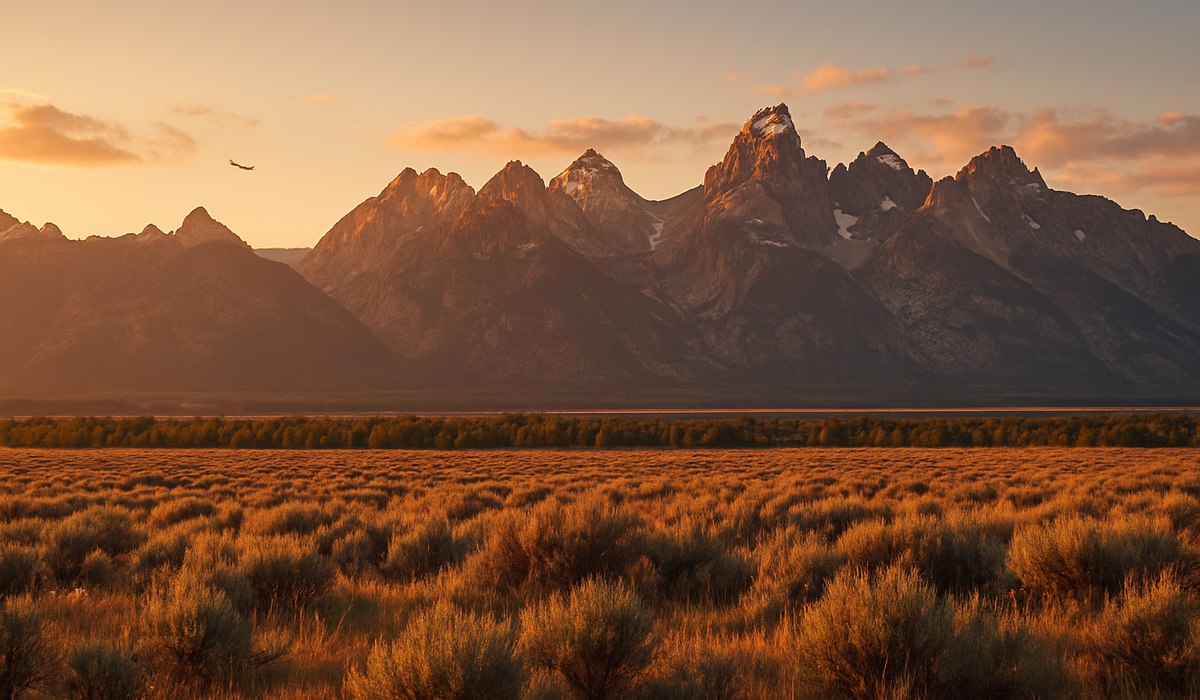
Image generated by AI
Airport Operations Face Wildlife Safety Challenge
Jackson Hole Airport, located entirely within Grand Teton National Park, now hosts hundreds of thousands of annual visitors while managing critical wildlife hazards. The airport's presence in sensitive sage grouse habitat has created an ongoing conflict between aviation operations and endangered bird protection. Grand Teton National Park and airport operators are collaborating on an innovative solution: robotic sage grouse decoys designed to redirect real birds away from runway environments. This unique conservation experiment combines habitat restoration with cutting-edge behavioral technology. The initiative represents a growing trend of airports nationwide implementing wildlife deterrents to improve safety and protect threatened species while maintaining operational efficiency.
Why Sage Grouse and Airports Don't Mix
Greater sage grouse populations have declined sharply across the American West over recent decades. These ground-dwelling birds rely on open sagebrush habitat for breeding and foraging, making them particularly vulnerable to aircraft strikes in areas near airports. Between the early 1990s and 2010s, documented records show dozens of sage grouse were killed by aircraft near Jackson Hole Airport, especially during summer breeding months when birds inhabit exposed terrain surrounding the runway. The loss of individual birds contributes to broader population pressures already threatening the species' survival. For aviation safety managers, wildlife collisions present operational risks and regulatory compliance challenges. The Federal Aviation Administration and park administrators recognized that addressing this conflict required proactive habitat management rather than passive deterrence alone. Grand Teton National Park's integrated approach tackles both conservation imperatives and airport safety simultaneously through strategic landscape redesign.
How Robotic Decoys Work: Conservation Meets Technology
The evolution from static papier-mâché models to sophisticated robotic birds illustrates escalating innovation in wildlife management. In 2025, park staff introduced handcrafted sage grouse decoys across restored fields south of the runway. These basic statues helped establish the concept that decoys could signal breeding habitat suitability to real birds. Trial cameras documented genuine bird responses to these initial installations. Building on this success, park collaborators partnered with Jackson Hole High School's robotics team to develop mechanized versions. The 2026 generation features foam and fabric bodies with articulated tails, heads, and chest components capable of precise movement. Hidden speakers broadcast dawn calling sequences that mimic authentic breeding ground soundscapes. The robotic birds' animated displays—including head swivels, body bobs, and chest puffing—recreate courtship behaviors male sage grouse use to attract females. This multisensory approach leverages natural breeding instincts to create powerful behavioral incentives pulling birds toward designated habitat zones away from aircraft traffic patterns and operational corridors.
Eight Years of Habitat Restoration Efforts
Patient landscape restoration underpins the robotic decoy project's success. Approximately eight years of focused effort has transformed roughly 100 acres of degraded pastureland into native sagebrush and grassland ecosystems. Decades of cattle grazing had eliminated native vegetation that sage grouse depend upon for roosting, nesting, and courtship activities. Park crews removed invasive species, replanted native sagebrush stands, and allowed native grass communities to regenerate. This ecological rehabilitation creates genuinely attractive habitat rather than relying solely on technological trickery to fool birds. The restored landscape offers real food sources, protective cover, and traditional lek sites sage grouse seek seasonally. Combined with robotic decoys, the habitat modifications create comprehensive incentive structures encouraging birds to establish and maintain breeding grounds in safe locations. Wildlife managers recognize that true success requires addressing underlying ecological conditions rather than deploying deterrents into degraded environments birds would naturally abandon.
What's Next for Wildlife Management at U.S. Airports
Grand Teton's robotic sage grouse experiment has captured attention from airports and conservation agencies nationwide facing similar wildlife conflicts. The FAA acknowledges wildlife strikes as an ongoing operational challenge affecting hundreds of airports. Habitat modification, targeted deterrents, and behavioral management now complement traditional approaches like exclusion fencing and lethal control. Other airports have begun evaluating whether similar decoy-based strategies could protect sensitive species while minimizing operational disruptions. The success of Grand Teton's approach may inspire broader adoption of technology-enhanced conservation tactics at transportation hubs. Future iterations might incorporate artificial intelligence to optimize decoy placement and timing. Enhanced monitoring systems could provide real-time population assessments informing adaptive management decisions. As airports worldwide confront climate change impacts on wildlife distribution, integrated habitat and technology solutions will likely become standard practice in aviation safety planning and environmental stewardship.
Critical Data: Grand Teton Airport Wildlife Management Initiative
| Metric | Details |
|---|---|
| Airport Location | Entirely within Grand Teton National Park, Wyoming |
| Annual Visitors | Hundreds of thousands arrive via Jackson Hole Airport |
| Target Species | Greater sage grouse (threatened population) |
| Historical Strikes | Dozens documented between 1990s–2010s |
| Habitat Restored | ~100 acres over 8-year initiative |
| Previous Vegetation | Degraded pasture (cattle-grazed for decades) |
| Current Habitat | Native sagebrush and grassland ecosystems |
| Decoy Evolution | Papier-mâché models (2025) → robotic versions (2026) |
| Partner Institution | Jackson Hole High School robotics program |
| Decoy Features | Articulated movement, animated displays, integrated speakers |
| Audio Component | Pre-dawn calling sequences mimicking breeding grounds |
| Behavioral Target | Redirect birds to restored habitat south of runway |
What This Means for Travelers
Visitors flying into Jackson Hole Airport should understand that this wildlife initiative reflects the park's commitment to sustainable tourism practices. The conservation project doesn't impact flight schedules, routes, or passenger operations—airport functionality remains unchanged. Here's what travelers should know:
-
Expect normal airport operations with no delays related to the robotic grouse project.
-
Schedule flexible travel plans during spring breeding season (April–June) when bird activity peaks and visibility decreases occasionally due to wildlife observations.
-
Book through carriers serving Jackson Hole regularly: check FlightAware for real-time operations and flight status information.
-
Review passenger rights via the U.S. Department of Transportation consumer protection site for weather-related or operational delays.
-
Arrive with extra time during peak spring migration periods when ecological monitoring may subtly affect gate assignments.
-
Appreciate that wildlife protection enhances safety for all passengers by reducing collision risks and supporting long-term airport sustainability.
-
Contact your airline directly if your flight is affected; carriers maintain updated policy information about operations in Grand Teton's sensitive ecosystem.
Frequently Asked Questions
Will robotic sage grouse decoys delay my flight?
No. The wildlife management initiative operates independently from flight scheduling. Decoys remain stationed in restored habitat south of the runway and don't interact with airport operational infrastructure, taxiways, or boarding processes.
Can I see the robotic birds or restored habitat during my visit?
The project site is restricted to authorized personnel and research teams. However, visitors exploring Grand Teton National Park may observe real sage grouse throughout the region during spring and early summer months when they're most active in native sagebrush environments.
Does wildlife management affect ticket prices or airline routes?
Airlines pricing and route planning remain unchanged by the grouse habitat project. Economic factors driving airfare and scheduling operate independently from conservation initiatives occurring outside operational airport zones.
What happens if the robotic decoys succeed?
Success would demonstrate that behavioral technology combined with habitat restoration can effectively redirect endangered wildlife away from collision hazards while maintaining airport functionality—a model potentially adopted at other U.S. airports facing similar conflicts.
Related Travel Guides
- [Complete Guide to Visiting Grand Teton National Park in 2026](/blog/travel
Disclaimer
This article is for informational and educational purposes only. It does not constitute legal, financial, or professional advice. While we strive to provide accurate and up-to-date information, travel policies, regulations, and conditions change rapidly. Always verify information with official sources before making travel decisions. Nomad Lawyer makes no representations about the accuracy, reliability, completeness, or suitability of the information provided. Readers should consult qualified professionals for advice specific to their circumstances. The views expressed in this article are those of the author and do not necessarily reflect the views of Nomad Lawyer.
Preeti Gunjan
Contributor & Community Manager
A passionate traveller and community builder. Preeti helps grow the Nomad Lawyer community, fostering engagement and bringing the reader experience to life.
Learn more about our team →