
United Delta American Emirates Singapore Airlines and Lufthansa Accelerate Premium Cabin Expansion as Aviation Industry Splits Into Luxury and Basic Economy Tiers
Global carriers led by United Airlines, Delta, American Airlines, and Emirates are aggressively expanding premium cabins and luxury lounge infrastructure as high-spending leisure travelers replace corporate passengers as the primary driver of airline profitability.

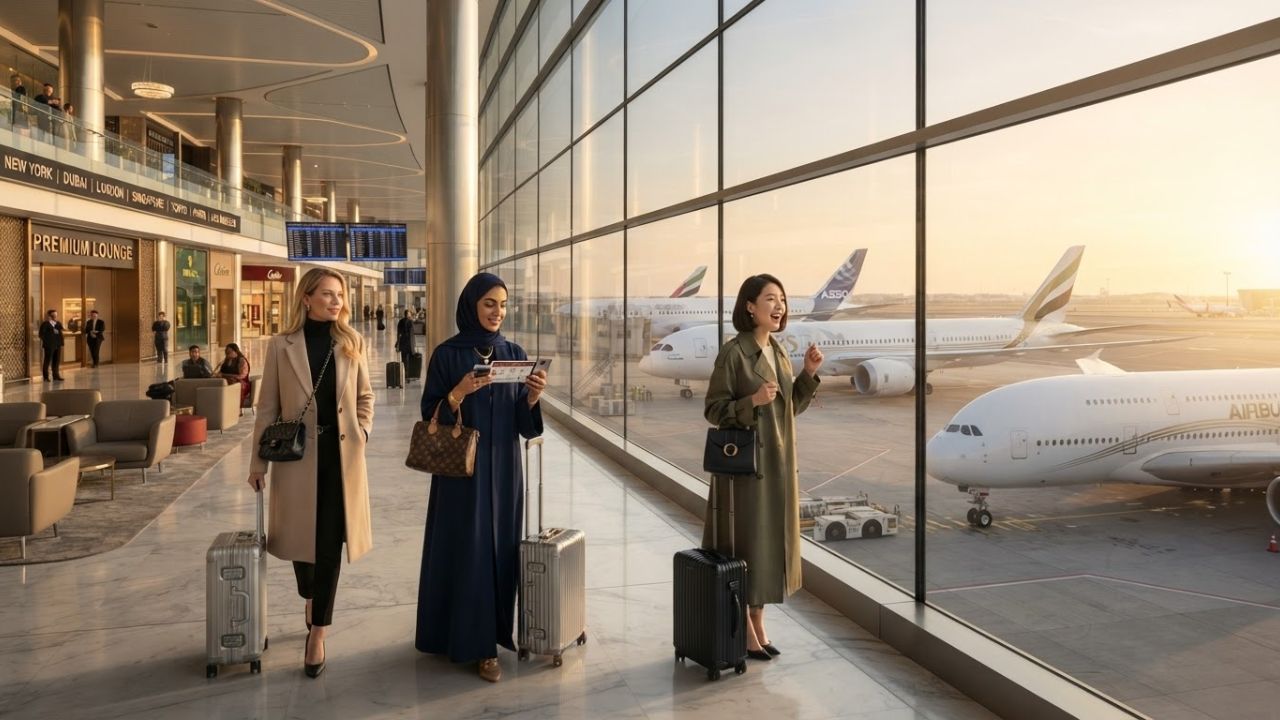
Image generated by AI
[Global, July 7, 2026] — The post-pandemic commercial aviation recovery has not produced a return to the pre-2020 industry structure. It has produced something fundamentally different: an industry increasingly organized around the spending power of high-income leisure travelers who replaced corporate passengers as the primary buyers of premium cabin seats. For decades, Business Class and First Class economics depended on corporate travel budgets. When those budgets returned slowly after 2020 while affluent leisure travelers filled premium cabins at elevated yields, airlines drew a structural conclusion and began redesigning their fleets accordingly.
The result is a simultaneous movement among the world's largest carriers — United Airlines, Delta Air Lines, American Airlines, Emirates, Singapore Airlines, EVA Air, Japan Airlines, Air France-KLM, and Lufthansa — all expanding premium cabin space, investing in airport lounge infrastructure, and creating multiple graduated premium tiers between standard Economy and full Business Class. At the other end of the cabin, Basic Economy products are stripping inclusions from the cheapest tickets, separating seat selection, checked baggage, and flexibility from the base fare.
United Airlines: Polaris Suite Upgrades and Premium Plus Expansion
United Airlines is advancing its United Next investment programme across three product tiers:
- United Polaris Business Class: Second-generation Polaris Business Suites with improved privacy features and upgraded long-haul sleeping configurations are being rolled out across the international fleet.
- United Premium Plus: The airline's Premium Economy product is being expanded across international aircraft, targeting comfort-focused travelers who want more than Economy but cannot justify Business Class fares.
- New Boeing 787 Dreamliners: Aircraft deliveries include expanded premium seating configurations and modern cabin layouts designed around the premium leisure traveler rather than the legacy corporate model.
United's strategy positions it directly against global long-haul competitors on routes connecting New York, London, Tokyo, and Dubai — markets where premium cabin competition is most intense.
Delta Air Lines: Half the Cabin, Premium Revenue
Delta Air Lines has advanced further along the premiumisation curve than most U.S. competitors:
- Delta operates three premium tiers: Delta One Suites (Business Class), Delta Premium Select (Premium Economy), and Comfort+ (enhanced Economy).
- By end of 2026, nearly half of the cabin space on selected next-generation long-haul aircraft is expected to be allocated to premium passengers.
- Delta lounge infrastructure is being redesigned as luxury hospitality venues featuring restaurant-style dining, premium bars, relaxation zones, and private workspaces.
Delta's model demonstrates the commercial logic driving the industry: premium cabin seats generate multiples of Economy revenue per seat while occupying relatively modest additional physical space. Expanding premium allocation is a yield optimization decision, not simply a luxury branding exercise.
American Airlines: 50% Premium Expansion by End of Decade
American Airlines has set a specific target for its premium transition:
- The airline plans to expand premium cabin seating by approximately 50% by the end of the decade.
- New long-haul aircraft feature Flagship Suites with sliding doors — replacing the traditional open-row Business Class configuration with private, enclosed suite products.
- The airline is simultaneously increasing Premium Economy capacity across its long-haul fleet.
- American is targeting premium leisure travelers planning international holidays and special-occasion trips — a deliberate broadening of the premium customer beyond the corporate base.
Emirates: 99 Destinations Get Premium Economy by End of 2026
Emirates — historically focused on First Class and Business Class luxury — has made the most significant premium market expansion of any carrier in the current cycle:
- Emirates is installing Premium Economy cabins across its Airbus A380 and Boeing 777 fleets.
- By end of 2026, Emirates Premium Economy is expected to be available across 99 global destinations.
- The product targets travelers who want larger seats, increased legroom, and improved dining at a price point below Business Class.
Emirates' Premium Economy expansion is strategically important because of Dubai's function as a global transfer hub. Premium Economy passengers routing through Dubai gain access to Emirates' entire network — meaning the cabin's availability at 99 destinations effectively creates a new mid-market tier across the carrier's full intercontinental route map.
Asian Carriers Compete on Premium Depth
Asian flag carriers are advancing parallel premium strategies:
Singapore Airlines:
- Redesigned long-haul cabins on Airbus A350 aircraft with a focus on exclusivity, personalized service, and carefully managed premium inventory.
EVA Air:
- Premium Economy seat pitch of approximately 42 inches — compared with approximately 31 inches in standard Economy — establishing one of the largest economy-to-premium comfort differentials in Asian aviation.
Japan Airlines:
- Upgraded Business Class and Premium Economy products across international routes, reinforcing Japan Airlines' long-standing premium service credentials.
European Carriers: Graduated Premium Structures
Air France-KLM:
- Strengthening Premium Economy as a distinct revenue category between Economy and Business Class.
- Adjusting loyalty programmes and pricing strategies to encourage comfort-seeking travelers to upgrade within the group's aircraft.
Lufthansa:
- Introducing the Allegris cabin concept — offering multiple Business Class options within the same aircraft, allowing passengers to select specific comfort levels including extra privacy, longer sleeping configurations, and enhanced seating features.
- Allegris creates granular pricing opportunities: passengers pay for specific cabin attributes rather than a single undifferentiated Business Class product.
Economy Class: The Other Side of the Split
While premium cabins improve, Economy Class is evolving in the opposite direction for the cheapest fare tiers:
| Service Previously Included | Current Basic Economy Status |
|---|---|
| Seat selection | Now a common additional charge |
| Checked baggage | Frequently charged separately |
| Ticket flexibility | Reduced or removed on lowest fares |
| Preferred boarding | Often sold as a separate add-on |
Basic Economy products allow airlines to advertise low headline fares while recovering revenue through ancillary charges. For budget travelers, the cheapest ticket price no longer represents the total cost of flying.
Airline-by-Airline Premium Strategy Summary
| Airline | Premium Products | Key 2026 Development |
|---|---|---|
| United Airlines | Polaris Business, Premium Plus | 2nd-gen Polaris suites; Premium Plus expansion; new 787 deliveries |
| Delta Air Lines | Delta One, Premium Select, Comfort+ | ~50% of next-gen long-haul cabin space premium by end 2026 |
| American Airlines | Flagship Suite, Premium Economy | 50% premium cabin expansion target by end of decade |
| Emirates | First, Business, Premium Economy | Premium Economy reaching 99 destinations by end 2026 |
| Singapore Airlines | First, Business, Premium Economy | A350 cabin redesign; tight premium inventory management |
| EVA Air | Business, Premium Economy | ~42-inch seat pitch in Premium Economy vs ~31-inch in Economy |
| Japan Airlines | Business, Premium Economy | International Business Class and Premium Economy upgrades |
| Air France-KLM | Business, Premium Economy | Premium Economy strengthened; loyalty programme adjustments |
| Lufthansa | Allegris Business | Multiple Business Class comfort tiers within single aircraft |
Key Facts Breakdown
- Delta's target: Nearly half of selected next-gen long-haul aircraft cabin space dedicated to premium by end of 2026.
- American's target: 50% premium cabin expansion by end of the decade.
- Emirates' reach: Premium Economy available across 99 global destinations by end of 2026.
- EVA Air specification: Premium Economy seat pitch ~42 inches versus ~31 inches in Economy.
- Lufthansa Allegris: Multiple graduated Business Class options within the same aircraft.
- Basic Economy trend: Seat selection, checked baggage, and flexibility increasingly sold as separate charges on cheapest tickets.
Why This Matters
Our analysis of the industry-wide premium expansion data indicates that the cabin reconfiguration underway at United, Delta, American, Emirates, and European carriers is not a cyclical trend — it is a structural reset triggered by a permanent shift in who buys premium seats. Pre-2020, Business Class economics required corporate travel programs. Post-2020, the demographic has diversified: premium leisure travelers, remote-working professionals, and affluent retirees now fill seats that were previously occupied almost exclusively by business-class expense account holders.
This shift has a compounding commercial effect. Premium leisure travelers book earlier, pay closer to full fare more often, and spend significantly on ancillary products — lounge access, seat upgrades, inflight purchases — compared with corporate travelers who maximize points accrual and prefer flexibility over advance booking. Airlines that optimize for this passenger profile generate higher total revenue per aircraft departure, not just higher per-seat revenue.
The parallel Basic Economy stratification is the necessary counterpart. Airlines need low-fare funnels to fill aircraft — but they no longer want low-fare inclusions to reduce margin across the full flight. By unbundling checked baggage, seat selection, and flexibility from the cheapest tickets, airlines isolate their cost exposure to the passengers who are least profitable while preserving margin on the entire rest of the cabin.
The result is an aviation market where the gap between the cheapest and most expensive travel experiences on the same aircraft is wider than at any point in commercial aviation history.
Industry Outlook
Market trends suggest that by 2028, more than 60% of long-haul revenue at United, Delta, and American Airlines will be generated by passengers in Business Class, Premium Economy, or Comfort+ tiers — a structural inversion of the historical Economy-majority revenue model. Long-term projections indicate that Emirates' 99-destination Premium Economy rollout will compress Premium Economy pricing across the Middle East hub market as increased supply meets demand, pushing full-service carriers to compete on product quality rather than availability scarcity. Expect Lufthansa's Allegris multi-tier Business Class model to be replicated by Air France and British Airways by 2027 as European carriers seek to extract additional yield from Business Class passengers willing to pay for specific comfort attributes within the same cabin class.
FAQ
Which airlines are expanding premium cabins the most in 2026? The most significant premium cabin expansions in 2026 are United Airlines (second-generation Polaris suites and Premium Plus), Delta Air Lines (approximately half of next-gen long-haul cabin space dedicated to premium), American Airlines (Flagship Suites expansion), and Emirates (Premium Economy reaching 99 destinations by end of 2026).
What is Lufthansa Allegris? Lufthansa Allegris is a new Business Class cabin concept that offers multiple comfort tiers within the same Business Class cabin — giving passengers choices between extra privacy, longer sleeping configurations, and different seating formats rather than a single standard Business Class product.
Why are airlines cutting Economy Class inclusions? Airlines use Basic Economy products to advertise low headline fares while recovering revenue through separate charges for seat selection, checked baggage, and ticket flexibility. This model improves total yield per flight without raising the visible base fare.
What is Emirates Premium Economy's expansion target? Emirates is rolling out its Premium Economy product across its Airbus A380 and Boeing 777 fleets, with the cabin expected to be available across 99 global destinations by the end of 2026.
Related Travel Guides
- Delta Air Lines Opens Second Delta One Lounge at LAX Making Los Angeles the First Airport to Host Two Premium Delta Facilities
- Iberia Refreshes Long-Haul Menus Across All Cabins on Madrid Flights Bringing Back Award-Winning Dishes and Expanding Plant-Based Options
- American Airlines Restores Daily Chicago O'Hare to Tokyo Narita Flights on Boeing 787-9 From March 2027 Backed by Japan Airlines Joint Business and Oneworld Asian Network
Disclaimer
This article is for informational and educational purposes only. It does not constitute legal, financial, or professional advice. While we strive to provide accurate and up-to-date information, travel policies, regulations, and conditions change rapidly. Always verify information with official sources before making travel decisions. Nomad Lawyer makes no representations about the accuracy, reliability, completeness, or suitability of the information provided. Readers should consult qualified professionals for advice specific to their circumstances. The views expressed in this article are those of the author and do not necessarily reflect the views of Nomad Lawyer.
Kunal K Choudhary
Co-Founder & Contributor
A passionate traveller and tech enthusiast. Kunal contributes to the vision and growth of Nomad Lawyer, bringing fresh perspectives and driving the community forward.
Learn more about our team →