
Ghana and South Korea Sign US$4.5 Million Strategic Alliance to Transform Heritage Tourism by 2030
Ghana and South Korea have launched a five-year, US$4.5 million strategic partnership to preserve coastal heritage sites and modernize cultural tourism infrastructure through 2030.

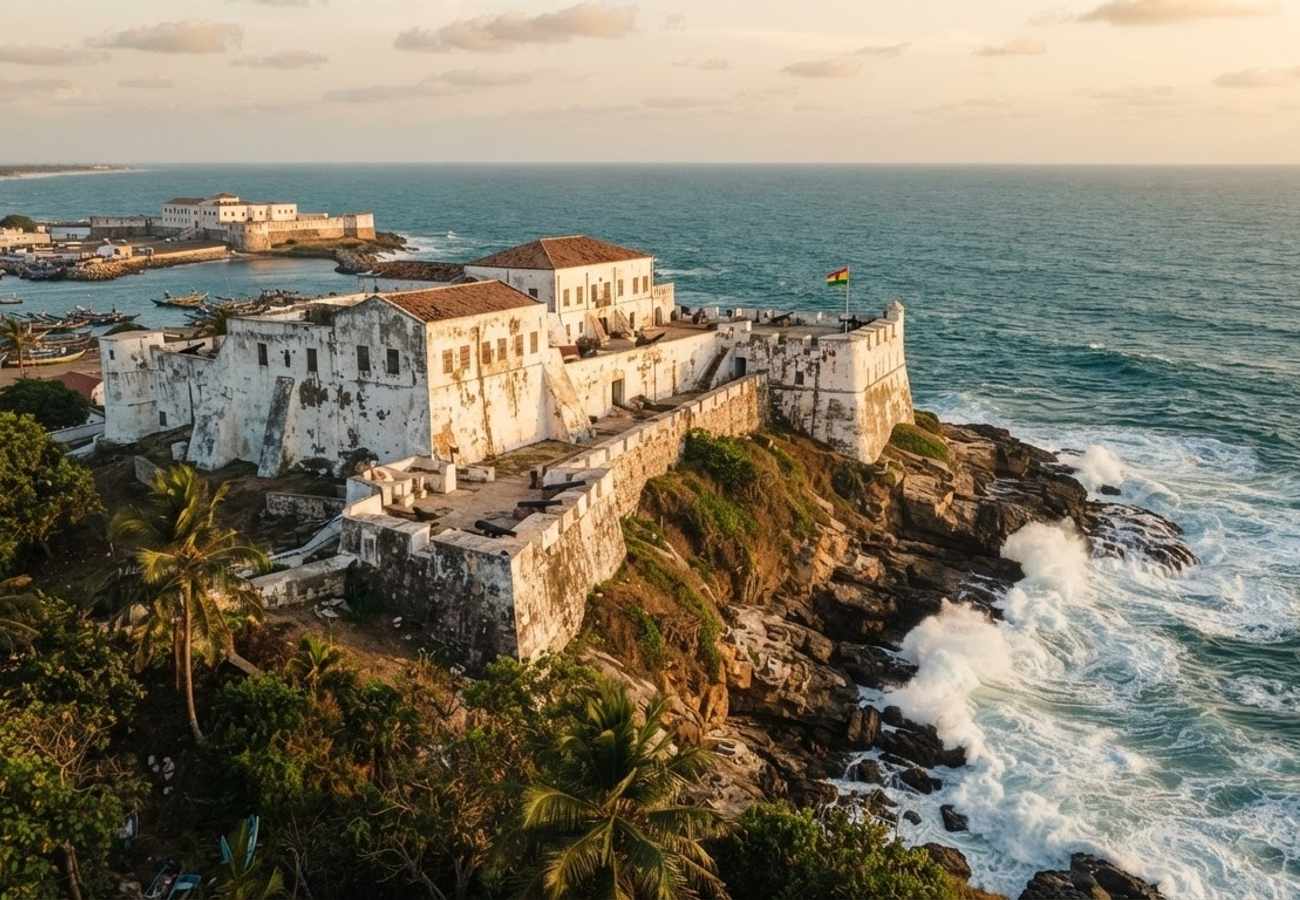
Image generated by AI
A US$4.5 million diplomatic pact between Ghana and South Korea is set to rescue crumbling coastal forts and digitize the visitor experience across West Africa. This strategic alliance aims to merge South Korean technical precision with Ghanaian cultural wealth to create a world-class tourism ecosystem.
The Republic of Korea and Ghana have formalized a five-year strategic cooperation framework designed to redefine the intersection of heritage preservation and international travel. Announced by Abla Dzifa Gomashie, Ghana’s Minister of Tourism, Culture and Creative Arts, the agreement provides nearly US$4.5 million in financial and technical support to safeguard vulnerable landmarks and professionalize the management of the creative arts sector.
For the global traveler, this shift means a transition toward more sustainable, digitally integrated, and structurally safe cultural itineraries. By integrating South Korea's technological infrastructure with Ghana's historical assets, the initiative seeks to protect critical sites from environmental decay while increasing their accessibility to a global audience.
Strategic Objectives for the 2026–2030 Window
The cooperation is not merely a financial grant but a systemic overhaul of Ghana's tourism value chain. The framework focuses on four primary pillars to ensure the sector remains competitive on a global scale:
- Institutional Strengthening: Upgrading regulatory bodies and local frameworks to improve governance within the tourism ecosystem.
- Specialized Human Capital: Providing advanced training for curators, conservation officers, and heritage site managers.
- Digital Transformation: Implementing South Korean technology to modernize virtual museum archives, online booking systems, and digital presentation tools.
- Bilateral Exchange: Creating pipelines for shared artistic traditions and administrative efficiency.
Fortifying Coastal Landmarks Against Climate Erosion
A central component of the alliance is the Korea-Ghana Heritage Project, which targets the structural degradation of coastal monuments. Many of these sites, vital for understanding the transatlantic slave trade and ancient kingdoms, have suffered from severe ocean erosion and extreme weather.
The project has prioritized six critical historical assets in the Greater Accra region for immediate structural fortification and rescue operations.
Priority Heritage Sites Under Restoration
| Site Name | Location | Primary Focus |
|---|---|---|
| Ussher Fort | Jamestown | Structural fortification & erosion control |
| James Fort | Jamestown | Structural fortification & erosion control |
| Christiansborg Castle | Osu | Structural fortification & erosion control |
| Fort Augustaborg | Teshie | Structural fortification & erosion control |
| Fort Vernon | Prampram | Structural fortification & erosion control |
| Fort Fredensborg | Old Ningo | Structural fortification & erosion control |
By implementing scientific climate-risk assessment systems, the partnership ensures these anchors of Ghanaian history remain stable for future generations. This infrastructure upgrade directly benefits international tourists by providing safer, more immersive educational tours and modernized interpretive displays.
Professionalizing the Tourism Workforce
Beyond physical masonry, the alliance emphasizes "human capital" as the engine of tourism growth. In collaboration with the Korean National Commission for UNESCO, Ghanaian administrators are undergoing rigorous professional development.
The training focuses on three core areas:
- Modern Site Curation: Transitioning from passive displays to active, engaging storytelling.
- Visitor Management: Implementing high-volume crowd control and service standards.
- Sustainable Policy: Aligning local operations with international benchmarks to attract diverse, high-spending markets.
Minister Gomashie noted that the synergy between South Korean administrative discipline and Ghanaian hospitality creates a unique environment for the creative industries to scale globally.
Economic Ripple Effects and the Creative Economy
The scope of the agreement extends into the broader creative arts economy, recognizing that cultural tourism is one of the fastest-growing segments of international travel. By packaging historical assets with contemporary creative industries, Ghana aims to capture a larger share of global traveler spending.
The partnership facilitates cross-border collaboration for local artisans, film producers, and content creators. This includes the rollout of virtual galleries and digital memory spaces between Accra and Seoul, allowing global audiences to explore Ghanaian culture remotely before visiting in person.
This strategic intervention is designed to ensure that the revenue generated from international arrivals is distributed equitably among local hospitality providers and creative enterprises, fostering regional economic resilience.
A bold fusion of East Asian technology and West African heritage is setting a new global standard for sustainable cultural tourism.
Key Takeaways
- Financial Investment: A US$4.5 million fund dedicated to tourism and heritage over five years (2026–2030).
- Climate Action: Six major forts in Greater Accra are being fortified against ocean erosion.
- Tech Integration: South Korea is providing digital tools for museum archives and booking platforms.
- Workforce Growth: Training via the Korean National Commission for UNESCO to professionalize site management.
FAQ
Which specific sites are being restored under the Korea-Ghana Heritage Project? The project focuses on six sites in the Greater Accra region: Ussher Fort, James Fort, Christiansborg Castle, Fort Augustaborg, Fort Vernon, and Fort Fredensborg.
How will this impact the average tourist visiting Ghana? Visitors can expect safer structures, more professional guides, improved digital booking options, and more immersive, tech-driven educational exhibits.
What is the primary goal of the professional training component? The goal is to align Ghanaian tourism operations with international benchmarks in site curation and visitor management to better serve high-volume international markets.
Related Travel Guides
Disclaimer
This article is for informational and educational purposes only. It does not constitute legal, financial, or professional advice. While we strive to provide accurate and up-to-date information, travel policies, regulations, and conditions change rapidly. Always verify information with official sources before making travel decisions. Nomad Lawyer makes no representations about the accuracy, reliability, completeness, or suitability of the information provided. Readers should consult qualified professionals for advice specific to their circumstances. The views expressed in this article are those of the author and do not necessarily reflect the views of Nomad Lawyer.
Preeti Gunjan
Contributor & Community Manager
A passionate traveller and community builder. Preeti helps grow the Nomad Lawyer community, fostering engagement and bringing the reader experience to life.
Learn more about our team →